
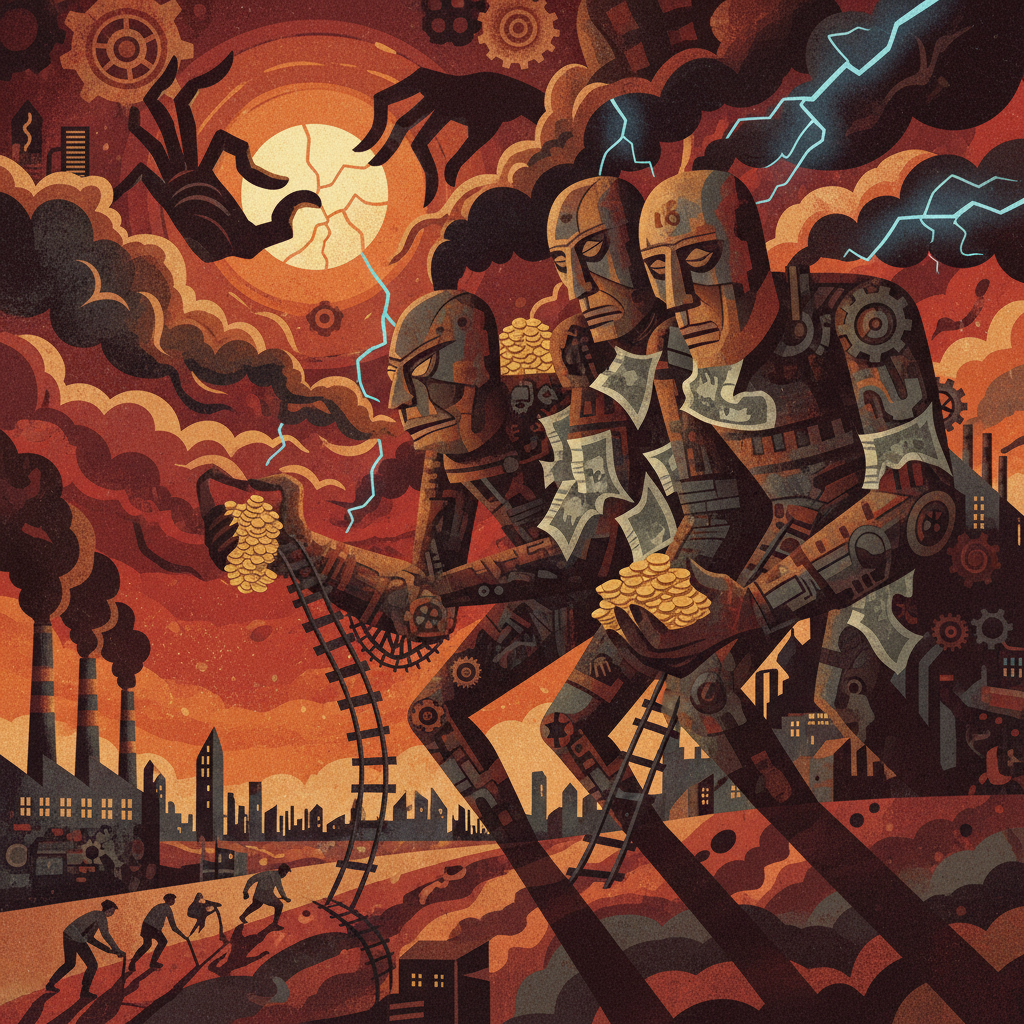
Robber Barons: Titans of Industry or Ruthless Exploiter? | Vibepedia
The term 'Robber Baron' conjures images of immense wealth and unchecked power, typically applied to industrialists like Carnegie, Rockefeller, and Vanderbilt…
Contents
Overview
The term 'Robber Baron' conjures images of immense wealth and unchecked power, typically applied to industrialists like Carnegie, Rockefeller, and Vanderbilt during the late 19th and early 20th centuries. These figures amassed fortunes through aggressive business practices, often at the expense of workers and competitors, leading to monopolies and vast economic inequality. While their innovations undeniably shaped modern industry and infrastructure, their methods sparked intense debate about capitalism, labor rights, and the role of government regulation. Understanding the Robber Barons requires examining their business acumen alongside the social and political fallout of their empires, a legacy that continues to inform discussions on wealth concentration and corporate responsibility today.
💡 What Are Robber Barons?
The term "[[Robber Baron]]" conjures images of immense wealth and unchecked power, typically applied to American industrialists of the late 19th and early 20th centuries. These figures, often self-made men, amassed fortunes through aggressive business practices, dominating industries like oil, steel, railroads, and finance. The label itself is loaded, implying not just immense success but also a ruthless disregard for competitors, workers, and the public good. Understanding robber barons requires dissecting their business acumen alongside their ethical controversies, a duality that defines their enduring historical significance.
🕰️ Historical Context: The Gilded Age
The era most associated with robber barons is the [[Gilded Age]] (roughly 1870-1900), a period of rapid industrialization, economic growth, and significant immigration in the United States. This era saw unprecedented technological advancements and the expansion of national markets, but also stark social inequalities, political corruption, and widespread poverty. The immense fortunes built by figures like [[Andrew Carnegie]] and [[John D. Rockefeller]] were a direct product of this transformative, yet deeply unequal, period. The contrast between opulent wealth and abject poverty became a defining characteristic of this historical epoch.
💰 The Titans: Key Figures and Their Empires
The pantheon of robber barons includes names that still resonate today. [[John D. Rockefeller]] revolutionized the oil industry with [[Standard Oil]], creating a near-monopoly through shrewd, often predatory, tactics. [[Andrew Carnegie]] built an empire in steel, transforming American manufacturing and later becoming a prolific philanthropist. [[Cornelius Vanderbilt]] amassed a fortune in railroads and shipping, his empire shaping the nation's transportation infrastructure. [[J.P. Morgan]] consolidated power in finance, orchestrating mergers and bailouts that influenced the very stability of the American economy. These individuals didn't just build companies; they built dynasties that reshaped the economic and social fabric of the nation.
⚖️ The Debate: Titans or Tyrants?
The central debate surrounding robber barons is whether they were visionary titans of industry who propelled America into modernity, or ruthless exploiters who prioritized profit over people. Proponents point to their role in driving innovation, creating jobs, and building the infrastructure that fueled national growth. Critics, however, highlight their monopolistic practices, suppression of labor unions, exploitation of workers through low wages and dangerous conditions, and their immense political influence. This dichotomy is not easily resolved, as their actions often contained elements of both.
📈 Economic Impact: Innovation vs. Exploitation
Economically, the impact of robber barons is undeniable. They pioneered new business models, introduced efficiencies, and invested heavily in technological advancements that spurred productivity. [[Standard Oil]]'s vertical integration and [[Carnegie Steel]]'s mass production techniques set new benchmarks for industrial organization. However, their pursuit of monopoly power often stifled competition, leading to higher prices for consumers and limited opportunities for smaller businesses. The concentration of wealth also raised concerns about economic fairness and the equitable distribution of the nation's prosperity.
🏛️ Legacy and Modern Echoes
The legacy of the robber barons is complex and continues to shape contemporary discussions about capitalism, wealth inequality, and corporate responsibility. While their direct empires have long since dissolved or transformed, the strategies they employed—from vertical integration to aggressive market consolidation—remain relevant. Their philanthropic endeavors, particularly those of Carnegie and Rockefeller, established models for large-scale charitable giving, though the source of these funds remains a point of contention. The ongoing debates about antitrust regulations and the influence of wealth in politics often trace their roots back to the Gilded Age.
📚 Further Exploration
To truly grasp the era of the robber barons, consider exploring primary source documents from the period, such as the writings of [[Ida Tarbell]], who critically examined [[Standard Oil]]. Visiting historical sites like the [[Vanderbilt Mansion]] or researching the industrial heritage of cities like Pittsburgh can offer tangible connections to this transformative period. Examining the evolution of labor laws and antitrust legislation provides further insight into the societal responses to the power wielded by these industrial giants.
Key Facts
- Year
- 1870
- Origin
- United States
- Category
- History / Economics
- Type
- Historical Figures / Socioeconomic Phenomenon
Frequently Asked Questions
What is the primary difference between a "robber baron" and a "captain of industry"?
The terms are often used interchangeably, but "captain of industry" generally carries a more positive connotation, emphasizing innovation, job creation, and economic progress. "Robber baron," conversely, highlights the alleged unethical, exploitative, and monopolistic practices used to amass wealth and power. The distinction often depends on one's perspective regarding the individual's methods and impact on society.
Were all wealthy industrialists of the Gilded Age considered robber barons?
No, not all. While many prominent industrialists of the era faced criticism and accusations of ruthless behavior, the "robber baron" label was typically reserved for those whose business practices were seen as particularly predatory or monopolistic. The term itself is a loaded critique, not a neutral descriptor for all successful entrepreneurs of the time.
What were some of the most common criticisms leveled against robber barons?
Key criticisms included monopolistic practices that stifled competition, extremely low wages and dangerous working conditions for laborers, the use of bribery and political influence to gain advantages, and the accumulation of vast wealth that exacerbated social inequality. Their perceived lack of social responsibility, beyond selective philanthropy, was also a major point of contention.
How did the public react to the rise of robber barons?
Public reaction was deeply divided. Many admired the success and perceived genius of these industrialists, seeing them as symbols of American opportunity and progress. Others, particularly workers and those affected by monopolistic practices, viewed them with suspicion and resentment, leading to widespread social unrest, labor movements, and calls for government regulation.
Did robber barons engage in philanthropy?
Yes, many prominent figures, most notably [[Andrew Carnegie]] and [[John D. Rockefeller]], became significant philanthropists. They endowed universities, libraries, hospitals, and various cultural institutions. However, the scale and source of these fortunes often led critics to question the motives and true impact of their charitable giving, sometimes viewing it as a way to launder their reputations.
What were the long-term consequences of the robber barons' influence on American society?
Their influence led to the development of significant antitrust legislation, such as the [[Sherman Antitrust Act]] of 1890, aimed at curbing monopolistic power. Their philanthropic activities established models for modern charitable foundations. Furthermore, the social and economic disparities they highlighted fueled progressive reforms and continue to inform debates about capitalism, wealth distribution, and corporate accountability today.