
Contents
Overview
The roots of ultrasonic cleaning can be traced back to early 20th-century investigations into the effects of high-frequency sound. While the precise inventor is debated, early work by scientists like Richard L. Sonickson in the 1950s, particularly his research at the University of California, Los Angeles (UCLA), laid crucial groundwork for practical applications. The development of reliable piezoelectric transducers in the mid-20th century, spurred by advancements in ceramics engineering and electronics manufacturing, was pivotal. These transducers could efficiently convert electrical energy into high-frequency mechanical vibrations, making ultrasonic cleaning systems feasible. Early commercial units, appearing in the late 1950s and early 1960s, were often bulky and expensive, primarily used in specialized industrial settings and military applications for cleaning precision parts. Companies like Bendix Corporation were early adopters, recognizing its potential for cleaning complex aerospace components.
⚙️ How It Works
At its core, ultrasonic cleaning operates by converting electrical energy into high-frequency sound waves via piezoelectric transducers mounted on the cleaning tank. These sound waves propagate through the cleaning fluid, typically water-based solutions with added detergents or solvents, at frequencies between 20 kHz and 40 kHz. The rapid pressure fluctuations in the fluid cause microscopic vacuum bubbles to form and then violently collapse (cavitation) on the surface of the submerged object. The process is highly effective because these cavitation bubbles can reach into intricate crevices, blind holes, and complex geometries that are inaccessible to manual cleaning or even many high-pressure washing systems. The choice of cleaning solution, temperature, and frequency significantly impacts the cleaning efficacy for different materials and contaminants.
📊 Key Facts & Numbers
Ultrasonic cleaning systems span a vast range of capacities, from desktop units with less than 0.5 liters (0.13 US gal) capacity, often used for jewelry or laboratory glassware, to massive industrial tanks exceeding 1,000 liters (260 US gal) employed in automotive or aerospace manufacturing. A typical ultrasonic cleaner operates at frequencies between 20 kHz and 40 kHz, though specialized applications can utilize frequencies as high as 1 MHz. The cleaning process itself can be remarkably swift, often completing the removal of common contaminants in as little as 3 to 5 minutes, though more stubborn residues or larger items might require 30 minutes or more. The energy input for a standard 1-liter ultrasonic cleaner might range from 50 to 100 watts, scaling up significantly for industrial units. Market research from Grand View Research projected the global ultrasonic cleaning market to reach USD 3.1 billion by 2027, indicating substantial commercial adoption.
👥 Key People & Organizations
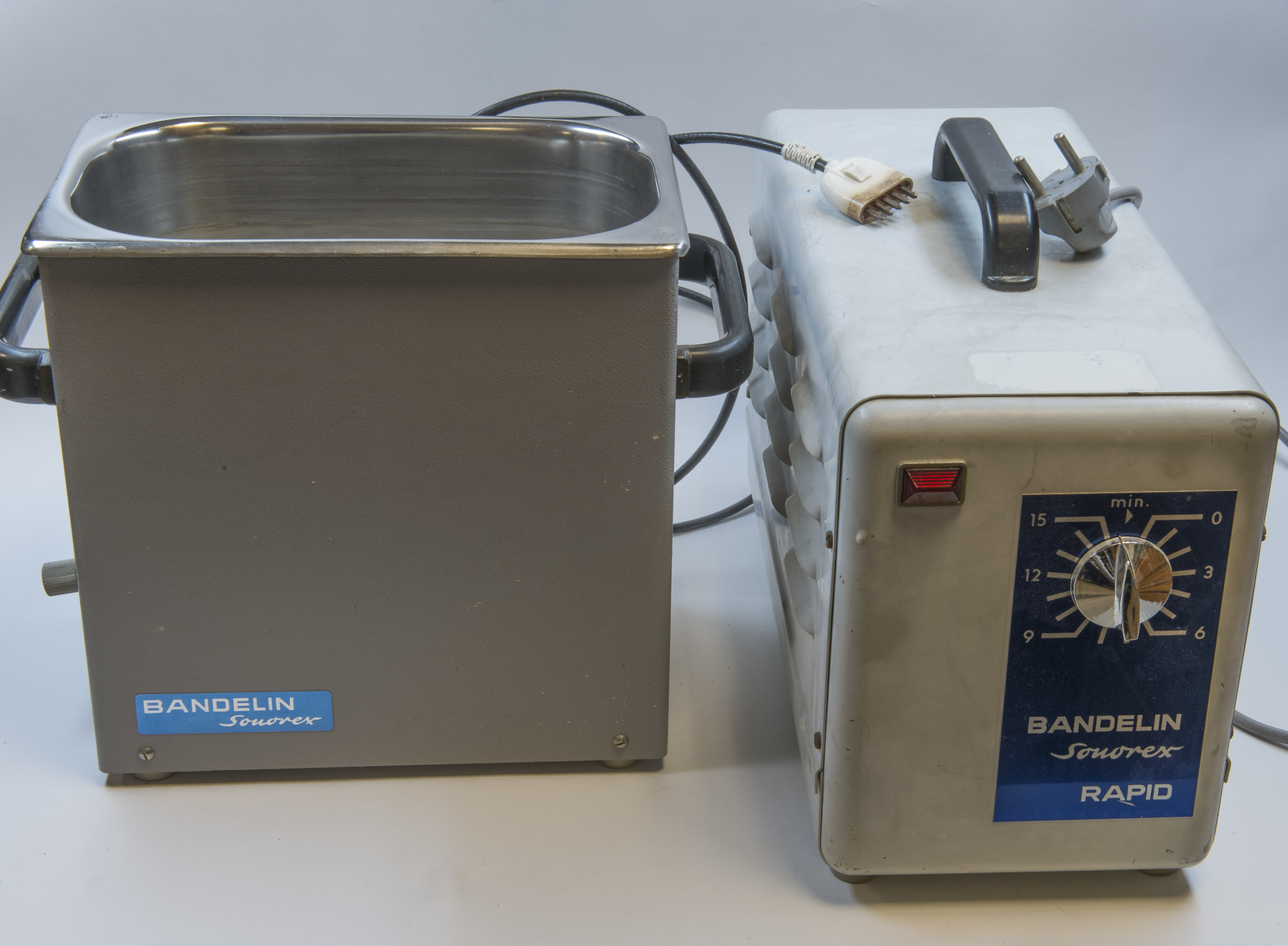
While no single individual is credited with inventing ultrasonic cleaning, Richard L. Sonickson's early research at UCLA in the 1950s was foundational. Key organizations driving its development include transducer manufacturers like Branson Ultrasonics (now part of Emerson Electric) and Kemet Electronics, who have been instrumental in refining piezoelectric technology. Major industrial players in ultrasonic cleaning equipment include Bandelin Electronic GmbH & Co. KG, Sharper Image (for consumer units), and GE Healthcare for specialized medical cleaning systems. Research institutions like the Institute of Sound and Vibration Research at the University of Southampton continue to explore advanced applications and optimize cleaning parameters.
🌍 Cultural Impact & Influence
The impact of ultrasonic cleaning resonates across numerous industries, fundamentally altering how precision components are maintained. In the jewelry industry, it allows for the rapid and thorough cleaning of intricate settings and gemstones without manual risk, boosting efficiency and customer satisfaction. For medical device manufacturers and hospitals, it's indispensable for sterilizing surgical instruments, ensuring patient safety by removing bioburden from complex lumens and surfaces, a critical step before autoclave sterilization. The semiconductor industry relies on it for cleaning silicon wafers and delicate electronic components, where even microscopic dust particles can render products useless. Its adoption has also elevated standards in watchmaking, optics manufacturing, and even firearms maintenance, demonstrating a broad cultural shift towards achieving higher levels of cleanliness through advanced technology.
⚡ Current State & Latest Developments
The current landscape of ultrasonic cleaning is marked by increasing sophistication and specialization. Advancements in digital signal processing allow for more precise control over frequency, power, and sweep patterns, leading to more consistent and effective cleaning. The integration of IoT capabilities enables remote monitoring, diagnostics, and process optimization in industrial settings, connecting ultrasonic cleaners to broader smart factory initiatives. There's also a growing trend towards eco-friendly cleaning solutions, with a focus on using water-based chemistries and reducing reliance on hazardous solvents, aligning with global sustainability efforts. Furthermore, research into higher frequencies (e.g., megasonic cleaning) is pushing the boundaries for cleaning even finer features in microelectronics and advanced materials.
🤔 Controversies & Debates
One persistent debate revolves around the optimal frequency for specific applications. While 20-40 kHz is standard for general industrial cleaning, some argue that higher frequencies (e.g., 80-120 kHz) offer gentler yet more thorough cleaning for extremely delicate items like microchips or sensitive optical lenses, minimizing the risk of surface damage. Conversely, critics suggest that the cavitation intensity at these higher frequencies is insufficient for removing robust industrial contaminants, making them less versatile. Another point of contention is the environmental impact of cleaning solutions; while ultrasonic cleaning reduces the need for harsh chemicals compared to some older methods, the disposal of spent cleaning fluids, especially those containing degreasers or heavy metals, remains an environmental concern that necessitates responsible waste management protocols and the development of biodegradable alternatives.
🔮 Future Outlook & Predictions
The future of ultrasonic cleaning appears poised for further integration and intelligence. Expect to see more 'smart' ultrasonic systems that automatically adjust parameters based on real-time sensor feedback regarding contaminant levels and fluid conditions, potentially utilizing AI algorithms for predictive maintenance and optimal cycle times. The development of novel cleaning fluids, perhaps bio-based or nanoparticle-enhanced solutions, could further improve efficacy and environmental profiles. We may also witness the expansion of ultrasonic cleaning into entirely new domains, such as advanced biotechnology for cell lysis or pharmaceutical processing, and in specialized applications within the space exploration industry for maintaining sensitive equipment in vacuum environments. The ongoing miniaturization of ultrasonic transducers could also lead to portable, handheld cleaning devices for field repairs or consumer use.
💡 Practical Applications
Ultrasonic cleaning is a versatile technology with applications spanning nearly every sector requiring meticulous cleanliness.
Key Facts
- Category
- technology
- Type
- topic