
Contents
Overview
The rivalry between AMD and Intel is a foundational narrative in the history of personal computing, representing a decades-long competition for dominance in the central processing unit (CPU) market. Since the late 1970s, these two semiconductor giants have engaged in a relentless arms race, pushing the boundaries of microarchitecture, manufacturing processes, and performance metrics. Intel, often the incumbent, has historically held a significant market share, particularly in the desktop and server segments, while AMD has frequently emerged as the disruptive challenger, offering compelling price-to-performance ratios and innovative designs. This dynamic has driven rapid advancements, from the early days of the IBM PC to the sophisticated multi-core processors of today, impacting everything from gaming and professional workloads to the very economics of the technology industry. The ongoing battle for supremacy, measured in clock speeds, core counts, and power efficiency, continues to shape the future of computing.
🎵 Origins & History
The seeds of the AMD vs. Intel rivalry were sown in the late 1960s and early 1970s, long before the personal computer era. Intel initially focused on memory chips. AMD began as a second source for Fairchild Semiconductor products, including Intel's own. The critical turning point came with a processor that led to a licensing agreement allowing AMD to produce compatible processors. This agreement, however, became a source of contention, with Intel eventually terminating it. AMD's subsequent development of its own compatible processors directly challenged Intel's monopoly, setting the stage for decades of intense competition and legal battles over intellectual property and market share.
⚙️ How It Works
At their core, both AMD and Intel design and manufacture CPUs, the brains of a computer. These processors execute instructions from software programs. The fundamental architecture involves fetching instructions from memory, decoding them, executing them using various units (like arithmetic logic units and floating-point units), and writing results back. Key performance differentiators include clock speed (how many cycles per second a CPU performs, measured in GHz), the number of cores (independent processing units within a single chip), cache memory (small, fast memory on the CPU itself), instruction set architecture (the commands a CPU understands), and manufacturing process node (the size of transistors, measured in nanometers, impacting power efficiency and density). Intel's x86 architecture, and AMD's compatible implementations, have been the dominant force in personal computing for decades, with both companies constantly innovating on these core principles to gain an edge.
📊 Key Facts & Numbers
The CPU market is a colossal arena. AMD has made significant inroads, particularly following the launch of its Ryzen processors, which saw AMD's market share in discrete CPUs climb from single digits to over 20% by early 2023, according to Mercury Research. The average selling price (ASP) for Intel's desktop CPUs has hovered around $100-$150, while AMD's Ryzen processors have often commanded higher ASPs due to their perceived performance advantage in certain segments. The server CPU market, dominated by Intel's Xeon processors, is also a key battleground, with AMD's EPYC processors gaining traction, capturing an estimated 15-20% of the x86 server market by 2023.
👥 Key People & Organizations
The rivalry has been shaped by visionary leaders and tenacious engineers. Jerry Sanders, co-founder of AMD, was a charismatic figure who famously declared, "We don't have to take a backseat to anyone." On the Intel side, Pat Gelsinger, currently CEO, has been instrumental in Intel's manufacturing revival efforts. Key architectural figures include Jim Keller, who played pivotal roles in developing successful architectures for both AMD (like the Zen) and Intel. Organizations like OpenAI and Nvidia, while not direct CPU competitors, are massive consumers and influencers of CPU technology, often leveraging the strengths of one vendor over the other for their AI and graphics processing needs. The TSMC has also become a critical player, as AMD has outsourced its advanced chip manufacturing to them, while Intel has historically relied on its own fabs.
🌍 Cultural Impact & Influence
The AMD vs. Intel narrative is deeply ingrained in PC culture. For decades, PC enthusiasts and gamers have debated which brand offers superior performance, leading to passionate online communities and countless benchmark comparisons. The "Intel Inside" campaign by Intel in the 1990s became one of the most successful marketing efforts in history, embedding the brand into consumer consciousness. AMD, often positioned as the underdog, has cultivated a loyal following among those seeking better value or raw performance, particularly in the enthusiast segment. This competition has directly fueled innovation in areas like esports and high-performance computing, as gamers and professionals demand ever-increasing power, making the choice between AMD and Intel a significant decision for millions of consumers and businesses worldwide.
⚡ Current State & Latest Developments
As of mid-2024, the competition remains fierce. Intel has been aggressively pushing its Core Ultra processors, emphasizing integrated AI capabilities and improved power efficiency, particularly for laptops. AMD continues to leverage its Zen-based Ryzen and EPYC processors, with its latest Zen 4 architecture delivering strong performance and efficiency gains. AMD's recent launch of its Ryzen 8000 series processors, featuring integrated AI accelerators (NPUs), directly challenges Intel's new AI push. Both companies are also heavily invested in advanced manufacturing, with Intel aiming to regain process leadership through its Intel 18A node and AMD continuing to utilize TSMC's cutting-edge fabrication technologies.
🤔 Controversies & Debates
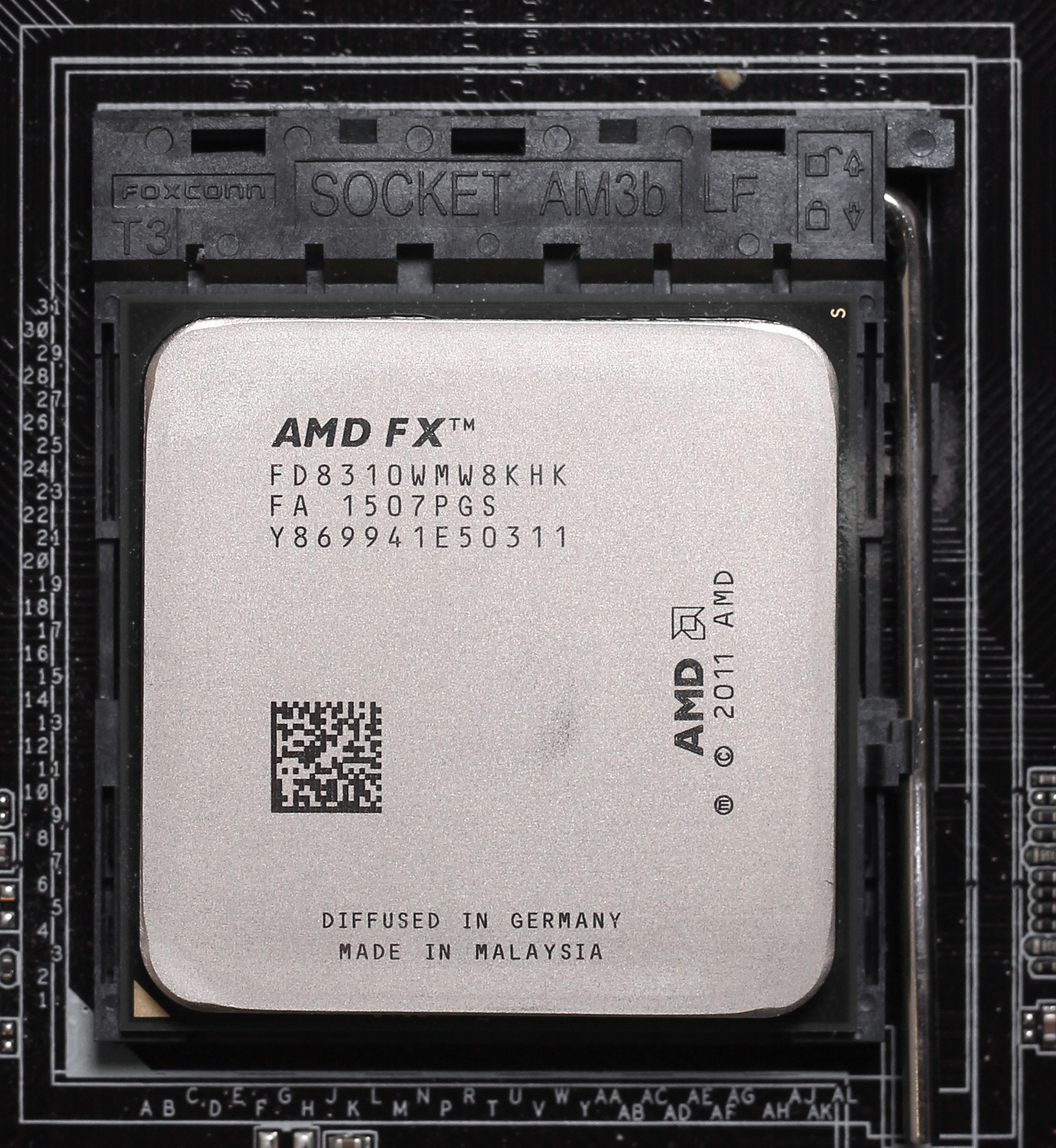
A persistent controversy revolves around market dominance and alleged anti-competitive practices. Intel has faced numerous antitrust investigations and significant fines globally. AMD has often accused Intel of leveraging its dominant market position to stifle competition. Another debate centers on the true meaning of "core count" and performance metrics; while AMD initially pushed higher core counts with its Bulldozer and Vishera architectures, Intel's more efficient cores often delivered better single-threaded performance, leading to ongoing discussions about which metric truly matters for different workloads. The reliance on external foundries like TSMC for AMD, versus Intel's in-house manufacturing, also sparks debate about supply chain stability and technological independence.
🔮 Future Outlook & Predictions
The future of the CPU market will likely be defined by the escalating integration of AI capabilities directly into processors. Both AMD and Intel are betting heavily on Neural Processing Units (NPUs) to accelerate AI tasks locally, reducing reliance on discrete GPUs or cloud processing. Intel's Gaudi accelerators and AMD's Instinct accelerators signal their ambitions in the AI hardware space beyond traditional CPUs. Furthermore, the ongoing miniaturization of manufacturing processes, with both companies targeting sub-2nm nodes, will continue to drive performance and efficiency. The potential for RISC-V architecture to emerge as a viable open-source alternative to the proprietary x86 standard also looms as a long-term disruptive force, though its immediate impact on the high-performance desktop and server markets remains speculative.
💡 Practical Applications
The practical applications of AMD and Intel processors are ubiquitous. In the consumer space, they power everything from budget laptops and gaming PCs to high-end workstations for video editing and 3D rendering. For professionals, Intel's Xeon and AMD's EPYC processors are the backbone of data centers, cloud computing infrastructure, and supercomputers used for scientific research, financial modeling, and AI training. The performance differences between their product lines directly influence the capabilities of these applications; for instance, a gamer might choose an AMD Ryzen CPU for its superior multi-core gaming performance, while a content creator might opt for an Intel processor known for its strong single-core speed and integrated graphics capabilities. The choice of CPU profoundly impacts user experience and computational power across virtually every digital domain.
Key Facts
- Category
- technology
- Type
- topic