
Contents
Overview
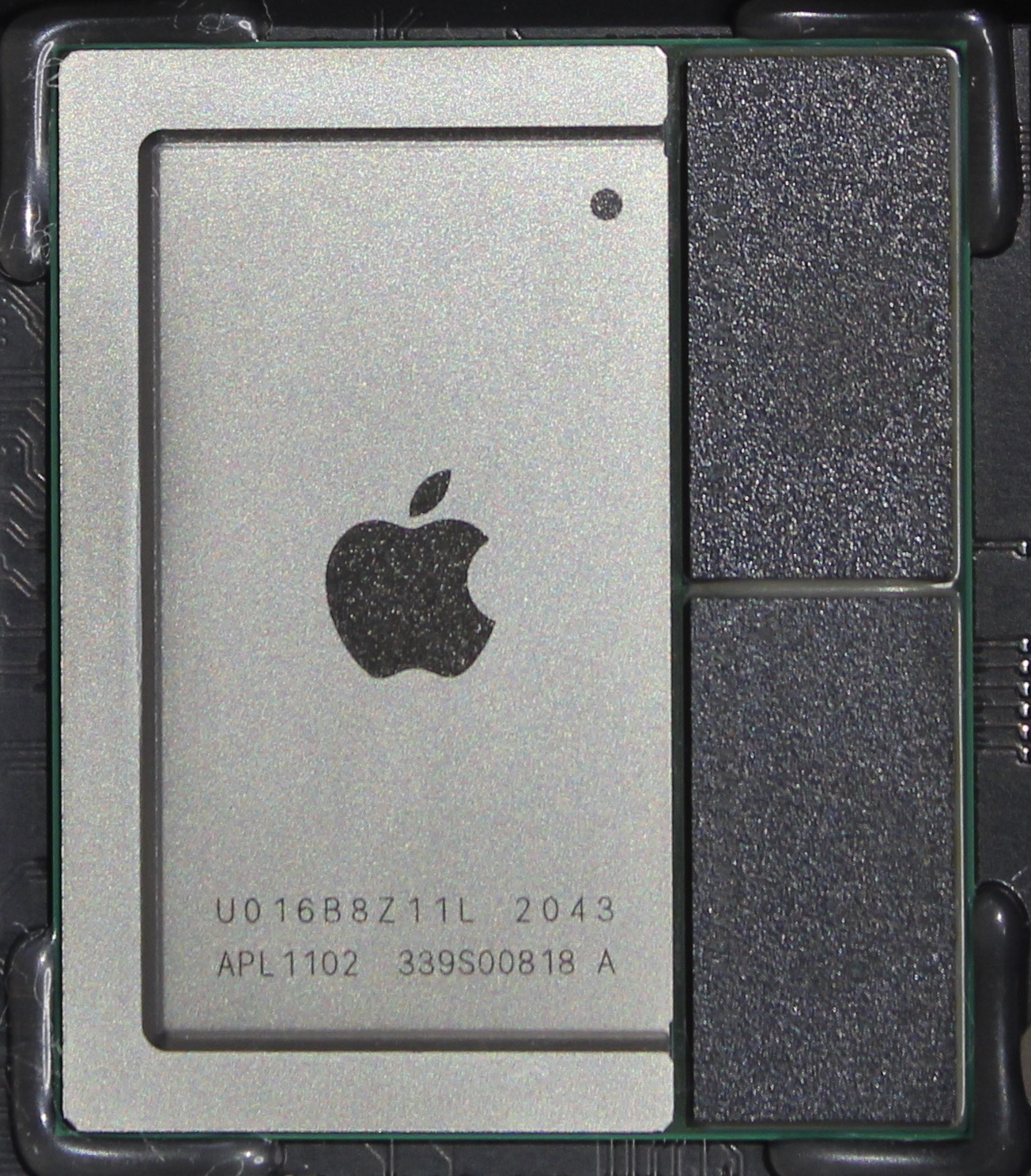
The M1 Max emerged from Apple's ambitious 'Apple Silicon' initiative, a strategic pivot away from Intel processors. Building on the success and efficiency of its predecessor, the M1 Max was engineered for the professional macOS ecosystem. This release signaled Apple's intent to cater to distinct tiers of professional users, with the M1 Max positioned as the ultimate performance engine. Its development was a direct response to the growing demands of creative professionals who relied on Macs for intensive tasks, pushing the boundaries of what was previously achievable with laptop and compact desktop form factors. The M1 Max's architecture was a testament to years of ARM architecture expertise cultivated by Apple, drawing from their mobile chip designs and scaling them up for desktop-class performance.
⚙️ How It Works
At its core, the M1 Max is a sophisticated System on a Chip (SoC) that integrates multiple critical components onto a single piece of silicon, manufactured using a 5nm process. It features a powerful CPU, designed to balance raw computational power with energy conservation. The true differentiator for the M1 Max lies in its integrated GPU, offering a massive leap in graphical processing capabilities compared to the original M1. Furthermore, it includes a Neural Engine for accelerated machine learning tasks, a dedicated media engine for hardware-accelerated encoding and decoding of video codecs like H.264 and HEVC, and a unified memory architecture. This unified memory system allows the CPU, GPU, and other processing units to access the same pool of high-bandwidth, low-latency memory—without copying data, drastically improving performance and efficiency for memory-intensive applications.
📊 Key Facts & Numbers
The M1 Max is a colossal chip, packing an astonishing number of transistors, dwarfing the original M1. This sheer scale translates into significant performance gains. Its memory bandwidth enables smoother handling of large datasets and complex visual assets. In benchmarks, the M1 Max offered impressive performance in specific professional application tests, particularly those optimized for Apple's graphics API. This performance was delivered while maintaining impressive power efficiency, with Apple touting industry-leading performance per watt.
👥 Key People & Organizations
The M1 Max is a product of Apple Inc.'s internal silicon engineering division, a team that has grown exponentially in influence since the company began designing its own A-series chips for iPhones and iPads. While specific engineers are rarely named publicly by Apple, the leadership of Tim Cook as CEO and Jeff Williams as Chief Operating Officer has overseen the strategic direction of Apple Silicon. Key figures in the broader Apple Silicon project, though not exclusively tied to the M1 Max, include Jony Ive (former Chief Design Officer) whose design philosophy influenced the integration of hardware and software, and Johny Srouji, Senior Vice President of Hardware Technologies, who has been instrumental in leading the development of Apple's custom silicon since 2010. The M1 Max is primarily found in high-end MacBook Pro models and the Mac Studio desktop.
🌍 Cultural Impact & Influence
The introduction of the M1 Max fundamentally shifted the perception of what was possible in professional mobile and compact desktop computing. For video editors, 3D artists, and developers, it meant significantly reduced render times and the ability to work with larger, more complex projects on a portable machine. This performance boost, coupled with the efficiency gains, allowed for longer battery life in laptops, a critical factor for professionals on the go. The M1 Max also accelerated the adoption of Metal, Apple's graphics API, as developers optimized their software to take full advantage of the chip's capabilities. Its success has put immense pressure on competitors like Intel and AMD to deliver comparable performance and efficiency in their own architectures, particularly within the laptop space. The chip's integration into the Apple ecosystem further solidified the appeal of Macs for creative professionals, reinforcing Apple's dominance in certain creative industries.
⚡ Current State & Latest Developments
As of late 2024, the M1 Max continues to be a powerful option for professionals, though it has been succeeded by the M2 Pro and M2 Max and the M3 Max chips. However, many existing MacBook Pro and Mac Studio machines equipped with the M1 Max remain highly capable, with Apple continuing to provide software updates and support. The primary development in the M1 Max's current state is its ongoing integration into workflows and its continued presence in the used and refurbished markets. While new product announcements from Apple have moved to newer architectures, the M1 Max represents a significant benchmark in Apple's silicon journey and remains a relevant choice for users seeking high-end performance without necessarily needing the absolute latest generation. Its legacy is now being cemented as a foundational chip in Apple's professional silicon lineage.
🤔 Controversies & Debates
The M1 Max, while widely praised for its performance and efficiency, has not been without its controversies. One persistent debate revolves around its unified memory architecture; while offering incredible bandwidth, the inability to upgrade RAM post-purchase has been a point of contention for users with extremely demanding, memory-hungry workflows who might have previously opted for systems with user-replaceable modules. Critics argue this 'soldered' RAM limits the longevity and upgradeability of the machines. Another area of discussion is the performance comparison against high-end discrete GPUs from Nvidia and AMD. While the M1 Max excels in many optimized professional applications, particularly those leveraging Metal, some specialized workloads, especially in gaming or certain scientific simulations that rely heavily on CUDA or OpenCL, may still favor dedicated discrete graphics cards. Furthermore, the initial cost of M1 Max-equipped machines, especially with maximum RAM configurations, places them in a premium price bracket, raising questions about accessibility for smaller studios or individual creators.
🔮 Future Outlook & Predictions
The future of Apple's professional silicon, including successors to the M1 Max, points towards continued integration of AI and machine learning capabilities, further increases in core counts and clock speeds, and potentially even more advanced manufacturing processes. While the M1 Max itself is now a generation behind, its architectural principles—unified memory, integrated GPU, and dedicated media engines—will undoubtedly inform future designs. We can anticipate future chips to offer even greater memory capacities and bandwidth, potentially breaking the 400GB/s barrier, and further optimization for Apple's own software suite and emerging creative tools. The trend is clearly towards more powerful, more integrated, and more power-efficient processors that blur the lines between desktop and mobile performance, pushing the boundaries of what users can achieve on Apple hardware. The ongoing competition with Intel and AMD will likely drive further innovation across the entire industry.
💡 Practical Applications
The M1 Max finds its primary application in high-performance computing for creative professionals. This includes demanding tasks such as editing high-resolution video footage (e.g., 4K and 8K ProRes workflows), complex 3D rendering and animation using software like Blender and Cinema 4D, advanced photo editing with large RAW files in applications like Adobe Lightroom, an
Key Facts
- Category
- technology
- Type
- topic