
Contents
Overview
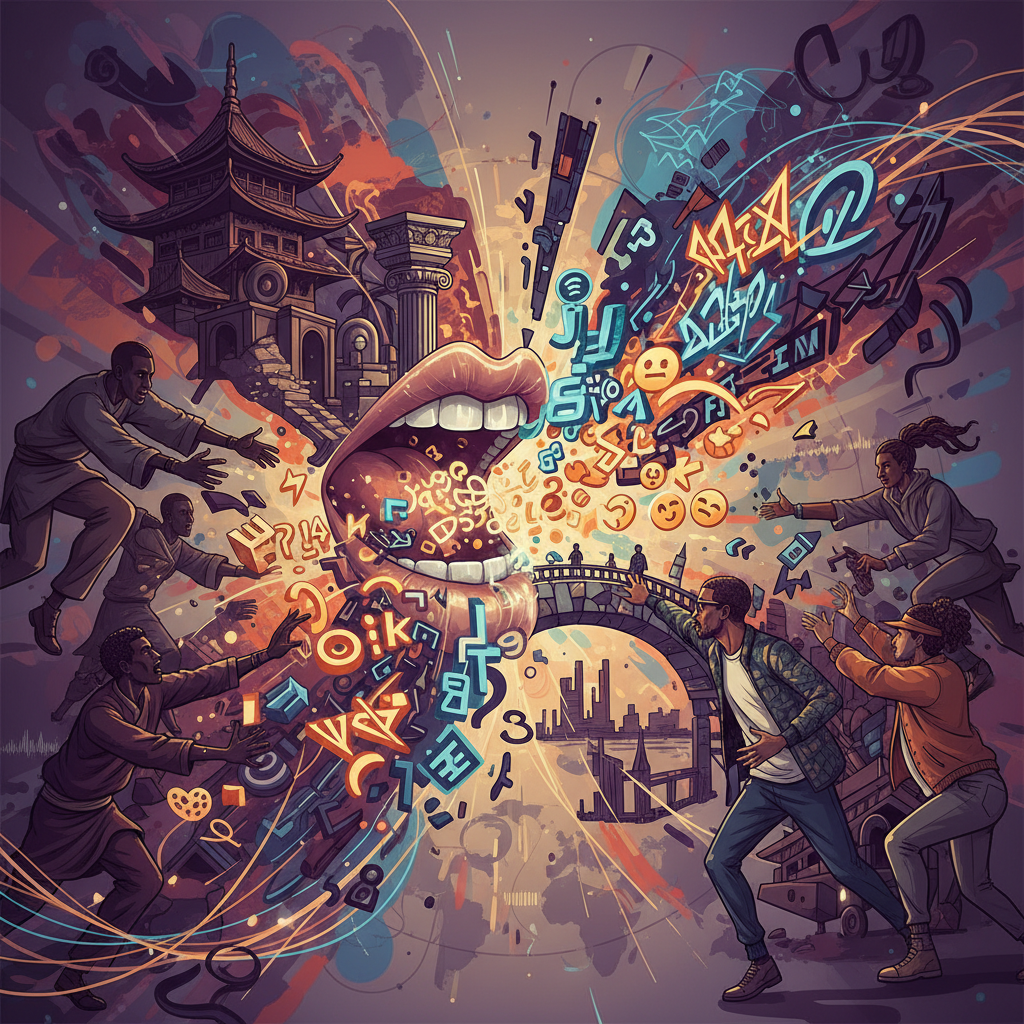
Slang has always been a dynamic aspect of language, evolving with generations and often originating within specific communities. Historically, marginalized groups have used slang as a form of identity, solidarity, and even resistance. For instance, African American Vernacular English (AAVE), with roots stretching back to the era of slavery and evolving through movements like the Great Migration, has been a rich source of linguistic innovation. Similarly, the LGBTQ+ community has developed distinct slang, particularly within the ballroom scene, as documented in discussions surrounding the origins of terms like 'slay.' These linguistic creations serve as a powerful marker of in-group belonging and cultural heritage, as explored in academic works like Rachel E. Laing's 'Linguistic Appropriation of Slang Terms within the Popular Lexicon.' The very nature of slang, as a fluid and evolving form of communication, makes it susceptible to adoption by broader society, a process that has been significantly accelerated by the digital age and platforms like YouTube and Tumblr.
⚙️ How It Works
The process of slang appropriation typically involves the adoption of terms from a non-dominant culture by a dominant one. This often happens without a deep understanding or respect for the original context, meaning, or cultural significance of the words. Social media platforms, particularly TikTok, have become major conduits for this phenomenon, leading to terms originating in communities like Black Americans being recontextualized as 'TikTok language' or 'Gen Z slang.' This can result in 'indexical erasure,' where the connection of the slang to its original speakers and cultural roots is lost, as discussed in the Journal of Sociolinguistics. Members of dominant groups may adopt these terms to gain social status or appear 'cooler,' as noted on Reddit's r/asklinguistics, sometimes without realizing the origins or the potential harm caused by stripping the language of its heritage. This mirrors historical patterns where slang from minority groups was often dismissed as 'improper English' until it became mainstream.
🌍 Cultural Impact
The cultural impact of slang appropriation is multifaceted and often contentious. While some argue that the widespread adoption of slang can foster a sense of unity, it frequently leads to the trivialization and commodification of the originating culture's linguistic capital. For example, the appropriation of AAVE by non-Black creators has been criticized as a form of 'digital Blackface,' where elements of Black culture are used for personal gain or entertainment without acknowledging their origins or the systemic discrimination faced by Black speakers. This can lead to a loss of authenticity and a sense of dispossession for the source community, as highlighted in articles from The Spectrum and Aurora Magazine. The ethical considerations become particularly acute when brands engage in linguistic appropriation, using sacred or culturally significant terms without proper appreciation, as discussed in 'The Ethics of Language Appropriation.' This practice can perpetuate harmful stereotypes and reinforce existing power imbalances, as explored in 'Dear White People: Don’t Use these Slang Words.'
🔮 Legacy & Future
The legacy of slang appropriation is an ongoing debate about cultural ownership, respect, and the future of language in a hyper-connected world. As platforms like TikTok continue to shape linguistic trends, the tension between cultural appreciation and appropriation remains a critical issue. Scholars are increasingly examining the sociolinguistic implications, urging for greater awareness and sensitivity to the origins and meanings of slang. The conversation extends beyond mere word usage to encompass broader discussions about identity, power dynamics, and the ethical responsibilities of creators and consumers in the digital space. Ultimately, navigating this complex landscape requires a commitment to understanding, acknowledging, and respecting the cultural heritage embedded within language, ensuring that linguistic exchange fosters genuine connection rather than cultural erasure, a principle echoed in discussions about 'Professional Networking Strategies' and the broader 'Digital Music Revolution.' The ongoing dialogue on platforms like Reddit and in academic journals underscores the need for critical engagement with how language shapes our understanding of culture and identity.
Key Facts
- Year
- Ongoing
- Origin
- Global, with specific roots in marginalized communities
- Category
- slang
- Type
- concept
Frequently Asked Questions
What is slang appropriation?
Slang appropriation is the adoption of slang terms from a marginalized community by members of a dominant culture, often without understanding or respecting the original context, meaning, or cultural significance. This can lead to the erasure of the slang's origins and the trivialization of the originating culture.
How does social media contribute to slang appropriation?
Social media platforms like TikTok and Reddit have significantly accelerated the spread of slang. Viral trends can quickly popularize terms, often detaching them from their original cultural context and speakers. This rapid dissemination can lead to widespread adoption by individuals who may not be aware of or respect the slang's heritage.
What are the ethical concerns surrounding slang appropriation?
The primary ethical concerns involve disrespect for the originating culture, the erasure of linguistic heritage, and the potential for commodification and trivialization of cultural expressions. It raises questions about who has the right to use certain language and the power dynamics involved when dominant groups adopt elements from marginalized communities.
Is all use of slang from other cultures considered appropriation?
Not necessarily. The line between appreciation and appropriation can be blurry. Genuine appreciation often involves understanding, respect, and acknowledgment of the source. Appropriation typically involves a lack of understanding, a disregard for context, and often a power imbalance where the dominant group benefits from the cultural elements of a marginalized group.
What is the difference between slang appropriation and cultural exchange?
Cultural exchange is typically a reciprocal process built on mutual respect, understanding, and acknowledgment between cultures. Slang appropriation, on the other hand, often involves a one-sided adoption where elements are taken from a marginalized culture by a dominant one, frequently without proper credit or respect, and can perpetuate power imbalances.
References
- scrippsnews.com — /us-news/race-in-america/how-gen-z-slang-connects-to-black-culture-appropriation
- ubspectrum.com — /article/2024/09/slang-from-appropriation-to-bringing-communities-together
- reddit.com — /r/linguistics/comments/2xqe13/slang_and_cultural_appropriation/
- reddit.com — /r/asklinguistics/comments/1ckqx54/why_does_so_much_slang_from_minority_communit
- acbc89.medium.com — /dear-white-people-dont-use-these-slang-words-afbfd20bceab
- ir.library.illinoisstate.edu — /cgi/viewcontent.cgi
- aurora.dawn.com — /news/1145216/the-ethics-of-language-appropriation
- hum.byu.edu — /iykyk-unraveling-the-secrets-of-slang