
Contents
- 🎧 What is Audio Resolution, Really?
- 📈 The Bit Depth & Sample Rate Showdown
- 🎶 Beyond CD Quality: The Hi-Res Revolution
- 👂 The Human Ear: Our Resolution Limit?
- 🎚️ Dynamic Range: The Quietest to Loudest
- 💡 The Engineering Behind the Vibe
- 💸 Is Higher Resolution Worth the Cost?
- 🚀 The Future of Audio Fidelity
- Frequently Asked Questions
- Related Topics
Overview
Audio resolution, often discussed in terms of bit depth and sample rate, dictates the fidelity and detail of digital sound. Bit depth determines the dynamic range – the difference between the loudest and quietest sounds a system can reproduce – with higher bit depths offering more subtle gradations. Sample rate, measured in kilohertz (kHz), defines how many times per second the analog audio signal is measured and converted into digital data; a higher sample rate captures more of the original waveform's nuances, particularly in higher frequencies. Understanding these parameters is crucial for audiophiles, producers, and anyone seeking to appreciate the full spectrum of recorded sound, from the faintest whisper to the most thunderous crescendo.
🎧 What is Audio Resolution, Really?
Audio resolution, at its heart, dictates how accurately digital audio captures the nuances of an analog sound wave. Think of it as the detail level in a photograph. While often simplified to bits and hertz, true resolution is a multi-dimensional concept that impacts everything from the subtle decay of a cymbal to the whisper of a vocalist's breath. For audiophiles and sound engineers alike, understanding these parameters is crucial for appreciating or creating truly immersive sound experiences. It's the difference between a sketch and a masterpiece, rendered in sound.
📈 The Bit Depth & Sample Rate Showdown
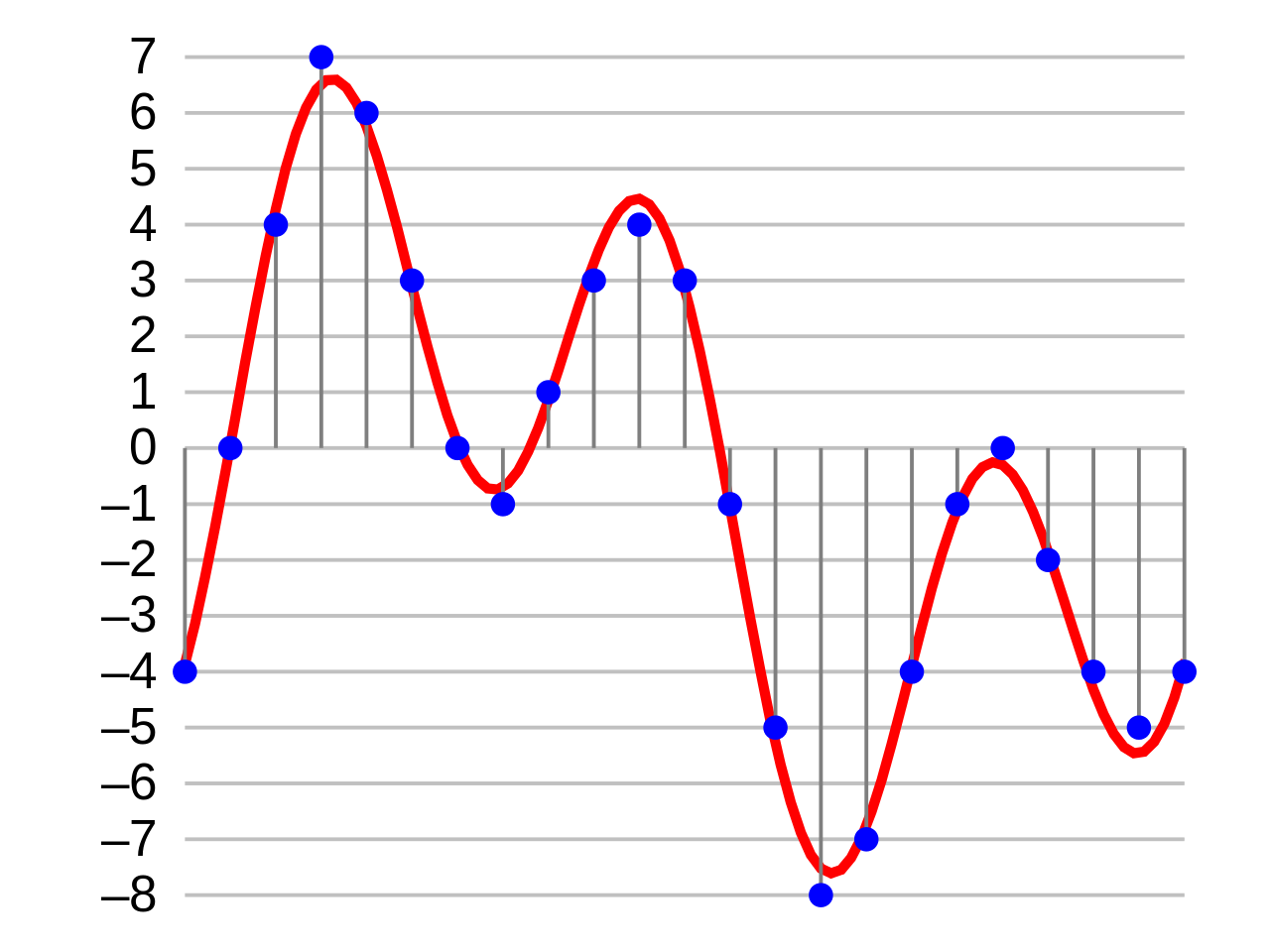
The two pillars of digital audio resolution are bit depth and sample rate. Bit depth, measured in bits (e.g., 16-bit for CDs, 24-bit for studio masters), determines the number of discrete amplitude values available for each sample. More bits mean finer gradations, translating to lower noise and greater dynamic range. Sample rate, measured in Hertz (Hz) or Kilohertz (kHz), dictates how many times per second the analog signal is measured. A higher sample rate, like 44.1 kHz for CDs or 96/192 kHz for high-resolution formats, captures higher frequencies and transient details more faithfully. These two work in tandem to define the fidelity of a digital audio stream.
🎶 Beyond CD Quality: The Hi-Res Revolution
The advent of hi-res audio formats has pushed the boundaries beyond the 16-bit/44.1 kHz standard established by the Compact Disc. Formats like DVD-Audio and Blu-ray Disc, and more recently, streaming services offering lossless tiers, provide resolutions up to 24-bit/192 kHz and beyond. This leap allows for a more faithful reproduction of master recordings, capturing a wider dynamic range and a more extended frequency response. For listeners, this can translate to a more spacious, detailed, and lifelike listening experience, especially with well-produced recordings. It's a conscious effort to bring the listener closer to the original studio performance.
👂 The Human Ear: Our Resolution Limit?
While technology can push resolution to incredible theoretical limits, our own biology imposes a practical ceiling. The human ear can typically perceive frequencies up to around 20 kHz, and our dynamic range, while impressive, is not infinite. Some argue that sample rates beyond 48 kHz offer diminishing returns for human perception, particularly concerning ultrasonic frequencies. However, the debate continues, with proponents of higher sample rates citing benefits in transient detail and the potential for psychoacoustic effects that enhance the perceived realism, even if the frequencies themselves aren't directly audible. It’s a fascinating interplay between engineering and psychoacoustics.
🎚️ Dynamic Range: The Quietest to Loudest
Dynamic range is a critical, often overlooked, aspect of audio resolution. It's the ratio between the loudest possible signal and the quietest discernible signal before it’s lost in the noise. A higher bit depth directly contributes to a wider dynamic range. For instance, 16-bit audio offers a theoretical dynamic range of about 96 dB, while 24-bit can reach up to 144 dB. This is crucial for music with significant variations in loudness, from delicate pianissimos to thunderous fortissimos, allowing for a more impactful and realistic portrayal of the performance without clipping or excessive noise.
💡 The Engineering Behind the Vibe
The engineering of audio resolution involves sophisticated ADCs and DACs. These components are responsible for the crucial conversion between the analog world of sound waves and the digital realm of bits and samples. High-quality converters, coupled with meticulous circuit design and jitter reduction, are essential for preserving the integrity of the audio signal throughout the conversion process. The pursuit of pristine audio often comes down to minimizing distortion and preserving the subtle timing and amplitude information captured at the source.
💸 Is Higher Resolution Worth the Cost?
The question of whether higher audio resolution is worth the investment is a perennial debate. High-resolution files are significantly larger, demanding more storage space and bandwidth for streaming. While the audible difference can be profound for some listeners with high-quality playback systems, others may find the distinction subtle or imperceptible, especially on less revealing equipment. The cost in terms of storage, bandwidth, and potentially more expensive hardware is a tangible factor. Ultimately, the value is subjective and depends on individual listening habits, equipment, and critical listening skills.
🚀 The Future of Audio Fidelity
The future of audio resolution is likely to involve further refinement of existing technologies and perhaps entirely new approaches. 3D audio formats, which encode not just amplitude and frequency but also positional information, are gaining traction, offering a different dimension of immersion. Advancements in AI audio might also play a role in optimizing or even reconstructing audio signals. While the pursuit of ultimate fidelity will continue, the industry may also focus on making high-resolution audio more accessible and practical for everyday listening, bridging the gap between technical specifications and the listener's experience.
Key Facts
- Year
- 1982
- Origin
- The development of digital audio recording technologies, notably the Sony PCM-1610 used for the first CD mastering in 1982, established the foundational metrics of bit depth and sample rate that define audio resolution.
- Category
- Audio Technology
- Type
- Technical Concept
Frequently Asked Questions
What is the difference between bit depth and sample rate?
Bit depth determines the amplitude resolution of each audio sample, essentially how many distinct volume levels are available. Higher bit depth means more precise amplitude representation and lower noise. Sample rate determines how many times per second the audio signal is measured and converted into digital data. Higher sample rates capture higher frequencies and faster transients more accurately. Both are crucial for overall audio fidelity.
Is 24-bit/192 kHz audio truly audible?
The audibility of 24-bit/192 kHz audio is a subject of ongoing debate. While it offers theoretical advantages in dynamic range and frequency response, many listeners, especially with standard equipment, may not perceive a significant difference compared to 16-bit/44.1 kHz. Proponents argue that the benefits are subtle but contribute to a more realistic and detailed soundstage, particularly with high-end audio systems and well-mastered recordings.
What are the main benefits of high-resolution audio?
High-resolution audio, typically defined as better than CD quality (e.g., 24-bit/96 kHz or higher), offers potential benefits such as a wider dynamic range, a more extended frequency response, and improved transient detail. This can lead to a more immersive, detailed, and lifelike listening experience, capturing subtle nuances in music that might be lost in lower-resolution formats. It aims to reproduce the sound as closely as possible to the original studio master.
How does bit depth affect dynamic range?
Bit depth directly impacts the dynamic range of digital audio. Each additional bit provides approximately 6 dB of additional dynamic range. Therefore, 16-bit audio has a theoretical dynamic range of about 96 dB, while 24-bit audio can achieve up to 144 dB. This wider range allows for greater contrast between the loudest and quietest parts of a recording, preventing clipping and preserving subtle details.
Are there any downsides to using high-resolution audio files?
Yes, there are several downsides. High-resolution audio files are significantly larger than standard CD-quality files, requiring more storage space on devices and consuming more bandwidth for streaming. This can also lead to longer download times. Additionally, to fully appreciate the benefits, a high-quality playback system, including DACs and headphones or speakers, is often necessary, which can be a considerable investment.
What is the role of DACs in audio resolution?
Digital-to-Analog Converters (DACs) are critical components that translate digital audio data back into an analog signal that speakers or headphones can reproduce. The quality of the DAC significantly influences the final sound. A high-quality DAC can more accurately reconstruct the original analog waveform from the digital data, preserving subtle details, reducing distortion, and contributing to a more faithful and enjoyable listening experience, regardless of the source file's resolution.