
Contents
Overview
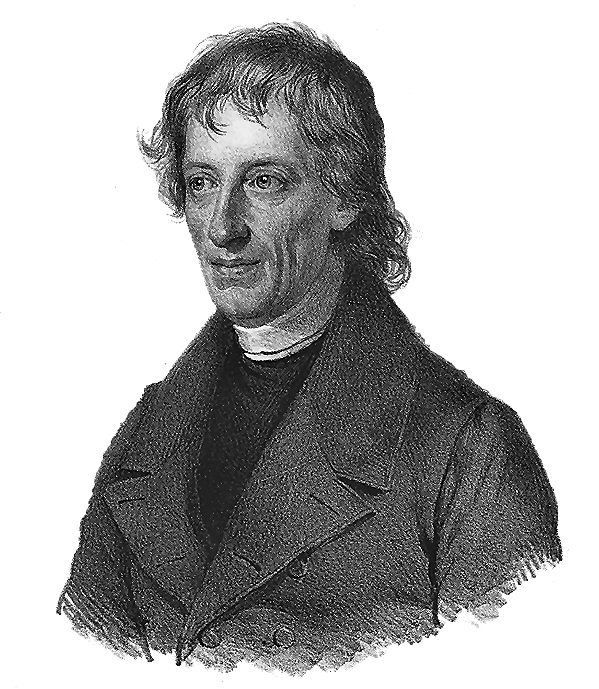
Bernhard Bolzano (1781–1848) was a Bohemian mathematician, logician, philosopher, theologian, and Catholic priest whose profound contributions were largely unrecognized during his lifetime. Born in Prague, he was a prolific writer whose work anticipated key developments in mathematical analysis, logic, and the philosophy of mathematics. Bolzano's rigorous approach to concepts like infinitesimals and his formalization of logical principles, particularly in his magnum opus Wissenschaftslehre (Theory of Science), challenged prevailing philosophical and mathematical paradigms. Despite facing censorship and academic ostracism for his liberal and pacifist views, his ideas on set theory, continuity, and the foundations of mathematics would later resonate with mathematicians like Weierstrass and Dedekind, cementing his posthumous reputation as a pivotal figure in the history of thought.
🎵 Origins & History
Bernhard Bolzano's father, Giovanni Bolzano, was an Italian immigrant who had settled in Prague. He studied theology and philosophy at the Piarist College and Gymnasium in Prague, and later mathematics and physics at the University of Prague. His academic career at the University of Prague was marked by both brilliance and conflict; he was appointed professor of the philosophy of religion but was later dismissed due to his pacifist and reformist writings, which drew the ire of Austrian authorities. This dismissal, though a setback, allowed him to dedicate more time to his extensive research, much of which would only gain traction decades after his death.
⚙️ How It Works
Bolzano's intellectual framework, particularly as laid out in his Wissenschaftslehre (Theory of Science), sought to establish a rigorous foundation for all knowledge. Bolzano distinguished between subjective knowledge (how we know things) and objective knowledge (the truths themselves), arguing for the primacy of the latter. He introduced the concept of a 'mathematical collection' (Menge), a precursor to modern set theory, and explored the properties of infinite sets. His logical investigations focused on the analysis of propositions, truth values, and the structure of arguments, laying groundwork for formal logic and the philosophy of mathematics by emphasizing the objective existence of abstract entities independent of the human mind.
📊 Key Facts & Numbers
His younger brother, Josef Bolzano, was also a mathematician and helped preserve some of Bernhard's unpublished manuscripts.
👥 Key People & Organizations
Key figures associated with Bolzano include his father, Giovanni Bolzano, who instilled in him a strong work ethic and intellectual curiosity, and his younger brother, Josef Bolzano, who was also a mathematician and helped preserve some of Bernhard's unpublished manuscripts. His academic home was the University of Prague, where he held the chair of Philosophy of Religion. However, his controversial views led to conflict with the university administration and the Austrian government, culminating in his dismissal. Philosophers and mathematicians like Bernard Bolzano Society scholars, including Jan Berg and contemporary researchers like Michael Potter, have been instrumental in re-evaluating and popularizing his work. His ideas on continuity and infinity were later appreciated by mathematicians such as Richard Dedekind and Karl Weierstrass, who independently developed similar concepts.
🌍 Cultural Impact & Influence
Bolzano's influence on modern mathematics and logic is substantial, though often indirect and posthumous. His rigorous definition of continuity for functions, which did not rely on geometric intuition, was a crucial step towards the epsilon-delta definition later popularized by Karl Weierstrass. His work on infinite sets, particularly in Paradoxes of the Infinite, laid conceptual groundwork for set theory and the understanding of transfinite numbers. In logic, his emphasis on the objective existence of propositions and his detailed analysis of logical structures anticipated developments in mathematical logic and the philosophy of mathematics. Despite facing censorship from the Austrian government, his writings circulated among intellectuals, and his ideas gradually filtered into the mainstream, impacting fields far beyond his initial academic appointments. His legacy is that of a thinker whose insights were too advanced for his own era.
⚡ Current State & Latest Developments
In the 21st century, Bernhard Bolzano continues to be a subject of intense academic interest, particularly among historians of mathematics and logic. The Bernard Bolzano Society, founded in 1970, actively promotes research into his life and work, publishing journals and organizing conferences. Recent scholarship has focused on his contributions to intuitionism in mathematics. His ethical and political philosophy, which advocated for pacifism and social reform. Digital humanities projects are increasingly digitizing and analyzing his extensive manuscripts, making his complex thought more accessible. The ongoing re-evaluation of his contributions highlights his role as a precursor to many 20th-century mathematical and logical innovations, solidifying his status as a foundational figure.
🤔 Controversies & Debates
Bolzano's liberal and pacifist views led to significant controversy during his lifetime. His essay On the Best State of a Republic was placed on the Index of Forbidden Books and contributed to his dismissal from the University of Prague. His philosophical stance, which posited the existence of objective, mind-independent truths (called 'Satz an sich' or 'propositions in themselves'), was also a point of contention, challenging prevailing idealist philosophies. Furthermore, his mathematical rigor, particularly his treatment of infinitesimals and infinite sets, was so far ahead of its time that it was often misunderstood or dismissed by his contemporaries, who were still grappling with the foundational issues of calculus. The debate continues regarding the extent to which his work was truly original versus a rediscovery or precursor to later developments.
🔮 Future Outlook & Predictions
The future outlook for Bolzano's legacy is one of continued scholarly excavation and reinterpretation. As mathematicians and philosophers delve deeper into the historical development of their disciplines, Bolzano's prescient insights into continuity, infinity, and logic are likely to gain further recognition. There is potential for his work to inform contemporary discussions in areas like computability theory and the foundations of artificial intelligence, particularly concerning formal systems and the nature of truth. The ongoing digitization of his manuscripts by institutions like the Czech Academy of Sciences will undoubtedly uncover new facets of his thought. The challenge remains to integrate his complex philosophical system with modern scientific understanding, ensuring his ideas continue to resonate beyond specialized academic circles.
💡 Practical Applications
While Bolzano's direct practical applications were limited by the academic and political constraints of his era, his theoretical work has profound indirect implications. His rigorous definition of continuity is fundamental to calculus and analysis, underpinning countless engineering, physics, and economics models that rely on continuous functions. His work on infinite sets and collections is foundational to set theory, which is itself a bedrock of modern mathematics and computer science, essential for understanding data structures and algorithms. His logical investigations contribute to the formal systems used in computer science and formal verification of software and h
Key Facts
- Category
- philosophy
- Type
- topic