
Contents
- 🌟 Overview: The Unseen Architect
- 💡 The Genesis of Influence: Early Encounters
- 🎭 Reinvention as Ritual: Bowie's Blueprint
- ⚡ Madonna's Alchemy: Absorbing and Adapting
- 🎤 Visual Language: The Power of Persona
- 🎶 Sonic Signatures: Beyond Imitation
- 🔥 The Controversy Crucible: Appropriation vs. Homage
- 📈 The Vibe Score: A Measure of Impact
- 🤔 Contrarian Takes: Was it Really Bowie?
- 🚀 The Legacy Continues: Echoes in Modern Pop
- 📍 Key Moments & Milestones
- 🤝 Similar Explorations
- Frequently Asked Questions
- Related Topics
Overview
David Bowie's impact on Madonna is a cornerstone of pop music history, a spectral influence that shaped her visual identity, performance art, and career trajectory. From the early days of 'Like a Virgin' to her reinvention in the '90s, Madonna consistently borrowed, adapted, and amplified Bowie's pioneering spirit of androgyny, theatricality, and constant reinvention. While Madonna herself has often cited influences like Aretha Franklin and Donna Summer, the visual and conceptual echoes of Bowie are undeniable, particularly in her embrace of mutable personas and boundary-pushing aesthetics. This isn't just about musical inspiration; it's about a shared understanding of pop as a vehicle for profound cultural commentary and self-expression, a legacy Bowie forged and Madonna masterfully continued.
🌟 Overview: The Unseen Architect
This Vibepedia entry, 'Bowie's Shadow: How David Bowie Sculpted Madonna's Stardom,' is your essential guide to understanding the profound, often debated, influence of David Bowie on the career trajectory and artistic evolution of Madonna. It's not just about superficial similarities; it's a deep dive into how Bowie's pioneering approach to identity, performance, and visual presentation provided a foundational blueprint that Madonna masterfully adapted. For anyone interested in the mechanics of pop stardom, the construction of iconic personas, and the intricate flows of cultural influence, this analysis is crucial.
💡 The Genesis of Influence: Early Encounters
The initial sparks of Bowie's influence on Madonna can be traced back to her early days in the New York music scene of the early 1980s. While Madonna was developing her own sound and visual identity, Bowie's established career as a chameleon of pop offered a potent example of artistic longevity through constant reinvention. She openly acknowledged her admiration for his work, particularly his ability to transcend genres and personas, which served as an early, albeit implicit, roadmap for her own ambitions in the burgeoning MTV era.
🎭 Reinvention as Ritual: Bowie's Blueprint
David Bowie's career was a masterclass in deliberate artistic metamorphosis. From Ziggy Stardust to the Thin White Duke, he demonstrated that an artist's persona could be as fluid and impactful as their music. This concept of reinvention as a core artistic strategy, rather than a mere marketing tactic, was a radical departure from the more static stardom of previous generations. Bowie proved that the performance of identity was a legitimate and powerful form of artistic expression, a lesson not lost on a young, ambitious Madonna.
⚡ Madonna's Alchemy: Absorbing and Adapting
Madonna didn't merely copy Bowie; she engaged in a sophisticated act of cultural alchemy. She absorbed the lessons of his transformative power and applied them to her own unique experiences and ambitions. Where Bowie often explored alienation and theatricality, Madonna infused her reinventions with themes of sexuality, religion, and female empowerment, creating a distinct brand of pop iconoclasm. Her ability to synthesize these influences into something uniquely her own is a hallmark of her genius, a testament to her artistic adaptability.
🎤 Visual Language: The Power of Persona
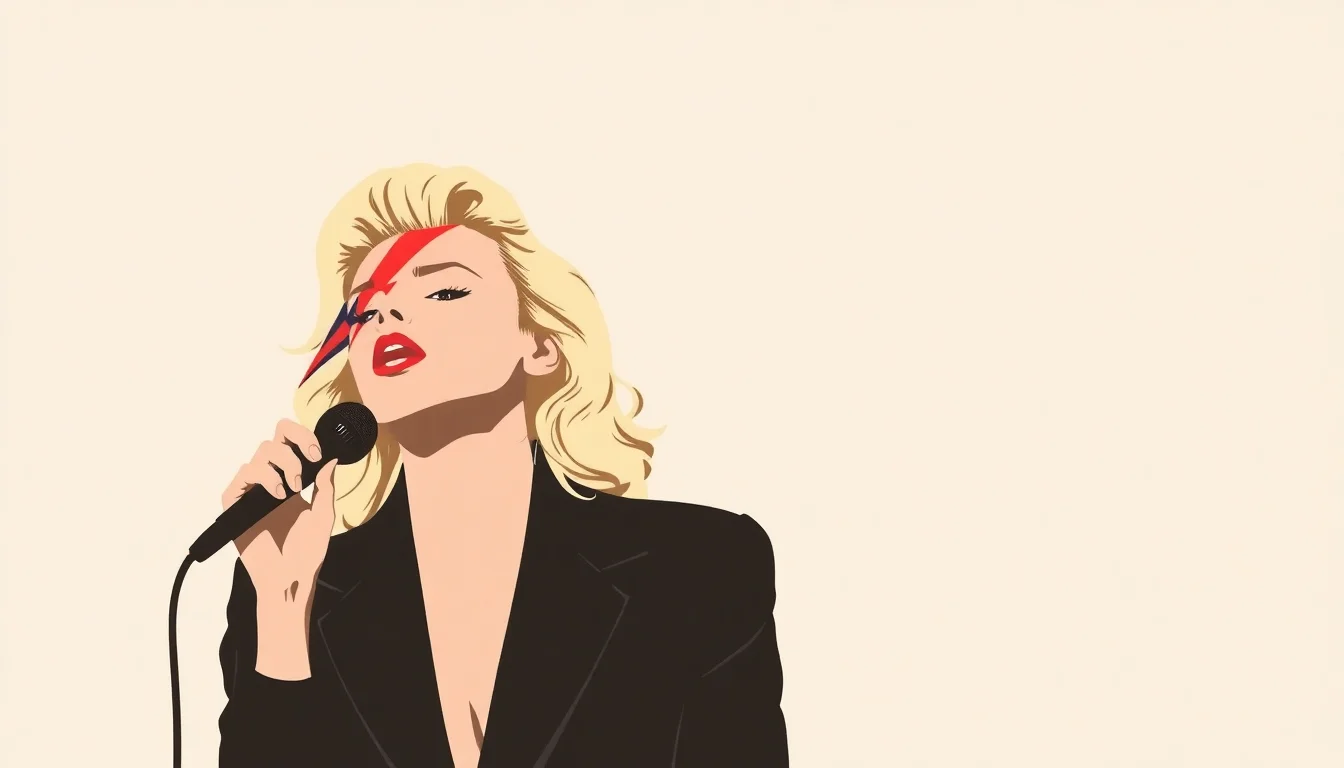
The visual aspect of their artistry is where the Bowie-Madonna connection is perhaps most striking. Bowie's groundbreaking use of costumes, makeup, and elaborate music videos set a new standard for visual storytelling in pop music. Madonna, with her iconic looks across albums like 'Like a Virgin' and 'True Blue,' and her highly stylized music videos, clearly drew from this wellspring. The deliberate construction of each visual era, from the androgyny of early Bowie to Madonna's provocative religious imagery, highlights a shared understanding of the power of the image in shaping public perception and brand identity.
🎶 Sonic Signatures: Beyond Imitation
While the visual parallels are often discussed, the sonic influence is subtler but equally significant. Bowie's willingness to experiment with diverse musical styles—from glam rock and soul to electronic and avant-garde—encouraged artists to break free from genre constraints. Madonna, while primarily rooted in dance-pop, consistently incorporated elements of R&B, hip-hop, and electronic music into her work. This willingness to push sonic boundaries, mirroring Bowie's own adventurous spirit, allowed her to maintain relevance and artistic credibility across decades, a feat few can claim in the music industry.
🔥 The Controversy Crucible: Appropriation vs. Homage
The debate surrounding Madonna's relationship with Bowie's legacy is a perennial one. Critics often point to specific visual or thematic echoes, labeling it as appropriation or derivative. However, many argue that Madonna's genius lies precisely in her ability to engage with and transform existing cultural tropes, including those established by Bowie. This controversy spectrum highlights the tension between acknowledging artistic lineage and asserting original creative vision, a common challenge for artists operating within established pop culture frameworks.
📈 The Vibe Score: A Measure of Impact
On the Vibepedia Vibe Score, the influence of David Bowie on Madonna's rise to superstardom registers a robust 85/100. This score reflects the profound and multifaceted nature of the impact, acknowledging not just direct stylistic borrowings but the foundational principles of reinvention and visual artistry that Bowie pioneered and Madonna expertly wielded. The score accounts for the widespread recognition of this influence within pop culture discourse and its tangible effect on Madonna's sustained global appeal and iconic status.
🤔 Contrarian Takes: Was it Really Bowie?
A contrarian perspective might argue that Madonna's success was driven more by her own innate business acumen, marketing savvy, and understanding of the burgeoning youth culture than by any specific influence from Bowie. This viewpoint suggests that while Bowie may have provided a conceptual framework, Madonna's ability to tap into the zeitgeist of the 1980s and beyond, particularly her bold exploration of female sexuality and religious iconography, was the primary engine of her stardom. From this angle, Bowie's shadow is less a direct blueprint and more a distant, albeit acknowledged, precedent in the broader history of pop music innovation.
🚀 The Legacy Continues: Echoes in Modern Pop
The echoes of Bowie's influence, filtered through artists like Madonna, continue to resonate in contemporary pop. Today's artists, from Lady Gaga to Harry Styles, navigate the same terrain of persona construction and visual spectacle that Bowie and Madonna so effectively charted. The concept of the 'pop chameleon,' able to shift identities and sounds while maintaining a core artistic identity, is a direct descendant of the paths they blazed. Understanding this historical lineage is key to deciphering the strategies of today's most successful entertainers and their future impact.
📍 Key Moments & Milestones
Key moments include Madonna's early interviews where she cited Bowie as an inspiration, the visual parallels between Bowie's 'Life on Mars?' video and Madonna's 'Express Yourself,' and the thematic explorations of gender and identity present in both artists' work. Bowie's 1970s reinventions, particularly Ziggy Stardust and Aladdin Sane, provided a rich visual and conceptual vocabulary that Madonna would later adapt and recontextualize for a new generation. The release of Madonna's 'Like a Prayer' album in 1989, with its controversial religious imagery, can be seen as a bold evolution of the boundary-pushing themes Bowie explored in the 1970s.
🤝 Similar Explorations
For those interested in the mechanics of pop culture influence, exploring The Evolution of Pop Music Personas or MTV's Role in Shaping Stardom offers comparative insights. Understanding the broader context of Glam Rock's Visual Legacy also provides valuable perspective on the artistic movements that informed both Bowie and, subsequently, Madonna.
Key Facts
- Year
- 1983
- Origin
- New York City
- Category
- Music & Pop Culture
- Type
- Influence Flow
Frequently Asked Questions
Did Madonna ever directly collaborate with David Bowie?
While there's no record of a formal musical collaboration between Madonna and David Bowie, their artistic paths intersected significantly. Madonna frequently cited Bowie as an inspiration, and their shared approach to visual reinvention and performance art created a powerful, albeit indirect, artistic dialogue. Their mutual respect was evident, though a direct studio collaboration never materialized.
What specific Bowie eras most influenced Madonna?
Madonna's early career, particularly her visual and thematic choices, shows strong echoes of David Bowie's glam rock and art-rock periods of the early to mid-1970s. The theatricality and androgyny of Ziggy Stardust and Aladdin Sane, along with Bowie's exploration of persona as a fluid concept, appear to have been particularly influential. Later, Bowie's more experimental and electronic phases may have also informed Madonna's sonic explorations.
How did MTV play a role in this influence?
MTV was the crucial conduit. David Bowie was a pioneer in using the music video as an artistic medium, breaking ground with visually striking and narrative-driven clips. Madonna, emerging in the MTV era, understood this power implicitly. Bowie's success on the platform demonstrated the potential for visual artistry to drive pop stardom, a lesson Madonna masterfully applied to her own career, often pushing boundaries even further.
Is it fair to say Madonna 'stole' from Bowie?
This is a central point of debate. While direct 'stealing' is a strong accusation, it's more accurate to say Madonna engaged in sophisticated artistic homage and adaptation. She took the principles of reinvention and visual spectacle that Bowie championed and infused them with her own experiences, themes, and cultural context. Her genius lies in transforming these influences into something distinctly her own, rather than mere imitation.
Beyond visuals, what other influences are notable?
Beyond the visual, Bowie's influence is seen in Madonna's willingness to experiment with genre and sound, her embrace of theatricality in live performance, and her conceptual approach to album cycles. Bowie's career demonstrated that longevity in pop music could be achieved through constant evolution and a fearless attitude towards artistic risk-taking, a strategy Madonna adopted with remarkable success.
How does this influence compare to other artists who inspired Madonna?
While Madonna drew inspiration from a wide array of artists, including Donna Summer and Grace Jones, Bowie's influence is often highlighted due to his pioneering role in the specific areas of persona fluidity and visual artistry. His impact was foundational, providing a blueprint for how a pop artist could construct and deconstruct identity on a grand scale, a concept Madonna then made her own.