
Contents
Overview
The concept of business continuity, formalized as Business Continuity Planning (BCP), emerged as a critical discipline to ensure organizational resilience against unforeseen events. While informal preparedness measures have always existed, the modern approach to BCP gained traction with increasing technological reliance and the growing awareness of systemic risks, such as those highlighted by major disruptions like the Y2K scare and subsequent global events. Organizations like the Business Continuity Institute (BCI) and standards bodies such as ISO (with ISO 22301) have been instrumental in defining frameworks and best practices, evolving from simple disaster recovery to comprehensive management systems that address a wide spectrum of threats, from cyberattacks to pandemics, as seen during the COVID-19 pandemic.
⚙️ How It Works
At its core, business continuity involves a structured process of identifying critical business functions, assessing potential risks and their impacts through a Business Impact Analysis (BIA), and developing strategies to maintain or recover these functions. This includes establishing clear roles and responsibilities for continuity teams, creating detailed response and recovery plans, and implementing robust communication protocols. Key elements often involve IT disaster recovery (DRP), data backup and restoration, and ensuring the availability of essential resources, as detailed in guidance from FEMA and organizations like IBM. The goal is to achieve predefined recovery time objectives (RTOs) and recovery point objectives (RPOs), ensuring minimal disruption to services and operations.
🌍 Cultural Impact
The cultural impact of business continuity is profound, shifting organizational mindsets from reactive crisis management to proactive resilience building. It fosters a culture of preparedness, where employees at all levels understand their roles in maintaining operations during adverse events. This preparedness is not just about technical recovery; it extends to human resources, ensuring employee safety and well-being, as emphasized by resources from Canada.ca and BDC. The widespread adoption of BCPs, driven by regulatory requirements and the increasing frequency of disruptions, has made resilience a boardroom imperative, influencing corporate governance and stakeholder trust, as noted by Investopedia and Protecht.
🔮 Legacy & Future
The legacy of business continuity planning lies in its evolution from a niche IT concern to a strategic, organization-wide imperative. Future trends point towards greater integration with enterprise risk management (ERM), enhanced use of AI and automation for predictive analysis and response, and a continued focus on supply chain resilience and cyber threats. Standards like ISO 22301 and the BCI's Good Practice Guidelines will continue to shape the field, promoting a holistic approach to resilience. As the threat landscape becomes more complex, with challenges like climate change and geopolitical instability, business continuity will remain a vital discipline for ensuring organizational survival and success, as explored by sources like Quantive and Wikipedia.
Key Facts
- Year
- 2000s-Present
- Origin
- Global
- Category
- technology
- Type
- concept
Frequently Asked Questions
What is the primary goal of business continuity?
The primary goal of business continuity is to ensure that an organization can continue to deliver its critical products and services at acceptable levels during and after a disruptive incident, minimizing downtime and financial impact.
What is the difference between business continuity and disaster recovery?
Business continuity (BC) is a broader concept that focuses on maintaining essential business functions during and after a disruption. Disaster recovery (DR) is a subset of BC that specifically deals with restoring IT systems and data after a disaster.
What are the key steps in developing a business continuity plan?
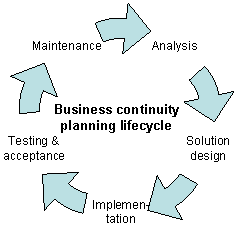
Key steps include performing a business impact analysis (BIA), assessing risks and threats, developing recovery strategies, creating the plan document, and conducting regular training and testing.
What are some common threats that business continuity plans address?
Common threats include natural disasters (e.g., floods, earthquakes), cyberattacks (e.g., ransomware, data breaches), power outages, supply chain failures, pandemics, and human errors.
Why is regular testing of a business continuity plan important?
Regular testing is crucial to identify weaknesses in the plan, ensure that response teams are prepared, validate recovery procedures, and make necessary updates to keep the plan effective and relevant.
References
- en.wikipedia.org — /wiki/Business_continuity_planning
- thebci.org — /thought-leadership/what-is-business-continuity.html
- jpmorgan.com — /insights/business-planning/what-is-a-business-continuity-plan
- quantive.com — /resources/articles/business-continuity-strategy
- continuity2.com — /blog/10-best-practices-for-effective-business-continuity-strategy
- investopedia.com — /terms/b/business-continuity-planning.asp
- ibm.com — /think/topics/business-continuity
- canada.ca — /en/services/policing/emergencies/continuity.html