
Contents
Overview
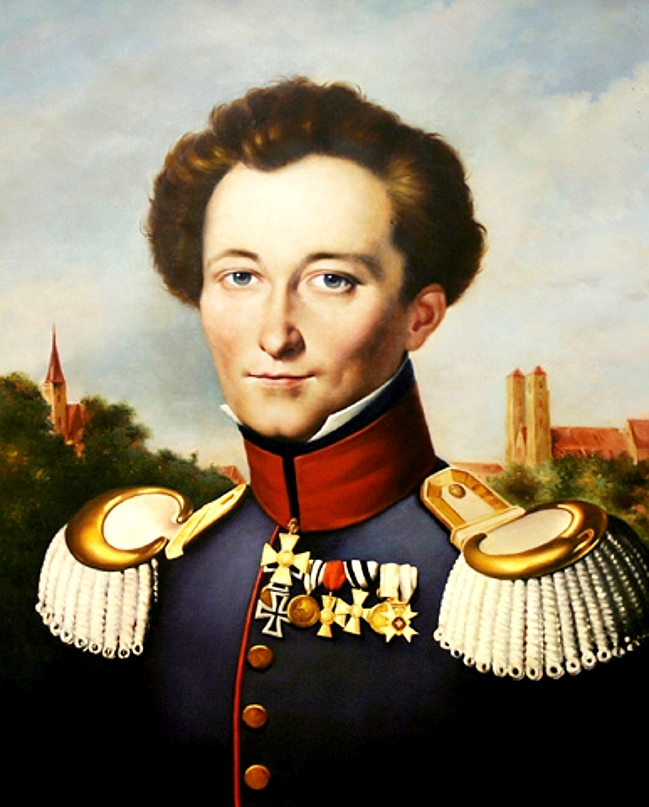
Carl Philipp Gottlieb Clauswitz was born on July 1, 1780, in Burg, near Magdeburg, in the Kingdom of Prussia. His family, though claiming noble lineage, was of modest means, and his father served as a junior officer in the Prussian army. Clausewitz entered military service at the tender age of twelve, joining the Prussian infantry as a junior officer in 1792. His early combat experience during the French Revolutionary Wars, particularly the disastrous campaigns against Napoleon Bonaparte's forces, profoundly shaped his thinking. He witnessed firsthand the limitations of rigid, traditional military doctrine when confronted by the revolutionary fervor and strategic genius of the French. This period of Prussian military humiliation, culminating in the Treaty of Tilsit in 1807, spurred Clausewitz to pursue rigorous intellectual study, leading him to the Prussian War College (Kriegsakademie) in Berlin, where he would later teach and develop his groundbreaking theories on war.
⚙️ How It Works
Clausewitz's core contribution lies in his conceptualization of war not as an isolated event but as an intrinsic part of political life. He famously posited that war is 'a continuation of politics by other means,' meaning that military action must always serve clear political objectives. He distinguished between 'absolute war' – a theoretical, unrestrained conflict – and 'real war,' which is always constrained by political considerations and the friction of reality. This friction, he argued, is amplified by the 'fog of war,' a state of uncertainty and confusion arising from incomplete information, fear, and the sheer chaos of battle. Unlike theorists like Antoine-Henri Jomini, who sought to codify war into geometric principles, Clausewitz emphasized the dynamic, psychological, and unpredictable nature of conflict, stressing the importance of commander's intuition and moral strength in navigating these complexities.
📊 Key Facts & Numbers
Clausewitz served in the Prussian military for over four decades, rising to the rank of Major General. He participated in numerous campaigns, including the Napoleonic Wars, where he served with Russian forces against Napoleon from 1812 to 1813. His seminal work, On War (Vom Kriege), was published posthumously in 1832, compiled by his wife, Marie von Brühl, from his extensive notes and manuscripts. The book comprises ten volumes, with the first three considered the most complete. It has been translated into over 30 languages and has sold millions of copies worldwide. Despite its theoretical depth, On War is estimated to have been read in its entirety by fewer than 1% of military officers globally, yet its core concepts permeate strategic thinking.
👥 Key People & Organizations
Key figures surrounding Clausewitz include his wife, Marie von Brühl, who meticulously edited and published his unfinished magnum opus, On War. His intellectual contemporaries and rivals included Antoine-Henri Jomini, a Swiss-French general whose more systematic approach to military strategy offered a contrasting perspective. Clausewitz served under and was influenced by Prussian reformers like Gerhard von Scharnhorst. His ideas were later championed and adapted by military leaders and theorists such as Helmuth von Moltke the Elder, Alfred von Schlieffen, and B.H. Liddell Hart. The Prussian General Staff, which Clausewitz helped to shape through his teaching and writings, became a model for military organizations worldwide, including the U.S. Army War College.
🌍 Cultural Impact & Influence
Clausewitz's influence on military thought is immeasurable, earning him the moniker 'the father of modern warfare.' His concept of war as a political instrument has been central to strategic doctrine for centuries, shaping the thinking of military leaders and policymakers across the globe. His ideas were particularly influential during the World Wars. His writings continue to be studied at military academies from West Point to the Royal Military Academy Sandhurst. Beyond the military, his theories on strategy, competition, and the interplay of objective and subjective factors have found resonance in fields as diverse as business strategy, political science, and game theory. The term 'Clausewitzian' itself has become shorthand for a pragmatic, politically-oriented approach to conflict.
⚡ Current State & Latest Developments
In the 21st century, Clausewitz's theories remain remarkably relevant, albeit constantly reinterpreted. Contemporary discussions on hybrid warfare, cyber warfare, and the role of non-state actors often engage with Clausewitzian principles, questioning how his framework applies to conflicts lacking clear political actors or traditional battlefields. Military institutions continue to grapple with the 'fog of war' in the age of artificial intelligence and advanced surveillance, seeking to apply Clausewitz's insights to new technological landscapes. Academic discourse on On War remains vibrant, with scholars debating its applicability to modern geopolitical challenges and the ethical dimensions of warfare in an era of nuclear deterrence.
🤔 Controversies & Debates
The primary controversy surrounding Clausewitz revolves around the interpretation and application of his work. Critics, particularly in the early 20th century, accused him of glorifying war and advocating for total, unrestrained conflict, a view often fueled by misinterpretations of his 'absolute war' concept. Conversely, others argue that his emphasis on political control and the psychological aspects of war actually serves as a cautionary principle against unnecessary or politically bankrupt military engagements. The debate over whether Clausewitz is a guide to waging war more effectively or a profound warning about its inherent dangers continues to this day, with his writings often cited by proponents of both hawkish and dovish foreign policy stances.
🔮 Future Outlook & Predictions
The future of Clausewitzian thought will likely involve continued adaptation to evolving forms of conflict. As state-based warfare becomes less common and asymmetric conflicts and information warfare proliferate, strategists will need to critically assess how Clausewitz's core tenets – political objectives, friction, and the psychological dimension – apply. There is also ongoing scholarly interest in exploring the philosophical underpinnings of his work, particularly its relationship to German Idealism and Hegelian thought. The challenge for future generations will be to avoid dogmatic adherence to his text while still drawing profound insights from his enduring analysis of the human condition in conflict.
💡 Practical Applications
Clausewitz's theories are not confined to military academies; they have significant practical applications across various domains. In business strategy, his principles are used to analyze competitive landscapes, understand market dynamics, and develop strategic plans, viewing market share battles as a form of 'war.' Diplomats and policymakers apply his insights to understand the political underpinnings of international relations and the use of coercive diplomacy. Even in sports analytics, coaches might analyze team dynamics and opponent strategies through a Clausewitzian lens, focusing on psychological advantages and adapting to unexpected game developments. His work provides a framework for understanding any competitive endeavor where success hinges on strategic planning, psychological resilience, and political maneuvering.
Key Facts
- Category
- philosophy
- Type
- topic