
Contents
Overview
The story of Chicago Midway International Airport begins in 1927, initially known as the Chicago Municipal Airport. Its strategic location on the city's southwest side, approximately 12 miles from the Loop, made it an ideal candidate for a major aviation center. For years, it served as Chicago's sole major airport, witnessing the dawn of commercial aviation and the rapid advancements in aircraft technology. The airport's name was officially changed to Midway Airport in 1949, a solemn commemoration of the decisive Battle of Midway, a significant naval engagement in World War II. This renaming marked a significant moment, tying the airport's identity to a pivotal moment in American military history. The subsequent opening of O'Hare International Airport in 1944 shifted the primary focus of air traffic, but Midway continued to evolve, adapting to new airlines and passenger demands.
⚙️ How It Works
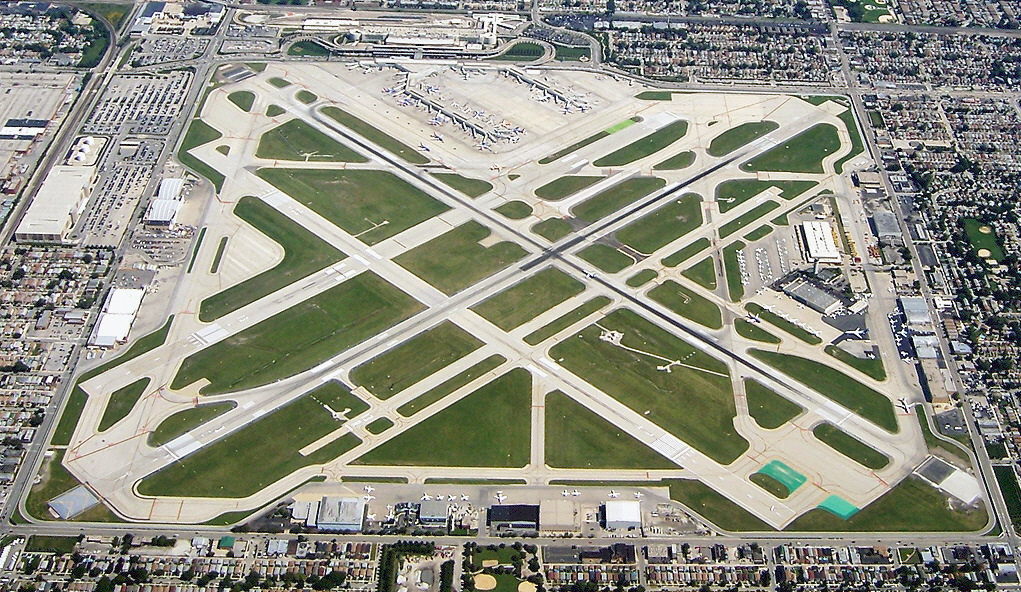
Midway International Airport operates as a bustling hub primarily for Southwest Airlines. The airport's infrastructure is designed to handle a high volume of domestic traffic, with a central terminal complex that underwent significant modernization. The airfield itself occupies a square mile, meticulously bounded by 55th and 63rd Streets, and Central and Cicero Avenues. Its layout facilitates efficient aircraft movement, crucial for meeting the demands of a major carrier like Southwest. The terminal complex, completed in 2001, features multiple concourses and gates designed to accommodate a steady flow of passengers, with amenities catering to travelers on short to medium-haul flights. Air traffic control at MDW is managed by the FAA, ensuring safe and orderly operations for the hundreds of daily flights.
📊 Key Facts & Numbers
In 2023 alone, Chicago Midway International Airport processed an impressive 22,050,489 passengers, underscoring its significant role in air travel. This figure places it as the second-busiest airport in the Chicago metropolitan area and the state of Illinois, trailing only its larger counterpart, O'Hare. Southwest Airlines accounts for an overwhelming majority of this traffic, operating over 90% of the flights and carrying more than 90% of the passengers. The airport boasts approximately 43 gates spread across its concourses, facilitating the high operational tempo. Its operational capacity allows for an average of over 700 daily departures, a testament to its efficiency and the demands of its primary carrier.
👥 Key People & Organizations
The operational heart of Midway International Airport beats strongest with Southwest Airlines, whose commitment has defined the airport's modern era. Gary Kelly, former CEO of Southwest, was instrumental in solidifying the airline's presence at MDW, transforming it into a major focus city for the carrier. The City of Chicago owns and operates Midway, with the Chicago Department of Transportation overseeing its management. Historically, figures like Mayor Richard J. Daley were involved in the airport's development and expansion phases. The defunct Midway Airlines, once headquartered at the airport, also played a role in its operational history, though its own story concluded in 1991.
🌍 Cultural Impact & Influence
Midway International Airport's cultural resonance is deeply intertwined with its historical significance and its role as a gateway to Chicago. The naming of the airport after the Battle of Midway imbues it with a sense of national pride and remembrance, a constant reminder of a critical turning point in World War II. For generations of Chicagoans, MDW has been the familiar starting point for vacations, family visits, and business trips, fostering a sense of local identity. Its prominence in the Southwest Airlines network has also shaped its public perception, often associated with the airline's famously friendly service and value-oriented travel. The airport has been a backdrop in numerous films and television shows, further embedding it in popular culture as a quintessential American airport.
⚡ Current State & Latest Developments
In the current landscape, Midway International Airport continues its robust operation, largely driven by Southwest Airlines. The airline has maintained its dominant position, consistently investing in its operations at MDW. Recent developments include ongoing infrastructure improvements aimed at enhancing passenger experience and operational efficiency, such as terminal upgrades and improved concourse amenities. The airport is also adapting to evolving travel trends, with a focus on sustainability and technological integration. While O'Hare handles more international traffic and overall volume, Midway remains a critical hub for domestic travel, particularly for leisure and business travelers in the Midwest. Discussions around potential route expansions and airline partnerships continue to shape its future trajectory.
🤔 Controversies & Debates
One of the persistent debates surrounding Midway International Airport centers on its capacity and its relationship with O'Hare International Airport. While MDW serves a substantial number of passengers, its operational footprint is significantly smaller than O'Hare's, leading to discussions about potential route duplication versus specialized roles. Critics sometimes point to the limited international flight options compared to O'Hare, though this is largely by design, with MDW focusing on domestic connectivity. Noise pollution for surrounding neighborhoods has historically been a point of contention, a common issue for urban airports, though mitigation strategies are continuously employed. The dominance of a single airline, Southwest Airlines, also raises questions about market competition and passenger choice, although Southwest's model itself is a significant draw for many travelers.
🔮 Future Outlook & Predictions
The future outlook for Midway International Airport appears stable, largely tethered to the strategic decisions of Southwest Airlines. Projections suggest continued strong domestic passenger volumes, especially as air travel rebounds and grows. There's potential for modest route expansion, particularly to underserved domestic markets, as Southwest continues to optimize its network. Infrastructure investments are likely to focus on modernization and sustainability, potentially incorporating more advanced technologies for passenger processing and energy efficiency. While it's unlikely to surpass O'Hare in overall size or international reach, Midway is poised to remain a crucial and efficient hub for domestic travel in the Midwest, serving millions of passengers annually for the foreseeable future. The airport's ability to adapt to new aviation technologies and passenger expectations will be key to its long-term success.
💡 Practical Applications
Midway International Airport's primary practical application is as a major hub for domestic air travel, facilitating millions of passenger journeys annually. Its role as a primary base for Southwest Airlines means it's a critical point for connecting travelers across the United States, particularly within the Midwest and to popular leisure destinations. For businesses operating in the Chicago area, MDW offers a convenient and often more accessible option than O'Hare for domestic meetings and conferences. The airport's infrastructure also supports cargo operations, though this is secondary to its passenger focus. Furthermore, its historical significance makes it a point of interest for aviation enthusiasts and historians studying the evolution of air travel in America.
Key Facts
- Category
- places
- Type
- topic