
Contents
Overview
The history of coffee roasting companies is intrinsically tied to the spread of coffee consumption itself. While coffee cultivation originated in Ethiopia, the first coffee houses emerged in cities like Mecca and Constantinople, becoming centers for social and intellectual life, and the roasting of beans was a crucial, often public, part of their operation. The Industrial Revolution brought about significant changes, with the invention of larger, more efficient drum roasters by figures like Alfred Diedrich and the mechanization of the process, allowing for greater scale and consistency. Companies like J.M. Smucker (which later acquired Folgers) and Kraft Foods began to dominate the mass market with pre-packaged roasted coffee, shifting the industry towards industrial production. The late 20th and early 21st centuries have seen a resurgence of small-batch, artisanal roasters, driven by the specialty coffee movement and a consumer desire for transparency and unique flavor profiles, exemplified by companies like Stumptown Coffee Roasters and Blue Bottle Coffee.
⚙️ How Roasting Works
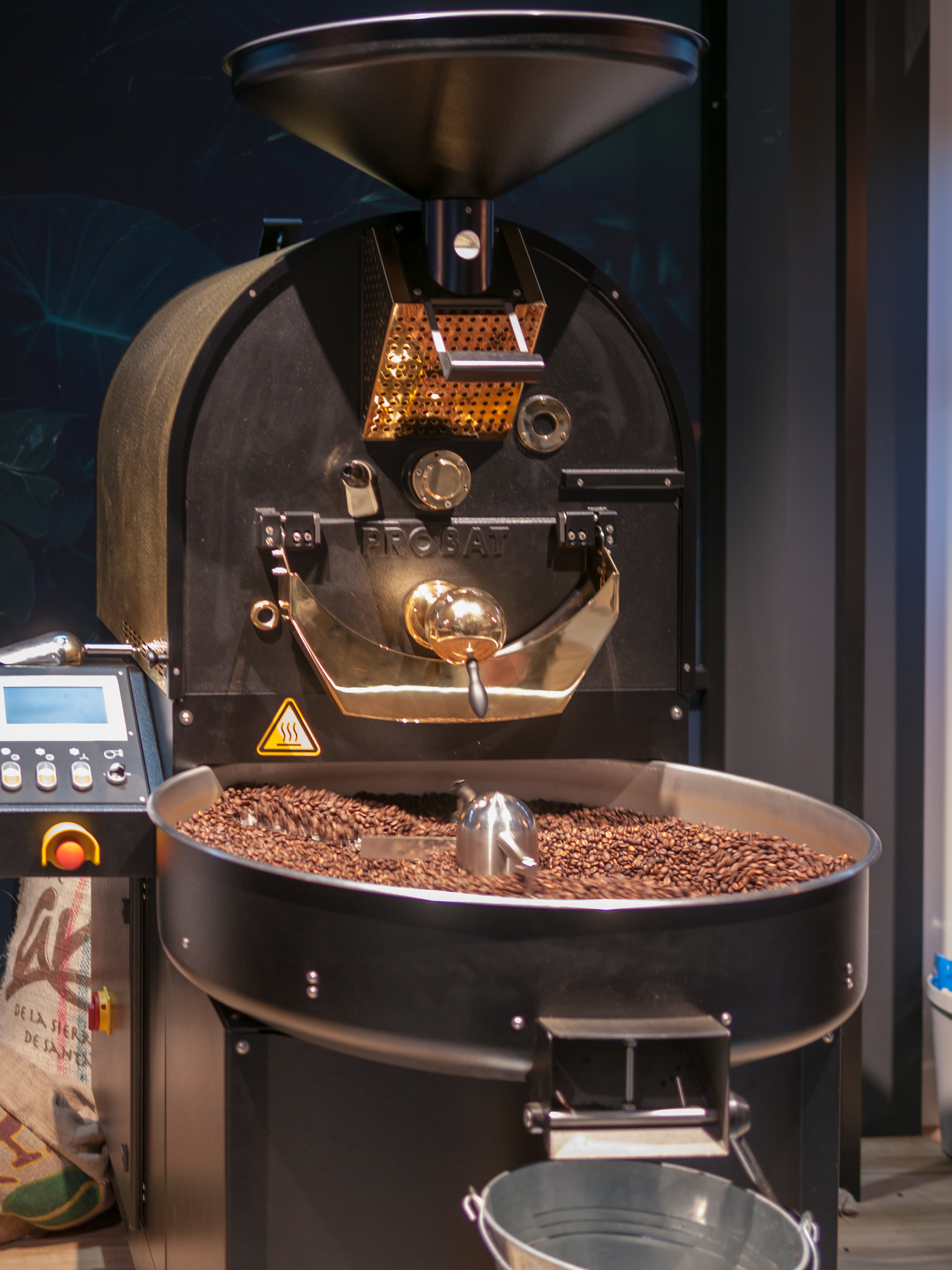
The core of a coffee roasting company's operation lies in the precise application of heat to green coffee beans. This process, typically conducted in specialized drum roasters or fluid-bed roasters, involves carefully controlling temperature, airflow, and time. Green beans, which are dense and possess grassy, vegetal aromas, undergo dramatic physical and chemical transformations. Sugars caramelize, acids break down, and volatile organic compounds develop, creating the complex flavor notes—fruity, floral, nutty, chocolatey—that consumers associate with coffee. The Maillard reaction and Strecker degradation are key chemical processes responsible for developing hundreds of aroma compounds. Roasters must manage the 'first crack' (an audible popping sound indicating the beans are expanding and releasing moisture) and 'second crack' (a quieter crackle signaling further breakdown of cellular structure and development of darker flavors) to achieve desired roast profiles. The final cooling of the beans, often done rapidly in a cooling tray, is critical to halt the roasting process and preserve the developed flavors. Companies invest heavily in understanding these variables to ensure consistency and quality across batches, often employing sophisticated roasting software and sensory analysis.
📊 Key Facts & Numbers
The global coffee market is colossal, with roasted coffee representing its most valuable segment. It's estimated that over 160 million bags of coffee (each 60kg) are consumed annually worldwide, with the vast majority being roasted domestically. The specialty coffee segment alone, driven by quality-focused roasting companies, is valued at over $30 billion globally and continues to grow at an estimated 10% per year. In the United States, the market for roasted coffee is projected to reach over $40 billion by 2027. A single large-scale industrial roaster, like those operated by Nestlé or Starbucks, can process upwards of 100,000 pounds of coffee per day. Conversely, a small artisanal roaster might process only 50-100 pounds per day. The price of green coffee beans fluctuates significantly based on origin, quality, and market conditions, with specialty-grade beans often fetching prices 50-100% higher than commodity-grade beans. Roasting companies must navigate these price volatilities while maintaining profitability, with profit margins for specialty roasters often ranging from 10-20% after all costs are accounted for.
👥 Key People & Organizations
The landscape of coffee roasting companies includes a diverse array of entities, from multinational corporations to independent craft businesses. Giants like Starbucks, Nestlé (owner of Nescafé), and J.M. Smucker (owner of Folgers) dominate the mass market with extensive distribution networks and brand recognition. In the specialty coffee arena, influential companies such as Stumptown Coffee Roasters, Blue Bottle Coffee (now owned by Nestlé), Intelligentsia Coffee, and Counter Culture Coffee have been pivotal in shaping consumer palates and promoting direct trade relationships with farmers. These companies often employ master roasters and invest in research and development to refine their techniques. Beyond these prominent names, thousands of smaller, local roasters operate globally, forming the backbone of the independent coffee scene. Organizations like the Specialty Coffee Association (SCA) play a crucial role in setting standards, providing education, and fostering community within the industry, influencing best practices for roasting companies worldwide.
🌍 Cultural Impact & Influence
Coffee roasting companies are not merely purveyors of a beverage; they are cultural architects, shaping daily rituals and social interactions. The rise of the specialty coffee movement, spearheaded by companies like Peet's Coffee and Four Barrel Coffee, has elevated coffee from a commodity to a craft, akin to wine or craft beer. This has fostered a global appreciation for terroir, processing methods, and roast profiles, influencing culinary trends and consumer expectations. Coffee shops, often the primary retail outlet for these roasters, have become third spaces—community hubs distinct from home and work. The branding and marketing employed by roasting companies, from the minimalist aesthetic of Blue Bottle Coffee to the rugged individualism of Dogtown Coffee, significantly impact consumer perception and loyalty. Furthermore, the ethical sourcing and sustainability initiatives championed by many roasters, such as direct trade programs and fair wages for farmers, have raised consumer awareness about the social and environmental impact of their coffee choices, influencing broader corporate responsibility trends.
⚡ Current State & Latest Developments
The coffee roasting industry is currently experiencing dynamic shifts. The specialty coffee sector continues its robust growth, with an increasing number of consumers seeking unique, ethically sourced beans and nuanced flavor profiles. This has led to a proliferation of small-batch roasters, both online and brick-and-mortar, catering to niche markets. Automation and data analytics are becoming increasingly sophisticated, with roasting companies leveraging AI and advanced sensors to optimize roast profiles and ensure batch-to-batch consistency. Sustainability remains a paramount concern, driving innovation in packaging (e.g., compostable bags), energy-efficient roasting technologies, and regenerative agriculture practices in coffee-producing regions. Direct trade relationships are becoming more formalized, with roasters investing in farmer training and infrastructure to improve bean quality and livelihoods. The COVID-19 pandemic accelerated the shift towards e-commerce, with many roasting companies significantly expanding their online sales channels and subscription services, a trend that shows no signs of abating. The rise of ready-to-drink (RTD) coffee, often produced by large roasting conglomerates like Starbucks and PepsiCo, also represents a significant growth area.
🤔 Controversies & Debates
The coffee roasting industry is not without its controversies and debates. A primary tension exists between large-scale industrial roasters and the artisanal specialty sector. Critics argue that industrial roasters prioritize volume and cost-efficiency over quality and ethical sourcing, sometimes using lower-grade beans and aggressive roasting to mask defects. Conversely, industrial players often point to their ability to provide affordable, consistent coffee to a mass market. The concept of 'direct trade' itself is debated; while often presented as a more equitable model, some question whether it truly benefits farmers or is merely a marketing tool. The environmental impact of coffee production and roasting, including water usage, energy consumption, and waste generation, is also a growing area of concern and discussion within the industry.
Key Facts
- Category
- culture
- Type
- topic