
Contents
Overview
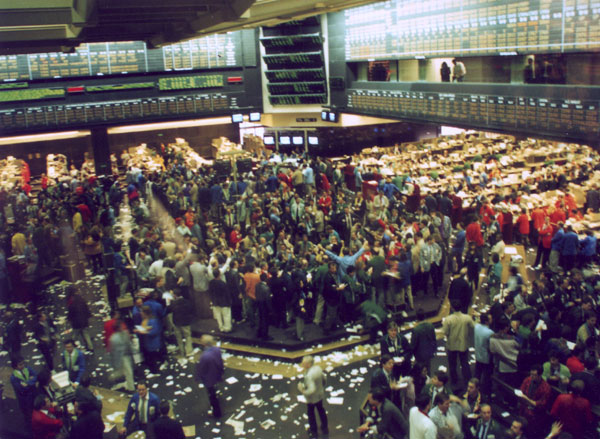
Commodity futures markets are global marketplaces where participants buy and sell contracts for the future delivery of raw materials. These markets, with origins stretching back centuries to manage agricultural price volatility, now facilitate massive financial speculation alongside their original hedging purpose. They operate through standardized contracts traded on exchanges such as the Chicago Mercantile Exchange and Intercontinental Exchange, with prices reflecting supply, demand, geopolitical events, and macroeconomic trends. The scale is staggering, with trillions of dollars in notional value traded annually, impacting everything from the cost of gasoline at the pump to the price of your morning coffee. Understanding these markets is crucial for producers, consumers, and investors alike, as they serve as both a vital risk management tool and a significant driver of global economic activity.
🎵 Origins & History
The genesis of commodity futures markets can be traced back to ancient Mesopotamia, where merchants used rudimentary forward contracts to secure prices for future grain harvests. This innovation allowed for price discovery and risk transfer, laying the groundwork for modern exchanges like the Chicago Mercantile Exchange (CME) and the Intercontinental Exchange (ICE). These early exchanges were driven by the need to manage the inherent price volatility of agricultural products, a problem that continues to shape the markets today.
⚙️ How It Works
At its core, a commodity futures market functions through standardized contracts that specify the quantity, quality, and delivery date of a particular commodity. Buyers (long position) agree to purchase, and sellers (short position) agree to deliver, at a predetermined price on a future date. These contracts are traded on regulated exchanges, which act as central counterparties, guaranteeing performance and reducing counterparty risk. Participants range from producers and consumers hedging their price exposure to speculators betting on price movements. The price of a futures contract is influenced by factors such as current spot prices, storage costs, interest rates, and market expectations of future supply and demand, often driven by global events and economic indicators.
📊 Key Facts & Numbers
The sheer scale of commodity futures markets is immense. Energy products, particularly crude oil and natural gas, represent the largest segment by value. Precious metals such as gold and silver are also heavily traded, acting as safe-haven assets during times of economic uncertainty. Gold futures alone account for hundreds of billions of dollars in daily notional value.
👥 Key People & Organizations
Key players in commodity futures markets include major exchanges like the Chicago Mercantile Exchange (CME), Intercontinental Exchange (ICE), and the London Metal Exchange (LME). Prominent clearinghouses, such as the CME Clearing and LCH.Clearnet, ensure the integrity of trades. Major financial institutions like JPMorgan Chase, Goldman Sachs, and Morgan Stanley play significant roles as market makers and brokers. Influential figures in the history of commodity trading include Jesse Livermore, a legendary speculator, and George Soros, whose macro-economic bets often involve commodity markets. Regulatory bodies like the Commodity Futures Trading Commission (CFTC) in the U.S. oversee these markets to prevent manipulation and ensure fair practices.
🌍 Cultural Impact & Influence
Commodity futures markets exert a profound influence on global culture and economics. They are the invisible hand that often dictates the price of everyday goods, from the gasoline powering our cars to the food on our tables. The volatility in oil futures, for instance, can trigger widespread inflation or recessionary fears, impacting political stability and consumer confidence. The price of gold futures has long been a barometer of global economic health and geopolitical tension, influencing investment strategies and even cultural perceptions of wealth. The rise of algorithmic trading and high-frequency trading in these markets has further amplified their impact, creating complex feedback loops that can lead to rapid price swings and significant wealth transfers, as seen during the 2008 financial crisis.
⚡ Current State & Latest Developments
The current state of commodity futures markets in 2024 is characterized by heightened volatility, driven by geopolitical tensions, persistent inflation concerns, and the ongoing energy transition. The war in Ukraine has significantly impacted energy and grain markets, leading to price spikes and supply chain disruptions. Climate change is also increasingly influencing agricultural commodity prices, with extreme weather events impacting crop yields. Furthermore, the growing focus on environmental, social, and governance (ESG) factors is leading to the development of new futures contracts, such as those for carbon credits and renewable energy certificates. The integration of artificial intelligence and machine learning in trading strategies is also a rapidly developing trend, promising to reshape market dynamics.
🤔 Controversies & Debates
Commodity futures markets are rife with controversy. Critics argue that speculative trading can detach futures prices from underlying physical supply and demand, leading to artificial price inflation that harms consumers and producers alike. The role of large financial institutions and hedge funds in these markets is often scrutinized, with accusations of market manipulation and excessive speculation. The impact of commodity futures on food security is another major debate; some argue that speculation drives up food prices, exacerbating hunger in developing nations, while others contend that futures markets provide essential price stability for farmers. The environmental impact of hard commodity extraction, often driven by futures market demand, also raises significant ethical concerns.
🔮 Future Outlook & Predictions
The future of commodity futures markets is likely to be shaped by several key trends. The accelerating energy transition will see increased trading in renewable energy futures and potentially new contracts for critical minerals used in battery technology, such as lithium and cobalt. The increasing frequency and severity of climate-related events will continue to drive volatility in agricultural markets, potentially leading to new hedging instruments. Advances in data analytics and AI will enable more sophisticated trading strategies, possibly leading to greater market efficiency but also new risks. Regulatory bodies will face ongoing challenges in balancing market liquidity and price discovery with the need to prevent excessive speculation and ensure market integrity, particularly as global economic power continues to shift.
💡 Practical Applications
Commodity futures markets serve critical practical applications for a wide range of participants. For farmers and producers, futures contracts offer a vital tool for hedging against price declines, allowing them to lock in revenues and plan production with greater certainty. For manufacturers and consumers, they provide a way to secure future supply at a known cost, mitigating the risk of price spikes. Investors and speculators use futures to gain exposure to commodity price movements, diversify portfolios, and profit from market volatility. Additionally, these markets are essential for price discovery, providing real-time signals about global supply and demand that inform economic decisions across industries, from energy exploration to food processing.
Key Facts
- Category
- finance
- Type
- topic