
Contents
- 🌊 Introduction to the Deep Blue Sea
- 🌴 Exploring the Ocean's Twilight Zone
- 🐳 Marine Life in the Deep Sea
- 🌊 Hydrothermal Vents and Ocean Chemistry
- 🚣♀️ Submarine Exploration and Mapping
- 🌊 The Hadal Zone: A Frontier of Oceanography
- 🌴 Seafloor Spreading and Plate Tectonics
- 🌊 Ocean Conservation and the Deep Sea
- 🌊 The Future of Deep-Sea Research
- 🌊 Economic Importance of the Deep Sea
- 🌊 Challenges and Opportunities in Deep-Sea Exploration
- Frequently Asked Questions
- Related Topics
Overview
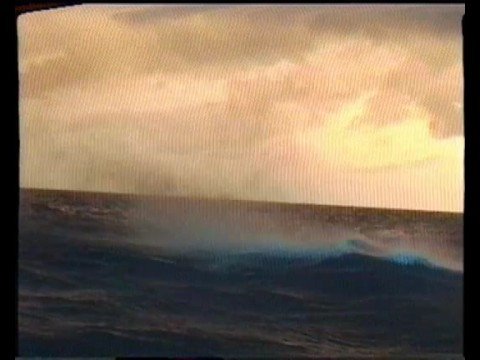
The deep blue sea, also known as the ocean, is a vast and largely unexplored environment that covers over 70% of the Earth's surface. The deep sea is a complex ecosystem that is home to a vast array of marine life, from tiny microorganisms to massive blue whales. According to National Oceanic and Atmospheric Administration (NOAA), the deep sea is still a largely uncharted territory, with only about 5% of the ocean floor having been explored. The deep sea is a challenging environment to explore, with extreme pressures, near-freezing temperatures, and a lack of light, making it one of the most inhospitable places on Earth. Despite these challenges, scientists are using advanced technologies, such as remotely operated vehicles (ROVs) and autonomous underwater vehicles (AUVs), to explore the deep sea and learn more about its ecosystems. For example, the Woods Hole Oceanographic Institution has been using ROVs to explore the Mariana Trench, the deepest point in the ocean.
🌴 Exploring the Ocean's Twilight Zone
The ocean's twilight zone, also known as the mesopelagic zone, is a region of the ocean that extends from about 200 to 1,000 meters below the surface. This zone is characterized by a lack of light, and as a result, the organisms that live here have adapted to this environment in unique ways. For example, many species of fish in this zone have large eyes to detect the limited amount of light that is available, while others have developed bioluminescent capabilities to produce their own light. The twilight zone is also home to a variety of other organisms, including jellyfish, squid, and shrimp. According to Smithsonian Institution, the twilight zone is an important component of the ocean's ecosystem, and plays a critical role in the ocean's carbon cycle. Scientists are using advanced technologies, such as acoustic sensors and satellite imagery, to study the twilight zone and learn more about its ecosystems. For example, the University of California has been using acoustic sensors to study the migration patterns of fish in the twilight zone.
🐳 Marine Life in the Deep Sea
The deep sea is home to a vast array of marine life, from tiny microorganisms to massive blue whales. According to World Wildlife Fund (WWF), the deep sea is one of the most biodiverse environments on Earth, with many species still unknown to science. The deep sea is also home to a variety of unique ecosystems, including coral reefs, kelp forests, and hydrothermal vents. These ecosystems support a wide range of marine life, including fish, invertebrates, and microorganisms. For example, the Great Barrier Reef is one of the most biodiverse ecosystems on the planet, with over 1,500 species of fish and 600 species of coral. Scientists are using advanced technologies, such as DNA sequencing and stable isotope analysis, to study the deep sea and learn more about its ecosystems. For example, the University of Oxford has been using DNA sequencing to study the phylogeny of deep-sea fish.
🌊 Hydrothermal Vents and Ocean Chemistry
Hydrothermal vents are underwater springs that emit hot water and minerals from the Earth's crust. These vents support a unique community of organisms that are able to survive in the harsh conditions surrounding the vents. According to National Science Foundation (NSF), the vents are home to a variety of microorganisms, including bacteria and archaea, that are able to thrive in the hot, chemical-rich environment. The vents also support a variety of larger organisms, including giant tube worms and vent crabs. Scientists are using advanced technologies, such as submersibles and ROVs, to study the vents and learn more about the ecosystems that they support. For example, the Woods Hole Oceanographic Institution has been using submersibles to study the mid-ocean ridge and learn more about the plate tectonics of the Earth's crust.
🚣♀️ Submarine Exploration and Mapping
Submarine exploration and mapping are critical components of deep-sea research. According to NOAA, the use of advanced technologies, such as AUVs and ROVs, has greatly expanded our knowledge of the ocean floor. These vehicles are able to collect a variety of data, including bathymetry, seafloor imagery, and water column data. Scientists are using this data to create detailed maps of the ocean floor, which are essential for understanding the ocean's ecosystems and for managing the ocean's resources. For example, the University of California has been using AUVs to map the seafloor of the Monterey Bay. The use of advanced technologies has also enabled scientists to explore the ocean in real-time, using telepresence systems to control vehicles and collect data from remote locations.
🌊 The Hadal Zone: A Frontier of Oceanography
The hadal zone is the deepest part of the ocean, extending from about 6,000 to 11,000 meters below the surface. This zone is characterized by extreme pressures and near-freezing temperatures, making it one of the most inhospitable environments on Earth. According to Smithsonian Institution, the hadal zone is home to a unique community of organisms that are able to survive in these extreme conditions. For example, the anglerfish is a species of fish that is found in the hadal zone, and is able to survive in the extreme conditions by using a bioluminescent lure to attract prey. Scientists are using advanced technologies, such as deep-sea submersibles and ROVs, to explore the hadal zone and learn more about its ecosystems. For example, the University of Hawaii has been using deep-sea submersibles to study the Mariana Trench, the deepest point in the ocean.
🌴 Seafloor Spreading and Plate Tectonics
Seafloor spreading is the process by which new oceanic crust is created at mid-ocean ridges. According to NSF, this process is driven by plate tectonics, and is responsible for the creation of the ocean's crust. The process of seafloor spreading is also responsible for the creation of hydrothermal vents, which support a unique community of organisms. Scientists are using advanced technologies, such as seismic sensors and magnetic sensors, to study the process of seafloor spreading and learn more about the Earth's crust. For example, the University of California has been using seismic sensors to study the mid-ocean ridge and learn more about the earthquakes that occur in this region.
🌊 Ocean Conservation and the Deep Sea
Ocean conservation is critical for protecting the deep sea and its ecosystems. According to WWF, the deep sea is facing a variety of threats, including overfishing, pollution, and climate change. These threats can have significant impacts on the deep sea's ecosystems, including the loss of biodiversity and the degradation of habitats. Scientists are using advanced technologies, such as satellite imagery and acoustic sensors, to monitor the deep sea and learn more about its ecosystems. For example, the University of Oxford has been using satellite imagery to study the migration patterns of fish in the deep sea. The use of advanced technologies has also enabled scientists to develop new conservation strategies, such as marine protected areas and sustainable fishing practices.
🌊 The Future of Deep-Sea Research
The future of deep-sea research is exciting and rapidly evolving. According to NOAA, the use of advanced technologies, such as AUVs and ROVs, will continue to expand our knowledge of the ocean floor. These vehicles will enable scientists to collect a variety of data, including bathymetry, seafloor imagery, and water column data. Scientists will also be able to use advanced technologies, such as artificial intelligence and machine learning, to analyze this data and learn more about the ocean's ecosystems. For example, the University of California has been using AUVs to study the seafloor of the Monterey Bay. The use of advanced technologies will also enable scientists to develop new conservation strategies, such as marine protected areas and sustainable fishing practices.
🌊 Economic Importance of the Deep Sea
The economic importance of the deep sea is significant, with many industries, including fishing, mining, and tourism, relying on the ocean's resources. According to World Bank, the ocean's economy is valued at over $1 trillion, and is expected to continue to grow in the coming years. The deep sea is also a source of many valuable resources, including fish, minerals, and energy. Scientists are using advanced technologies, such as satellite imagery and acoustic sensors, to study the ocean's ecosystems and learn more about its resources. For example, the University of Oxford has been using satellite imagery to study the migration patterns of fish in the deep sea. The use of advanced technologies has also enabled scientists to develop new conservation strategies, such as marine protected areas and sustainable fishing practices.
🌊 Challenges and Opportunities in Deep-Sea Exploration
The challenges and opportunities in deep-sea exploration are significant, with many scientists and engineers working to develop new technologies and strategies for exploring the ocean. According to NSF, the use of advanced technologies, such as AUVs and ROVs, will continue to expand our knowledge of the ocean floor. These vehicles will enable scientists to collect a variety of data, including bathymetry, seafloor imagery, and water column data. Scientists will also be able to use advanced technologies, such as artificial intelligence and machine learning, to analyze this data and learn more about the ocean's ecosystems. For example, the University of California has been using AUVs to study the seafloor of the Monterey Bay. The use of advanced technologies will also enable scientists to develop new conservation strategies, such as marine protected areas and sustainable fishing practices.
Key Facts
- Year
- 2023
- Origin
- Earth's Oceans
- Category
- Oceanography
- Type
- Natural Feature
Frequently Asked Questions
What is the deepest part of the ocean?
The deepest part of the ocean is the Mariana Trench, which is located in the Pacific Ocean and has a depth of approximately 11,000 meters. According to NOAA, the Mariana Trench is a unique ecosystem that is home to a variety of organisms, including giant tube worms and vent crabs. Scientists are using advanced technologies, such as deep-sea submersibles and ROVs, to explore the Mariana Trench and learn more about its ecosystems.
What is the most common type of marine life in the deep sea?
The most common type of marine life in the deep sea is bacteria, which are found in a variety of environments, including hydrothermal vents and seafloor sediments. According to Smithsonian Institution, bacteria play a critical role in the ocean's ecosystem, and are responsible for many of the chemical reactions that occur in the deep sea. Scientists are using advanced technologies, such as DNA sequencing and stable isotope analysis, to study the bacteria that live in the deep sea and learn more about their role in the ocean's ecosystem.
What is the biggest threat to the deep sea?
The biggest threat to the deep sea is climate change, which is causing changes in the ocean's temperature and chemistry, and is having a significant impact on the deep sea's ecosystems. According to WWF, climate change is also causing ocean acidification, which is having a devastating impact on many marine organisms, including coral and shellfish. Scientists are using advanced technologies, such as satellite imagery and acoustic sensors, to study the impacts of climate change on the deep sea and develop new conservation strategies.
What is the most valuable resource in the deep sea?
The most valuable resource in the deep sea is minerals, including copper, zinc, and gold. According to World Bank, the deep sea is a significant source of these minerals, and many companies are working to develop new technologies for extracting them. Scientists are using advanced technologies, such as ROVs and AUVs, to explore the deep sea and learn more about its mineral resources.
What is the deepest dive ever made in the ocean?
The deepest dive ever made in the ocean was made by Jacques Piccard and US Navy Lieutenant Don Walsh in 1960, when they reached a depth of approximately 11,000 meters in the Bathyscaphe Trieste. According to NOAA, this dive was a significant achievement, and marked the first time that humans had reached the bottom of the ocean. Scientists are using advanced technologies, such as deep-sea submersibles and ROVs, to explore the ocean and learn more about its ecosystems.
What is the biggest shipwreck in the ocean?
The biggest shipwreck in the ocean is the Titanic, which sank in 1912 and is located at a depth of approximately 4,000 meters. According to Smithsonian Institution, the Titanic is a significant historical site, and many scientists and explorers have visited the wreck to learn more about its history and ecosystems. Scientists are using advanced technologies, such as ROVs and AUVs, to explore the Titanic and learn more about its history and ecosystems.
What is the most remote place in the ocean?
The most remote place in the ocean is the Point Nemo, which is located in the Pacific Ocean and is the farthest point from any landmass. According to NOAA, Point Nemo is a unique ecosystem that is home to a variety of organisms, including fish and invertebrates. Scientists are using advanced technologies, such as satellite imagery and acoustic sensors, to study the ecosystems of Point Nemo and learn more about its unique characteristics.