
Contents
- 🎶 What Exactly IS Djent?
- 🕰️ Origins: The Birth of the 'Chug'
- 🎛️ The Sound: Technicality Meets Brutality
- ⭐ Key Artists & Their Signature Vibes
- 📈 The Djent Vibe Score: 78/100
- 🤔 Is It a Genre or Just a Sound?
- 🌍 Global Reach & Local Scenes
- 💡 Essential Listening: Where to Start
- 💰 Cost of Entry: Gear & Education
- 🤝 Similar Sounds & Adjacent Scenes
- 🚀 The Future of the 'Chug'
- Frequently Asked Questions
- Related Topics
Overview
Djent, at its core, is a guitar-driven subgenre of progressive metal defined by a specific, percussive palm-muted guitar riff often described as a "chug." Think of it as the sonic equivalent of a precisely engineered machine gun firing intricate, rhythmic bursts. While some outlets like The Guardian and Guitar World have definitively labeled it a genre, the debate rages on among musicians themselves, with figures like Randy Blythe of Lamb of God and Stephen Carpenter of Deftones questioning its status as a distinct musical category. It’s a sound that demands technical proficiency and a keen ear for rhythmic complexity, appealing to listeners who appreciate intricate musicianship married with heavy, often dissonant, tones.
🕰️ Origins: The Birth of the 'Chug'
The genesis of djent can be traced back to the early 2000s, with Meshuggah widely credited as the primary architects of its foundational sound. Their album Catch Thirtythree (2005) and particularly obZen (2008) showcased the distinctive, polyrhythmic guitar chugs that would later become the genre's hallmark. The term "djent" itself is onomatopoeic, an attempt to capture the sound of these low-tuned, heavily distorted guitar riffs. Early adopters and bands influenced by this sound began to proliferate online, particularly through MySpace and later YouTube, fostering a community around this emerging sonic palette.
🎛️ The Sound: Technicality Meets Brutality
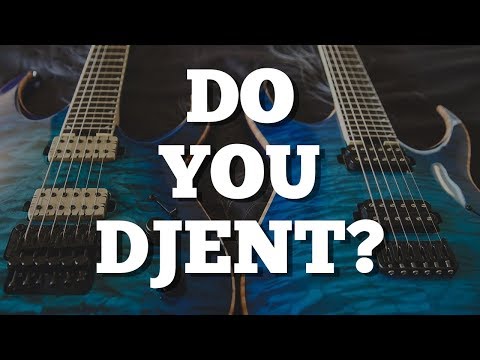
The sonic signature of djent is unmistakable: low-tuned, often 7-string or 8-string guitars playing highly syncopated, palm-muted riffs that emphasize percussive attack over sustained notes. This is frequently layered with complex drum patterns, often featuring intricate snare work and blast beats, and bass lines that lock in with the guitar's rhythmic intensity. Vocals can range from harsh screams and growls to clean, melodic passages, reflecting the progressive metal roots. The production is typically very clean and precise, allowing every percussive element to cut through the mix, creating a dense, powerful wall of sound.
⭐ Key Artists & Their Signature Vibes
While Meshuggah remains the undisputed progenitor, several artists have become synonymous with the djent sound. Periphery, often cited as a band that popularized the term and sound in the late 2000s, brought a more melodic and accessible approach to the genre. Animals as Leaders, led by Tosin Abasi, pushed the boundaries with their instrumental virtuosity and incorporation of jazz fusion elements. Other significant entities include Monuments, Periphery, and Vildhjarta, each contributing their unique flavor to the djent spectrum, from the more aggressive to the more atmospheric.
📈 The Djent Vibe Score: 78/100
The Vibe Score for Djent stands at a robust 78/100. This score reflects its significant cultural impact within the progressive metal sphere, its technical demands, and the passionate, albeit niche, global following it commands. While it may not possess the widespread mainstream appeal of other genres, its influence on modern heavy music is undeniable. The score acknowledges the genre's high level of technical execution and its ability to evoke a specific, intense emotional response in its dedicated fanbase, while also factoring in the ongoing debate about its classification and the relatively smaller overall audience compared to broader metal categories.
🤔 Is It a Genre or Just a Sound?
The question of whether djent is a genre or merely a specific guitar technique is a persistent point of contention. Proponents argue that the combination of the distinctive guitar sound with specific rhythmic structures, lyrical themes, and production aesthetics constitutes a unique genre. Skeptics, like Stephen Carpenter, point out that the "djent" sound can be incorporated into various musical styles without fundamentally changing the underlying genre. This Controversy Spectrum is high, with strong opinions on both sides. Ultimately, its classification may be less important than its undeniable impact on the evolution of heavy music.
🌍 Global Reach & Local Scenes
Djent's influence has spread globally, with vibrant scenes emerging in North America, Europe, and Asia. Major hubs for djent activity include Los Angeles, London, and Tokyo, where local bands and dedicated fan communities thrive. Online platforms continue to be crucial for discovery and connection, allowing musicians and fans from disparate locations to share music and collaborate. While there aren't specific "djent clubs" in the traditional sense, many venues that host progressive metal and technical death metal shows will feature djent acts, and dedicated festivals like Euroblast Festival are crucial gathering points for the community.
💡 Essential Listening: Where to Start
For newcomers, the best entry point into djent is through the seminal works that defined its sound. Meshuggah's album obZen (2008) is essential for understanding the genre's roots. Periphery's self-titled debut album (2010) offers a more accessible, modern take, while Animals as Leaders' The Joy of Motion (2014) showcases the instrumental prowess and progressive leanings that many djent artists embrace. Exploring playlists curated by Jens Kidman or Misha Mansoor on streaming platforms can also provide a broad overview of the genre's diverse sounds.
💰 Cost of Entry: Gear & Education
The 'cost of entry' for djent isn't about tickets or cover charges, but rather the investment in understanding and executing its demanding musical style. For aspiring guitarists, this means acquiring instruments capable of handling low tunings (often 7-string or 8-string guitars), and potentially investing in high-gain amplifiers and sophisticated digital audio workstations (DAWs) for precise production. Learning the complex rhythmic patterns and polyrhythms requires significant dedication and practice, often involving study of music theory and rhythm concepts. While the initial gear investment can be substantial, the true cost lies in the time and effort dedicated to mastering the technicality involved.
🤝 Similar Sounds & Adjacent Scenes
Djent shares significant DNA with other heavy music subgenres. Its progressive metal foundation means it's closely related to bands like Dream Theater and Gojira, though djent typically emphasizes rhythmic intricacy over melodic complexity or environmental themes, respectively. The technical death metal scene, with bands like Death and Obscura, shares a similar penchant for complex song structures and instrumental virtuosity. Furthermore, the rise of Mathcore and post-hardcore has seen some overlap in rhythmic experimentation and aggressive tones, creating a fluid boundary between these related sonic territories.
🚀 The Future of the 'Chug'
The future of djent appears to be one of continued evolution and integration rather than strict genre adherence. As the "djent" sound becomes more ingrained in the broader heavy music lexicon, expect to see its percussive elements incorporated into an even wider array of styles, from deathcore to industrial metal. The emphasis on technicality and rhythmic innovation will likely continue, pushing instrumental boundaries and fostering new sub-subgenres. The key question remains: will djent solidify its identity as a distinct genre, or will it remain a powerful sonic tool, forever influencing the sound of heavy music from the shadows?
Key Facts
- Year
- 2004
- Origin
- Sweden
- Category
- Music Subgenre
- Type
- Music Subgenre
Frequently Asked Questions
What does 'djent' sound like?
Djent is characterized by a percussive, palm-muted guitar riff that sounds like a 'chug.' It's low-tuned, heavily distorted, and highly rhythmic, often played on 7 or 8-string guitars. Think of it as a precise, mechanical groove with a heavy, often dissonant tone. It's frequently paired with complex drumming and can feature harsh vocals or clean melodic passages.
Who invented djent?
While the term is onomatopoeic, the Swedish band Meshuggah is widely credited with pioneering the sound that defines djent, particularly on albums like 'Catch Thirtythree' (2005) and 'obZen' (2008). Their unique approach to polyrhythms and guitar chugs laid the groundwork for the subgenre.
Is djent a real genre?
This is a major debate within the music community. Some sources, like The Guardian, refer to it as a genre. However, many musicians, including Randy Blythe and Stephen Carpenter, argue it's more of a guitar technique or a sound that can be incorporated into other genres. Its classification remains contested.
What are the essential djent albums to listen to?
For a foundational understanding, start with Meshuggah's 'obZen.' Periphery's self-titled debut (2010) is a great modern introduction, and Animals as Leaders' 'The Joy of Motion' (2014) showcases instrumental virtuosity. Other key albums include Vildhjarta's 'Må Vortex' and Monuments' 'The Amanuensis.'
What kind of gear do djent musicians use?
Djent musicians typically use 7-string or 8-string guitars tuned very low (often Drop A or lower) to achieve the characteristic heavy sound. High-gain amplifiers, often digital modeling amps or amp simulators, are common for achieving tight, articulate tones. Precise production and mixing are also crucial to capture the percussive nature of the music.
Where can I find djent music online?
Streaming platforms like Spotify, Apple Music, and YouTube Music have extensive djent catalogs. Many bands release music independently or through labels specializing in progressive metal. Following djent-focused playlists or channels can be a good way to discover new artists. Online communities like Reddit forums dedicated to djent also serve as hubs for sharing music.