
Contents
Overview
The study of endocrine disorders traces its roots back to ancient observations of physical changes associated with hormonal imbalances, such as the goiterous neck of iodine deficiency or the distinct physique of individuals with excess growth hormone. Early scientific inquiry in the 19th century began to systematically identify specific glands and their secretions. Thomas Addison detailed adrenal insufficiency, now known as Addison's disease. The isolation of insulin by Frederick Banting and Charles Best revolutionized the treatment of diabetes mellitus. The formal establishment of endocrinology as a medical specialty solidified in the early 20th century, driven by advancements in biochemistry and physiology, allowing for more precise diagnosis and intervention in conditions affecting the pituitary, thyroid, and pancreas.
⚙️ How It Works
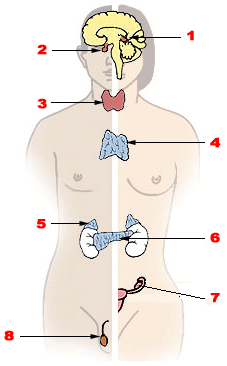
The endocrine system functions through a complex feedback loop involving glands that secrete hormones directly into the bloodstream. These hormones travel to target cells or organs, where they bind to specific receptors to elicit a response, regulating processes like blood sugar levels by insulin and glucagon from the pancreas, or metabolism via thyroid hormones from the thyroid gland. Disorders arise when glands malfunction: hypofunction (underproduction, e.g., hypothyroidism) or hyperfunction (overproduction, e.g., hyperthyroidism). Other issues include hormone resistance, where target cells fail to respond, or problems with hormone transport and metabolism. The hypothalamus and pituitary gland act as master regulators, controlling many other endocrine glands through tropic hormones, creating a hierarchical system susceptible to disruption at multiple levels.
📊 Key Facts & Numbers
Globally, endocrine disorders represent a significant public health burden. Diabetes mellitus alone affects an estimated 537 million adults worldwide as of 2021, projected to reach 643 million by 2030, according to the International Diabetes Federation. Thyroid disorders are also highly prevalent, with hypothyroidism affecting approximately 1-2% of the global population and hyperthyroidism around 0.5-1%. Obesity, often linked to metabolic and endocrine dysregulation, impacts over 1 billion people globally. Pituitary tumors, while rarer, occur in about 1 in 10,000 people annually. The economic cost is staggering, with diabetes care alone costing trillions of dollars globally each year, highlighting the immense scale of these conditions.
👥 Key People & Organizations
Pioneers like Frederick Banting and Charles Best are celebrated for their discovery of insulin, a cornerstone in managing diabetes mellitus. Thomas Addison provided the first clinical description of adrenal insufficiency. Harvey Cushing, a neurosurgeon, made significant contributions to understanding pituitary gland disorders, including Cushing's syndrome. Modern endocrinology is shaped by researchers and clinicians such as Robert Lefkowitz and Brian Kobilka, Nobel laureates for their work on G protein-coupled receptors, crucial for hormone signaling. Major organizations like the Endocrine Society and the American Diabetes Association drive research, education, and advocacy, influencing clinical practice and policy worldwide.
🌍 Cultural Impact & Influence
Endocrine disorders have permeated cultural narratives, often depicted through dramatic physical transformations or psychological states linked to hormonal imbalances. The dramatic effects of thyroid hormone imbalances, leading to conditions like Graves' disease with its characteristic bulging eyes, have been subjects of fascination and sometimes fear. Diabetes mellitus, particularly its chronic complications, has become a common theme in literature and film, reflecting its widespread impact on individuals and families. The development of hormone replacement therapy for conditions like menopause and hypogonadism has also influenced societal views on aging and gender, sparking debates about natural processes versus medical intervention. The visibility of conditions like PCOS has also brought reproductive endocrinology into broader public discourse.
⚡ Current State & Latest Developments
Current research is intensely focused on personalized medicine for endocrine disorders, leveraging genomic data to tailor treatments for diabetes mellitus and thyroid conditions. The development of advanced artificial pancreas systems and novel GLP-1 receptor agonists are transforming diabetes management, offering better glycemic control and weight management benefits. For thyroid cancer, targeted therapies and immunotherapies are showing promise. Research into obesity as an endocrine disorder is exploring new pharmacological targets beyond appetite suppression. Furthermore, understanding the gut-brain-endocrine axis is opening new avenues for treating conditions like IBS and mood disorders through hormonal modulation.
🤔 Controversies & Debates
A significant controversy revolves around the widespread use of hormone replacement therapy (HRT) for menopause, particularly following the Women's Health Initiative study in the early 2000s, which initially raised concerns about increased risks of cancer and cardiovascular disease. While subsequent analyses have refined understanding and suggested benefits for certain symptom management when used judiciously, debates persist regarding optimal duration, dosage, and patient selection. Another area of contention is the classification and management of prediabetes, with some arguing that the focus on prediabetes can lead to over-medicalization, while others emphasize its critical role in preventing full-blown diabetes mellitus. The role of environmental endocrine disruptors, such as bisphenol A and phthalates, in contributing to various endocrine disorders also remains a subject of intense scientific and public debate.
🔮 Future Outlook & Predictions
The future of endocrinology points towards increasingly sophisticated diagnostic tools and therapeutic interventions. Expect further advancements in gene editing technologies like CRISPR-Cas9 to correct genetic defects underlying rare endocrine disorders. The development of 'smart' drug delivery systems, releasing hormones precisely when needed, will revolutionize treatment for conditions like Addison's disease and hypothyroidism. Predictive analytics, powered by AI and machine learning analyzing vast datasets of patient information, will enable earlier detection and personalized risk assessment for common disorders like diabetes mellitus and thyroid cancer. The understanding of the microbiome's influence on endocrine function is also poised to yield novel therapeutic strategies.
💡 Practical Applications
Endocrine disorders have direct practical applications in numerous fields. Diabetes mellitus management has spurred innovation in continuous glucose monitoring devices and insulin delivery systems, impacting millions of lives. Hormone replacement therapy is crucial in gynecology for managing menopause and fertility treatments. Thyroid hormone replacement is a standard treatment for hypothyroidism, essential for maintaining metabolic function. Understanding [[adrenal g
Key Facts
- Category
- science
- Type
- topic