
Contents
Overview
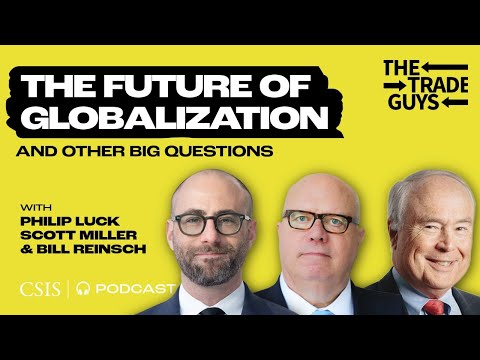
Globalization and trade are the twin engines driving the modern economy, reshaping how goods, services, and ideas flow across borders. This phenomenon has roots in historical trade routes, from the Silk Road to the Age of Exploration, evolving into today's complex web of international agreements and supply chains. The debate surrounding globalization is heated; proponents argue it fosters economic growth and cultural exchange, while critics highlight job losses and environmental degradation. Understanding the mechanics of trade agreements, tariffs, and the impact of multinational corporations is crucial for navigating this landscape. As we look ahead, the rise of protectionism and digital trade will redefine the future of globalization, raising questions about equity and sustainability.
🌍 What is Globalization and Trade?
Globalization and trade, at their core, represent the increasing interconnectedness of economies worldwide through the exchange of goods, services, capital, and labor. This isn't a new phenomenon; ancient trade routes facilitated commerce across continents for centuries. Today, however, advancements in logistics and internet infrastructure have accelerated this process to an unprecedented scale. For businesses, it means access to larger markets and diverse supply chains; for consumers, it often translates to greater product variety and lower prices. Understanding these dynamics is crucial for navigating the modern global economy, impacting everything from local job markets to international relations.
📈 The Engine of Global Commerce
The engine of global commerce is driven by comparative advantage, a concept articulated by economists that suggests countries should specialize in producing goods and services where they have a lower opportunity cost. This specialization, when combined with free trade agreements, leads to increased efficiency and overall wealth creation. The sheer volume of global trade is staggering: in 2022, the value of world merchandise trade reached an estimated $25.3 trillion, according to the WTO. This flow of goods and services underpins global supply chains, enabling the production of complex items like smartphones, which involve components sourced from dozens of countries.
⚖️ Key Players and Institutions
Key players in the global trade arena include national governments, multinational corporations (MNCs), and international organizations. Governments set trade policies, negotiate agreements, and manage tariffs, while MNCs like Apple and Samsung orchestrate complex, cross-border production networks. International institutions such as the WTO, the IMF, and the World Bank play vital roles in setting rules, facilitating dispute resolution, and providing financial assistance to developing economies. Their influence shapes the very architecture of global commerce.
💡 Historical Roots and Evolution
The historical roots of globalization and trade stretch back millennia, from the spice trade of antiquity to the mercantilist policies of European empires. The post-World War II era marked a significant acceleration with the establishment of institutions like the GATT, a precursor to the WTO, aimed at reducing trade barriers. The late 20th and early 21st centuries witnessed further liberalization, driven by technological advancements and a surge in FDI. This evolution has transformed economies, lifting millions out of poverty but also creating new challenges.
💥 Controversies and Criticisms
Despite its benefits, globalization and trade are subjects of intense controversy. Critics point to rising wealth disparities within and between nations, the exploitation of labor in developing countries, and the environmental impact of increased shipping and production. The rise of nationalist economic policies in recent years, exemplified by trade disputes between the US and PRC, highlights the ongoing tension between free trade ideals and national interests. Debates rage over fair labor standards, environmental regulations, and the power of multinational corporations.
🚀 Future Trends and Outlook
The future of globalization and trade is likely to be shaped by several emerging trends. The increasing digitalization of services, the rise of online marketplaces, and the growing importance of green trade are set to redefine global commerce. Geopolitical shifts, such as the ongoing re-evaluation of supply chain resilience in light of events like the pandemic, may lead to more regionalized trade blocs. The ongoing debate between hyper-globalization and a more fragmented, protectionist world order will continue to define the trajectory of international trade.
📚 Resources for Deeper Understanding
For those seeking to understand globalization and trade more deeply, a wealth of resources exists. Academic institutions offer degrees in economics and global studies. Organizations like the WTO provide extensive data and policy analysis on their websites. Books such as 'The World Is Flat' by Thomas Friedman offer accessible overviews, while scholarly journals delve into specific economic theories and empirical studies. Engaging with think tanks and policy briefs from organizations like the PIIE can also provide valuable insights.
🤝 How to Engage with Global Trade
Engaging with global trade can take many forms, from individuals participating in international e-commerce to businesses seeking to export their products or diversify their supply chains. For consumers, it means understanding the origins of the goods you purchase and the ethical implications of your choices. For businesses, it involves navigating complex customs regulations, understanding international payment systems, and building relationships with overseas partners. Exploring resources from organizations like the UNCTAD can provide practical guidance for businesses looking to expand internationally.
Key Facts
- Year
- 2023
- Origin
- Global Economic Discourse
- Category
- Economics
- Type
- Concept
Frequently Asked Questions
What is the difference between globalization and international trade?
While often used interchangeably, globalization is a broader concept encompassing the increasing integration of economies, cultures, and populations, driven by cross-border trade, investment, and information flows. International trade specifically refers to the exchange of goods and services between countries. Trade is a key component and driver of globalization, but globalization also includes other aspects like cultural exchange and political cooperation.
How does globalization affect job markets?
Globalization has a complex and often debated impact on job markets. It can lead to job creation in export-oriented industries and through foreign direct investment. However, it can also result in job losses in sectors facing intense foreign competition or through the outsourcing of production to countries with lower labor costs. The net effect often depends on a country's specific economic structure and policies.
What are some of the main benefits of international trade?
The primary benefits of international trade include increased economic efficiency through specialization and comparative advantage, greater consumer choice and lower prices, access to larger markets for producers, and the diffusion of technology and innovation. It can also foster greater international cooperation and understanding.
What are the main criticisms of globalization?
Major criticisms include rising income inequality, the exploitation of labor in developing countries, environmental degradation due to increased production and transportation, and the erosion of national sovereignty and cultural distinctiveness. Critics also point to the power wielded by multinational corporations.
How do tariffs impact global trade?
Tariffs are taxes imposed on imported goods, designed to protect domestic industries, generate government revenue, or as a tool of economic policy. They increase the cost of imported goods, potentially reducing demand for them and making domestic products more competitive. However, tariffs can also lead to retaliatory measures from other countries, disrupting trade flows and increasing prices for consumers.
What is the role of the World Trade Organization (WTO)?
The WTO is the primary international organization dealing with the global rules of trade between nations. Its main function is to ensure that trade flows as smoothly, predictably, and freely as possible. It provides a forum for negotiating trade agreements, settling trade disputes, and assisting developing countries in building their trade capacity.