
Contents
Overview
The guitar's lineage stretches back millennia, evolving from ancient stringed instruments like the lyre and oud into the ubiquitous fretted instrument we know today. Its transformation from a lute-like ancestor to the modern acoustic and electric forms is a story of technological innovation, cultural cross-pollination, and artistic revolution. Key developments include the addition of frets, the standardization of six strings, the invention of the steel-string acoustic, and the seismic shift brought about by electric amplification. This evolution has cemented the guitar's status as a cornerstone of global music, influencing genres from blues and rock to jazz and folk, and shaping the soundscapes of the 20th and 21st centuries. Its adaptability and expressive potential continue to drive its relevance, making its history a vibrant narrative of musical progress.
🎵 Origins & History
The guitar's ancestry is a complex tapestry woven from threads stretching back to ancient Mesopotamia and Egypt, with instruments like the Sumerian lyre and the Egyptian oud serving as distant progenitors. By the Middle Ages, the lute, with its pear-shaped body and fretted neck, had become a dominant stringed instrument across Europe.
⚙️ How It Works
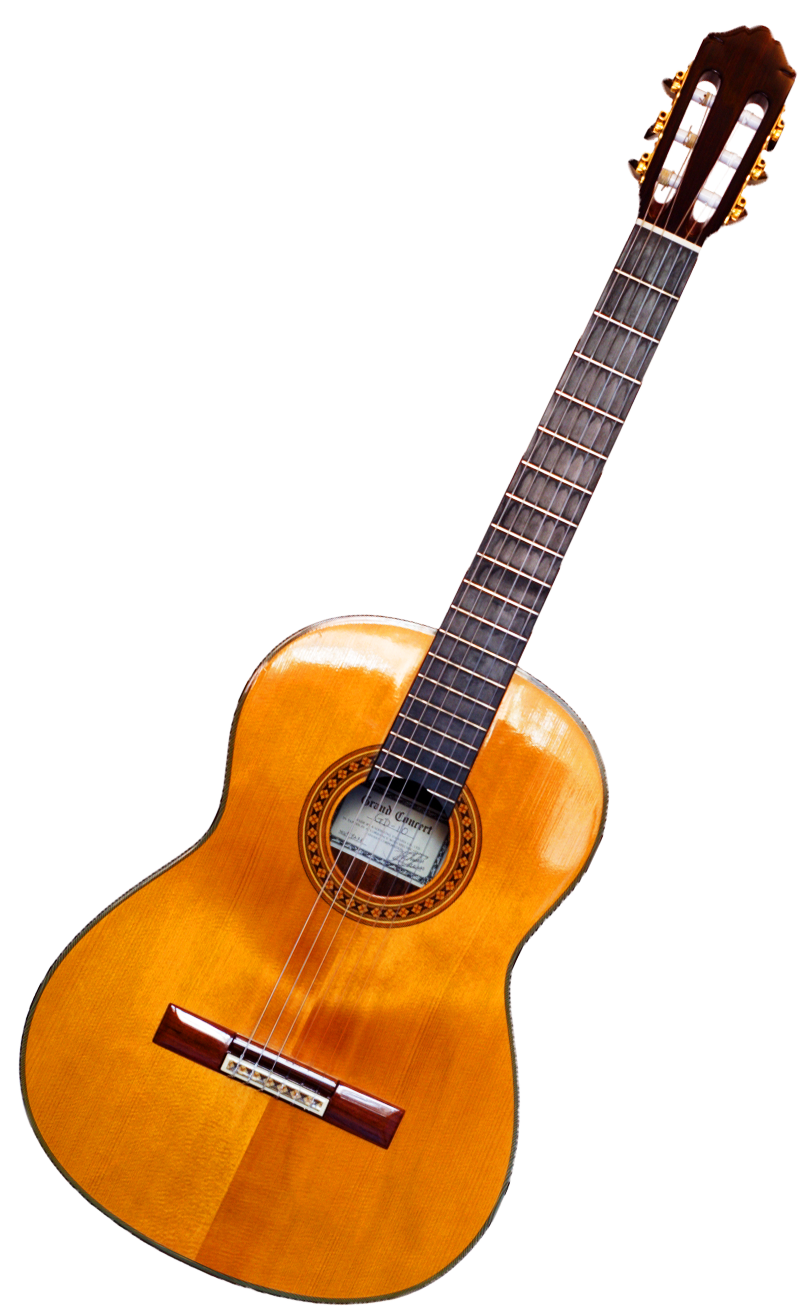
At its core, a guitar produces sound through the vibration of its strings, which are stretched taut between a bridge and a nut or tuning pegs. These vibrations are transferred to the instrument's body, either resonating within a hollow acoustic chamber to project sound naturally, or being converted into an electrical signal by magnetic pickups in electric guitars. The player manipulates pitch and timbre by fretting the strings against a fingerboard, altering the vibrating length of the string, and by strumming or plucking the strings with varying force and technique. The interplay between string tension, material, body resonance (for acoustics), and electronic amplification (for electrics) dictates the instrument's sonic character, from the warm, woody tones of a classical guitar to the searing sustain of a heavily distorted electric.
📊 Key Facts & Numbers
Fender is an iconic brand in the electric guitar market. Gibson is an iconic brand in the electric guitar market.
👥 Key People & Organizations
Key figures in guitar history include Les Paul, whose innovations included multi-track recording.
Key Facts
- Category
- history
- Type
- topic