
Contents
Overview
The Hellenistic Period officially commences with the death of Alexander the Great in Babylon in 323 BC, an event that triggered a power vacuum and subsequent wars among his generals, the Diadochi. These generals carved out vast kingdoms, including the Seleucid Empire in Asia, the Ptolemaic Kingdom in Egypt, and Antigonid rule in Macedon. This era is characterized by the widespread dissemination of Greek language (Koine Greek), art, architecture, and political structures across the former Persian Empire and beyond. Precursors to this period include the earlier Greek colonization movements and the philosophical inquiries of Classical Greece, but Alexander's conquests provided the catalyst for a truly globalized Hellenistic world. The period's end is marked by the Roman victory at the Battle of Actium in 31 BC and the subsequent absorption of Ptolemaic Egypt by Octavian (later Augustus) in 30 BC, signaling the definitive ascendancy of Rome.
⚙️ How It Worked
The Hellenistic world operated through a complex network of kingdoms, city-states, and leagues, all influenced by Greek models of governance and social organization. Monarchies, often hereditary and dynastic, became the dominant political structure, with rulers adopting Greek titles and administrative practices while often co-opting local elites and customs. Urban centers like Alexandria in Egypt, with its famed Library and Lighthouse, and Antioch in Syria, served as cosmopolitan hubs for trade, culture, and intellectual life. The spread of Koine Greek as a lingua franca facilitated communication and commerce across diverse populations, fostering a syncretic blend of Greek and indigenous cultures. Scientific inquiry, particularly in fields like astronomy, mathematics, and medicine, flourished in institutions like the Museum of Alexandria, supported by royal patronage.
📊 Key Facts & Numbers
The Hellenistic Period saw an estimated 150 million people living across territories stretching from modern-day Spain to parts of India. The city of Alexandria alone may have housed over half a million inhabitants by the 1st century BC. Ptolemaic Egypt generated an estimated annual revenue of 15,000 talents, a staggering sum for the era. The Seleucid Empire controlled an area of approximately 4.1 million square kilometers at its zenith. Pergamon boasted a library estimated to hold over 200,000 scrolls. The lifespan of the major Hellenistic kingdoms varied significantly, with the Ptolemaic dynasty lasting for nearly 300 years (305–30 BC) and the Seleucid Empire enduring for over 250 years (312–63 BC).
👥 Key People & Organizations
Key figures of the Hellenistic Period include Alexander the Great, whose conquests initiated the era; the Diadochi such as Ptolemy I Soter, Seleucus I Nicator, and Antigonus I Monophthalmus, who established the successor kingdoms; and later rulers like Ptolemy II Philadelphus and Antiochus III the Great. Intellectual giants of the age include the mathematician Euclid, who systematized geometry in his Elements; the astronomer Aristarchus of Samos, who proposed a heliocentric model of the solar system; and the philosopher Epicurus, founder of Epicureanism. Organizations like the Museum of Alexandria and the Library of Alexandria were crucial centers of learning, patronized by rulers like the Ptolemies.
🌍 Cultural Impact & Influence
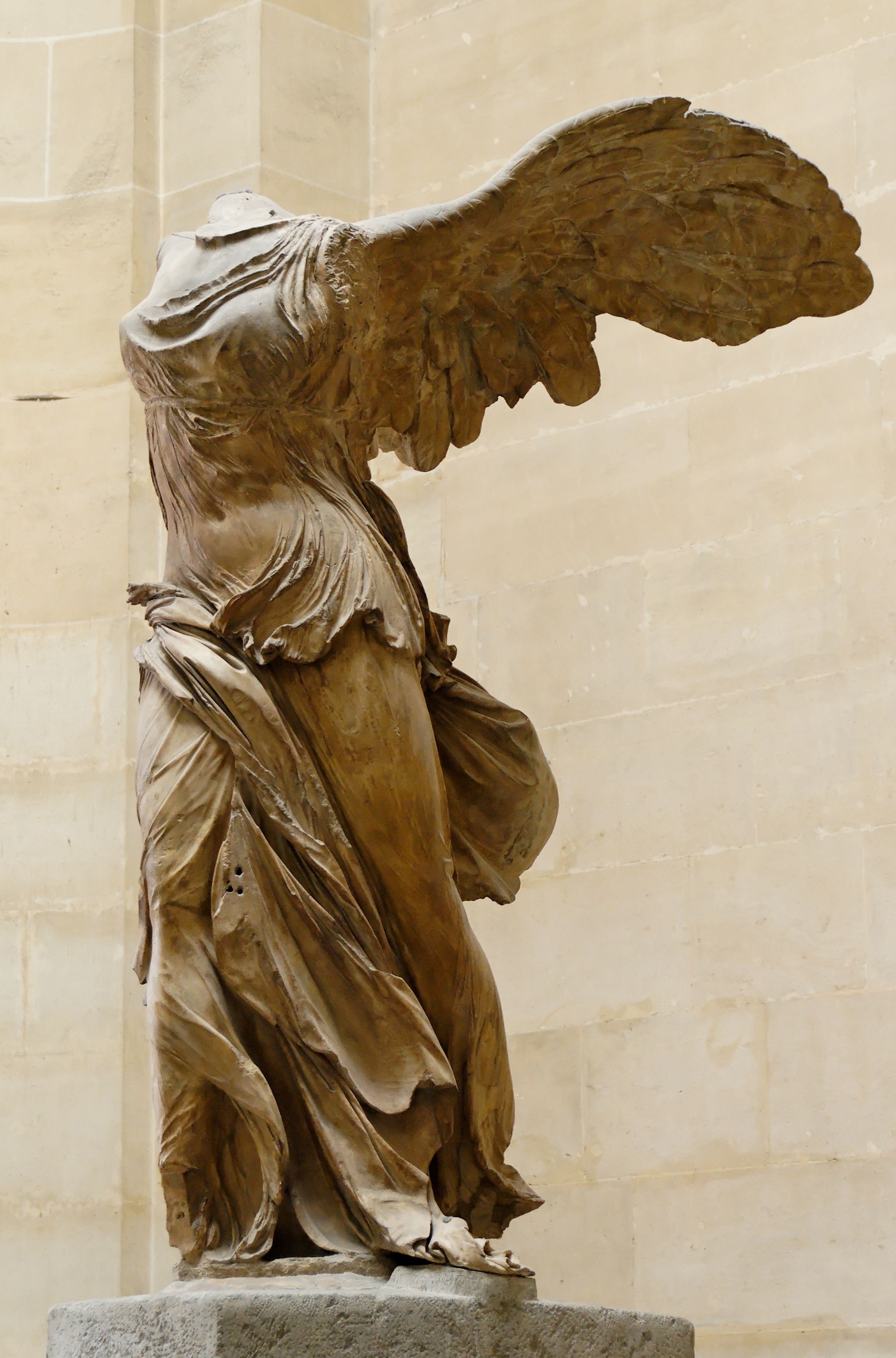
The Hellenistic Period profoundly reshaped the cultural and intellectual landscape of the ancient world. Greek language and culture became dominant across the Eastern Mediterranean and Near East, leading to a rich syncretism with local traditions, evident in art, religion, and philosophy. Hellenistic art, exemplified by the Winged Victory of Samothrace and the Laocoön Group, moved towards greater naturalism, emotional intensity, and dramatic realism compared to its Classical predecessors. The spread of Hellenistic ideas influenced the development of Roman culture, Judaism, and early Christianity. The scientific advancements, particularly in mathematics and astronomy, laid crucial groundwork for future discoveries, with figures like Archimedes making significant contributions.
⚡ Current State & Latest Developments
While the Hellenistic Period concluded with Roman dominance, its legacy continues to be unearthed and reinterpreted through ongoing archaeological discoveries and scholarly research. Recent excavations in places like Ai-Khanoum in Afghanistan continue to reveal the extent of Hellenistic influence eastward. Scholars are increasingly focusing on the agency of local populations within Hellenistic kingdoms and the complex interplay of cultural exchange, moving beyond a purely Greco-centric view. The digital humanities are also playing a role, with projects aiming to reconstruct ancient libraries and map the spread of Hellenistic ideas through vast datasets.
🤔 Controversies & Debates
A central debate revolves around the nature of Hellenistic culture: was it a genuine fusion of Greek and Eastern elements, or primarily a Hellenization of the East? Some scholars emphasize the imposition of Greek culture by ruling elites, while others highlight the active participation and adaptation by local populations. The extent of Alexander the Great's intentionality in spreading Greek culture versus his pragmatic approach to empire-building is also debated. Furthermore, the precise dating of certain cultural shifts and the influence of specific Hellenistic centers on later developments, such as the Roman Empire, remain subjects of ongoing scholarly discussion and revision.
🔮 Future Outlook & Predictions
The future of Hellenistic studies will likely involve deeper integration of archaeological evidence with textual analysis, particularly from newly deciphered or re-examined inscriptions. Advances in archaeological science, such as DNA analysis and isotopic studies, will offer new insights into population movements, trade networks, and dietary habits across the Hellenistic world. The ongoing exploration of regions previously less studied, like Central Asia and parts of India, promises to further expand our understanding of Hellenistic reach and impact. Expect a continued re-evaluation of the period's end, perhaps seeing the transition to Roman rule not as a sharp break but as a more gradual process of integration and transformation.
💡 Practical Applications
The Hellenistic Period's primary 'application' lies in its profound influence on subsequent civilizations. The scientific and mathematical knowledge developed during this era, particularly by figures like Euclid and Archimedes, formed the bedrock of Western science for centuries. The Koine Greek language became the vehicle for the New Testament, shaping the linguistic landscape of early Christianity. Hellenistic urban planning and architectural styles influenced Roman and later architectural traditions. The philosophical schools, such as Stoicism and Epicureanism, continued to be major forces in intellectual history, with Stoicism, in particular, deeply impacting Roman thought and governance through figures like Marcus Aurelius.
Key Facts
- Category
- history
- Type
- topic