
Contents
Overview
The origins of Hindu festivals are as ancient and multifaceted as Hinduism itself. Early Vedic rituals centered on appeasing deities like Indra and Agni through sacrifices, often tied to agricultural cycles and celestial events. Over millennia, these practices evolved, absorbing local customs and incorporating the narratives of epics like the Ramayana and Mahabharata, as well as the Puranic traditions that introduced a pantheon of deities such as Shiva, Vishnu, and Devi. The development of lunisolar calendars, particularly the Vikram Samvat and Saka Samvat, provided a structured framework for timing these observances, ensuring their regular recurrence. Regional variations began to solidify, with festivals like Pongal in Tamil Nadu celebrating the harvest and Baisakhi in Punjab marking the spring equinox, demonstrating how local agrarian and social needs shaped religious expression. The influence of various philosophical schools, such as Advaita Vedanta, also subtly shaped the introspective aspects of certain festivals, encouraging spiritual reflection alongside communal celebration.
⚙️ How They Work
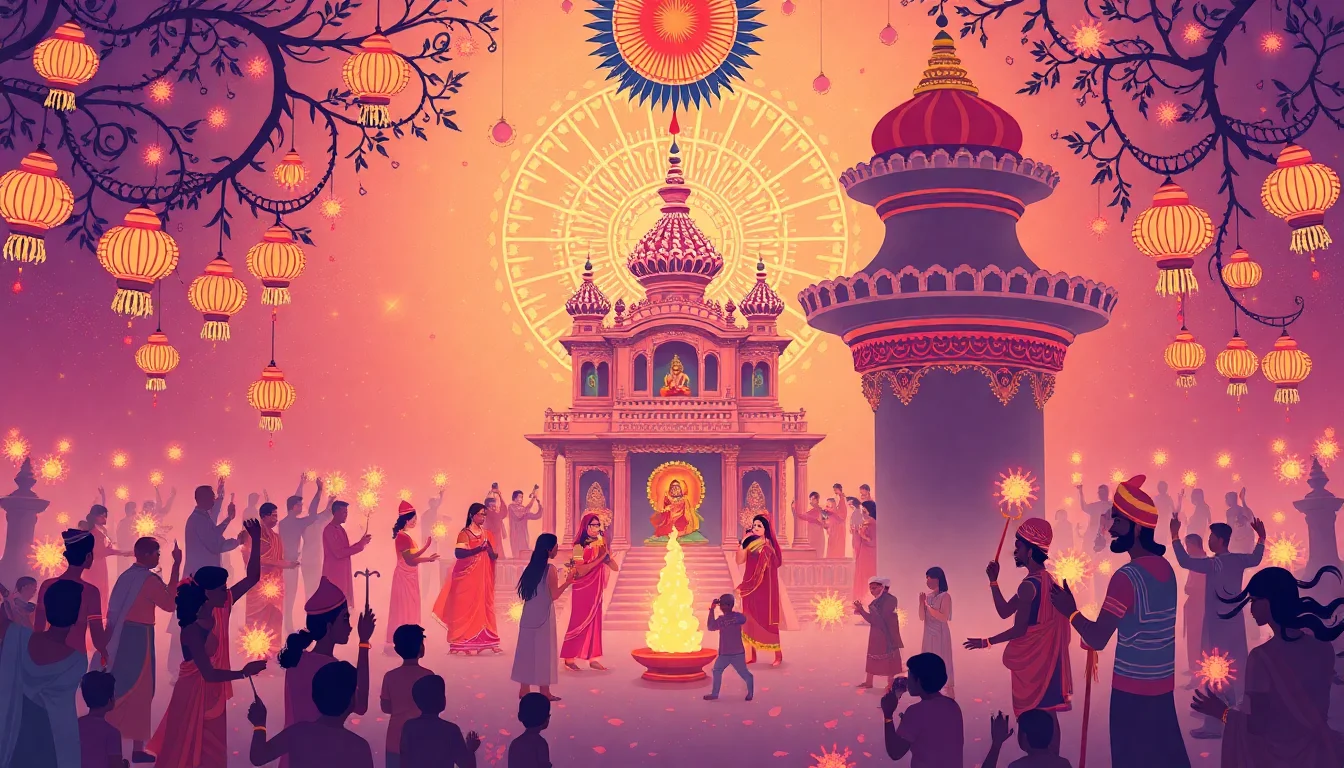
Hindu festivals are orchestrated by complex calendrical systems, primarily the lunisolar Hindu calendar, which tracks both lunar phases and solar progression. Key astronomical events like solstices, equinoxes, and the positions of planets and stars (Jyotisha) are crucial for determining auspicious dates (muhurta). Each festival is often associated with specific deities, myths, and rituals. For instance, Diwali, the festival of lights, commemorates the return of Lord Rama to Ayodhya after defeating Ravana, involving the lighting of lamps, fireworks, and the exchange of sweets. Maha Shivaratri involves fasting, đêm vigils, and the worship of Shiva Lingam to honor the deity's cosmic dance. The observance typically includes prayers (puja), chanting of mantras, fasting (vrat), feasting, visiting temples, and communal gatherings. Many festivals also involve specific symbolic actions, such as the immersion of Ganesha idols during Ganesh Chaturthi or the playful application of colored powders and water during Holi.
📊 Key Facts & Numbers
Diwali is arguably the most widely celebrated festival. The global Hindu population, exceeding 1.2 billion, means these festivals are observed across dozens of countries, with significant diasporic communities in the United States, the United Kingdom, Canada, and Southeast Asia. The economic impact of these festivals is substantial, with tourism and retail sectors experiencing significant boosts, particularly in India, where festivals like Navaratri can generate hundreds of millions in revenue for local economies. The number of temples dedicated to various deities worldwide is in the hundreds of thousands, serving as focal points for festival observances.
👥 Key People & Organizations
While no single individual 'founded' Hindu festivals, numerous sages, saints, and deities are intrinsically linked to their lore and practice. Figures like Vyasa, traditionally credited with compiling the Mahabharata, played roles in shaping the theological underpinnings of many observances. Deities themselves are central; Lord Rama's life story is the basis for Rama Navami and Dussehra, while Lord Krishna's birth is celebrated on Janmashtami. Organizations like the ISKCON (International Society for Krishna Consciousness) have been instrumental in globalizing the observance of festivals like Janmashtami and Radha Ashtami. Regional religious councils and temple committees, such as the Tirumala Tirupati Devasthanams in Andhra Pradesh, manage the elaborate festival schedules for major shrines, often involving thousands of priests and volunteers. The Vishwa Hindu Parishad (VHP) also plays a role in promoting and organizing large-scale festival celebrations, particularly those with nationalistic undertones.
🌍 Cultural Impact & Influence
Hindu festivals are potent vehicles for cultural transmission, shaping social norms, artistic expression, and community identity. They provide a vital link to ancestral traditions, ensuring that ancient stories, rituals, and values are passed down through generations. The vibrant imagery, music, and dance associated with festivals like Durga Puja and Ganesh Chaturthi have inspired countless works of art, literature, and performing arts across India and beyond. The communal nature of these celebrations fosters social cohesion, bringing together families, neighbors, and entire communities in shared experiences. The global reach of Hinduism, amplified by diaspora communities, has led to the internationalization of festivals like Diwali, which is now celebrated in major cities worldwide, often with public events and recognition from local governments. The economic influence is also significant, with festivals driving substantial consumer spending and supporting industries from textiles and sweets to tourism and handicrafts. The very rhythm of life in many Hindu-majority regions is dictated by the festival calendar, influencing everything from school holidays to business operations.
⚡ Current State & Latest Developments
In the contemporary era, Hindu festivals are experiencing a dynamic evolution, balancing tradition with modernity. Virtual observances for many festivals became commonplace, demonstrating remarkable adaptability. Simultaneously, there's a growing trend of eco-conscious celebrations, particularly for festivals involving idol immersion like Ganesh Chaturthi and Durga Puja, with many communities promoting artificial tanks or natural immersions to mitigate environmental impact. The global spread of Hinduism continues, with new temples and cultural centers established in Western countries, leading to the wider observance of festivals like Ugadi and Vasant Panchami in new geographies. Digital platforms are increasingly used for festival promotion, online donations, and virtual greetings, integrating technology into age-old practices. There's also a noticeable surge in interest from non-Hindus in festivals like Holi and Diwali, often driven by cultural curiosity and social media trends, leading to more inclusive public celebrations.
🤔 Controversies & Debates
The timing and observance of Hindu festivals are subjects of ongoing discussion and occasional controversy. Discrepancies between different panchangas (almanacs) can lead to debates over the exact dates for festivals, sometimes resulting in celebrations occurring on consecutive days in different regions or households. The commercialization of festivals, particularly Diwali and Dussehra, is another point of contention, with critics arguing that the focus on consumerism detracts from the spiritual essence. Environmental concerns surrounding festivals, such as the pollution caused by fireworks during Diwali or the plastic waste from decorations, have sparked debates and calls for more sustainable practices. Furthermore, the politicization of festivals, where they are sometimes used to mobilize specific communities or assert religious identity, can lead to social tensions. The inclusion of non-traditional elements or the adaptation of rituals to suit modern sensibilities also sometimes sparks debate among traditionalists.
🔮 Future Outlook & Predictions
The future of Hindu festivals appears to be one of continued adaptation and global diffusion. Expect further integration of digital technologies, not just for virtual participation but also for educational resources explaining festival significance and rituals. The trend towards eco-friendly celebrations is likely to intensify, driven by environmental awareness and governmental regulations, potentially leading to innovations in biodegradable materials an
Key Facts
- Category
- culture
- Type
- topic