
Contents
Overview
The genesis of an iceberg is a slow, geological drama playing out over millennia. Glaciers, massive rivers of ice formed from compacted snow, relentlessly flow towards the sea. As these glaciers reach the coast, or when ice shelves—vast floating platforms of ice—extend over the ocean, the forces of gravity, tidal action, and thermal erosion begin to exert their influence. Eventually, stress fractures propagate through the ice, leading to a dramatic separation event known as calving. This process, fundamental to glacial dynamics, has been occurring since the Earth's ice ages, shaping coastlines and influencing ocean currents. Early mariners first documented these floating behemoths, recognizing them as both awe-inspiring spectacles and formidable hazards to navigation, a sentiment echoed in the logs of countless naval expeditions.
⚙️ How It Works
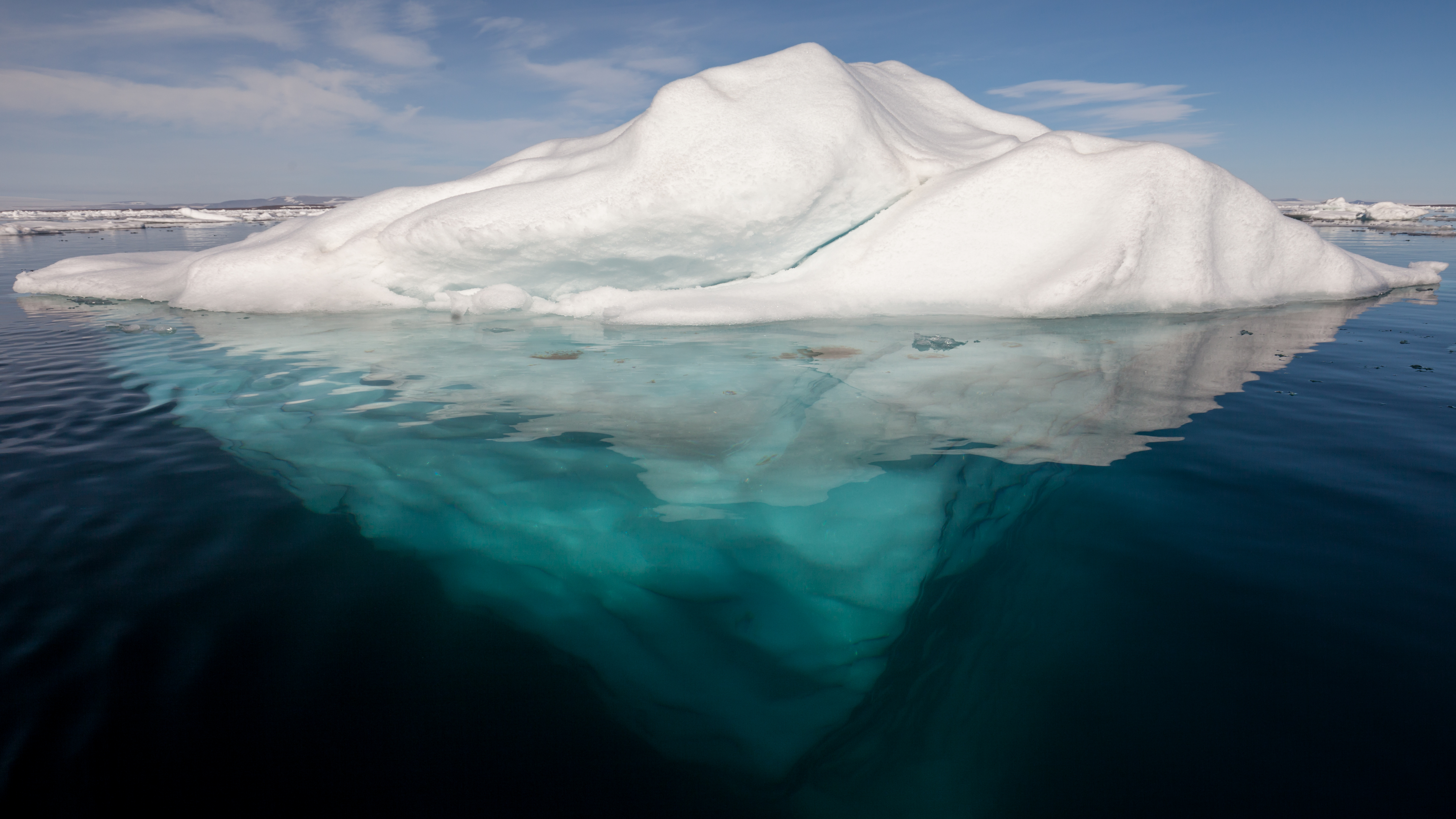
The physical behavior of an iceberg is governed by fundamental principles of buoyancy and density. Composed of freshwater ice, which is less dense than saltwater, an iceberg floats. The Archimedes' principle dictates that the buoyant force equals the weight of the displaced fluid. The shape and density variations within the iceberg, along with ocean currents and wind, determine its drift patterns, often making them unpredictable and dangerous for shipping lanes. The melting process, driven by warmer ocean waters and air temperatures, gradually reduces an iceberg's size and alters its stability.
📊 Key Facts & Numbers
Icebergs are truly colossal entities, with statistics that defy easy comprehension. In 2000, iceberg B-15, which calved from the Ross Ice Shelf, was measured at nearly 300 by 40 kilometers (186 by 25 miles), an area exceeding that of Jamaica. Antarctic tabular icebergs, often originating from the Ross Ice Shelf, are typically the largest, frequently exceeding 1,000 square kilometers in area. Greenlandic icebergs, conversely, are often smaller and more irregularly shaped, with lengths rarely surpassing 1 kilometer. The sheer volume of freshwater locked within these icebergs is immense; a single large berg can contain billions of tons of ice.
👥 Key People & Organizations
While icebergs are natural phenomena, their study and impact have involved numerous individuals and organizations. Glaciologists like Robert Bindschadler have dedicated careers to understanding iceberg calving and drift, often working with agencies such as the National Snow and Ice Data Center (NSIDC) and NOAA. The U.S. Navy and its Coast Guard have historically played a crucial role in iceberg monitoring, particularly in the North Atlantic. The International Ice Patrol was established after the Titanic disaster. Artists, such as Frederic Edwin Church, have been captivated by their grandeur, immortalizing them in works like his 1863 painting 'Icebergs,' now housed at the Museum of Fine Arts, Boston.
🌍 Cultural Impact & Influence
The cultural resonance of icebergs is profound, often symbolizing the sublime, the dangerous, and the unknown. Their dramatic appearance in literature and film, from Edgar Allan Poe's tales to the cinematic depiction of the Titanic's fateful encounter, has cemented their place in the popular imagination. The phrase 'tip of the iceberg' has become a ubiquitous metaphor in journalism and everyday conversation, illustrating how a visible problem is merely a fraction of a larger, hidden issue. In art, as seen with Frederic Edwin Church's dramatic canvases, icebergs represent the raw, untamed power of nature and the vastness of the polar regions. Their sheer scale and ephemeral existence evoke a sense of awe and a stark reminder of humanity's place within the grander environmental systems of the planet.
⚡ Current State & Latest Developments
In recent years, the behavior and prevalence of icebergs have become increasingly scrutinized due to climate change. Scientists are observing shifts in calving rates and iceberg trajectories, with some studies suggesting an increase in the number of icebergs entering shipping lanes from the Antarctic, potentially linked to the warming of the Southern Ocean and the destabilization of ice shelves like the Thwaites Glacier. The International Ice Patrol continues its vital work, utilizing satellite imagery and advanced modeling to track these icy behemoths, issuing warnings to mariners. The melting of large icebergs also releases significant amounts of freshwater into the ocean, potentially impacting local salinity and ocean circulation patterns, a subject of ongoing research by institutions like the British Antarctic Survey.
🤔 Controversies & Debates
The primary controversy surrounding icebergs, particularly in the context of climate change, revolves around their future behavior and the potential for increased maritime risk. While some research suggests an uptick in iceberg presence in certain regions due to accelerated glacial melt, others debate the precise long-term trends and their predictability. Another point of contention, though less common, involves the potential for harvesting iceberg freshwater for drinking water, a concept often dismissed as economically unfeasible and logistically challenging, despite its theoretical appeal. The sheer scale of these formations and the difficulty in predicting their movements also fuel ongoing debates about the effectiveness of current monitoring systems and the adequacy of maritime safety protocols in polar regions.
🔮 Future Outlook & Predictions
The future of icebergs is inextricably linked to global climate trajectories. As polar regions continue to warm at an accelerated rate, scientists predict significant changes in glacial calving and iceberg formation. Some projections suggest an increase in the frequency and size of icebergs entering major shipping routes, particularly in the North Atlantic, posing escalating risks to maritime traffic. Conversely, other models indicate potential shifts in iceberg distribution and melt rates depending on regional oceanographic changes. The long-term fate of major ice shelves, such as the Ross Ice Shelf and Filchner-Ronne Ice Shelf, will be a critical determinant of iceberg production in the coming centuries, with profound implications for global sea levels and ocean circulation.
💡 Practical Applications
While often viewed as hazards, icebergs have been considered for practical applications, most notably as a potential source of freshwater. In the late 19th and early 20th centuries, there were serious proposals to tow large icebergs from polar regions to arid areas for their meltwater. Though technically feasible for smaller bergs, the immense logistical challenges, cost, and energy requirements have largely rendered this idea impractical for large-scale implementation. However, the concept persists in niche discussions and theoretical scenarios. Furthermore, icebergs serve as crucial indicators of climate change, their presence and behavior providing invaluable data for scientists studying glacial dynamics and oceanographic shifts, aiding in the development of more accurate climate models.
Key Facts
- Category
- nature
- Type
- topic