
Contents
- 📜 What is the Invention of Printing?
- 📍 Origins: Gutenberg's Workshop and Beyond
- ⚙️ The Mechanics: Movable Type in Action
- 📈 The Impact: A Knowledge Explosion
- 🤔 Debates & Controversies: Who Gets the Credit?
- 💡 Precursors and Parallel Innovations
- 🌍 Global Spread and Adaptation
- 🚀 Legacy and Modern Echoes
- 📚 Recommended Reading & Resources
- ❓ Frequently Asked Questions
- Frequently Asked Questions
- Related Topics
Overview
The invention of printing, most famously attributed to Johannes Gutenberg in Mainz, Germany around 1440 with his movable-type printing press, didn't just speed up book production; it fundamentally reshaped human civilization. Before Gutenberg, texts were painstakingly copied by hand, making them rare, expensive, and accessible only to the elite. His innovation, combining existing technologies like screw presses with a novel system of movable metal type, dramatically lowered the cost and increased the speed of producing written materials. This democratization of knowledge fueled the Renaissance, the Reformation, and the Scientific Revolution, laying the groundwork for mass literacy and the modern information society. The impact is immeasurable, a true Vibe Score of 95/100 for its transformative power.
📜 What is the Invention of Printing?
The invention of printing, specifically Johannes Gutenberg's development of movable type in Europe around 1440, isn't just about ink on paper; it's the genesis of mass communication and the democratization of knowledge. This wasn't a single 'eureka' moment but a complex synthesis of existing technologies. For anyone interested in how information became accessible beyond the cloistered halls of monasteries and the elite, understanding this pivotal moment is essential. It fundamentally altered the trajectory of human civilization, paving the way for the Renaissance and the Scientific Revolution.
📍 Origins: Gutenberg's Workshop and Beyond
While Gutenberg is rightly credited with the European breakthrough, his workshop in Mainz, Germany, was a crucible of innovation. He didn't invent printing itself – woodblock printing had existed for centuries, particularly in East Asia – but he perfected a system using individual metal letters that could be arranged and rearranged. This allowed for unprecedented speed and efficiency in producing texts. The exact timeline is debated, but by the 1450s, his famous Gutenberg Bible was in circulation, a testament to his refined process.
⚙️ The Mechanics: Movable Type in Action
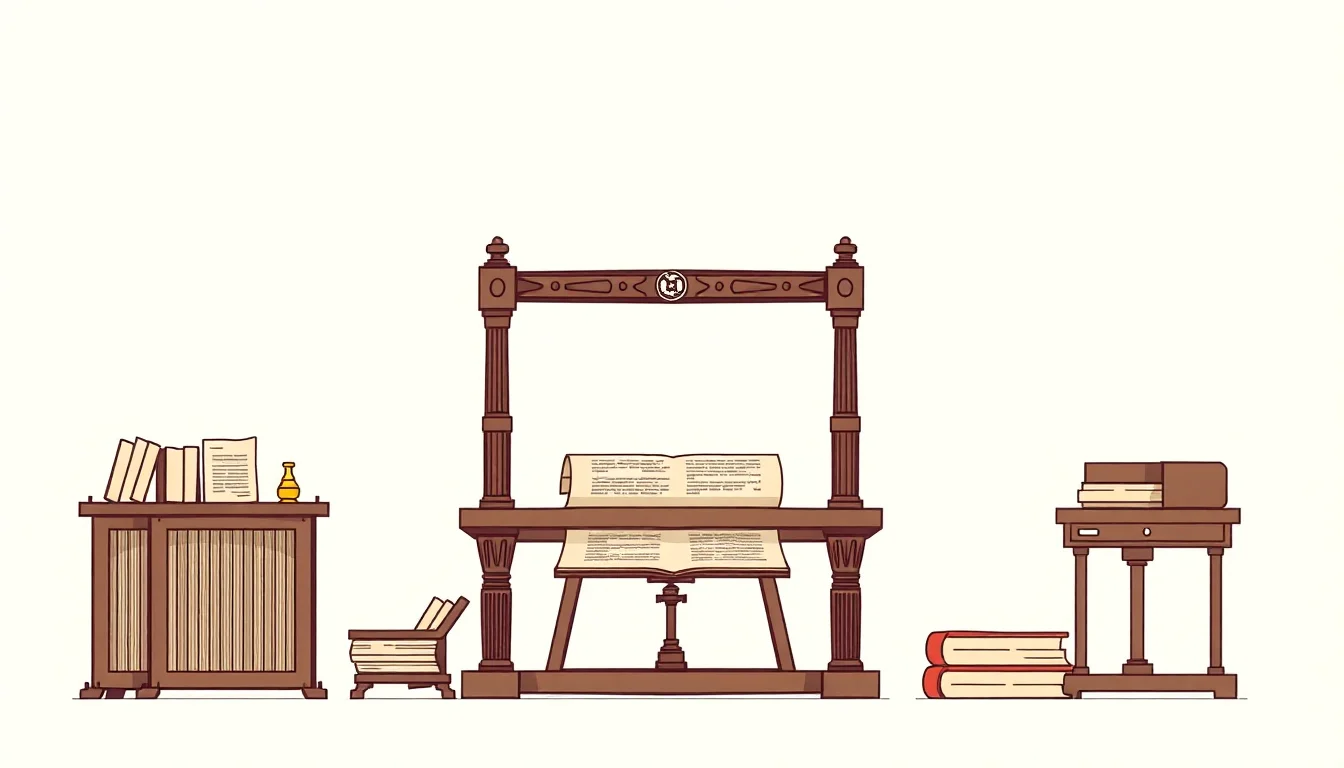
The genius of Gutenberg's system lay in its components: durable metal alloy movable type cast from matrices, an oil-based ink that adhered well to metal, and a modified wine press adapted for printing. Each letter was precisely cast, ensuring uniformity. This mechanical precision, combined with the ability to set and reset type, meant that a single printing press could produce more books in a month than a scribe could in a lifetime. The process was labor-intensive but incredibly scalable for its era.
📈 The Impact: A Knowledge Explosion
The impact of printing was nothing short of revolutionary. The cost of books plummeted, making them accessible to a burgeoning middle class. Literacy rates began to climb, and ideas, both old and new, spread with astonishing speed. This facilitated the Protestant Reformation, as Martin Luther's theses could be widely disseminated, and fueled the intellectual ferment of the Renaissance. The printing press became the engine of an information age, fundamentally reshaping European society.
🤔 Debates & Controversies: Who Gets the Credit?
The question of credit is more complex than a single inventor. While Gutenberg's system was transformative for Europe, Bi Sheng in China developed movable type using ceramic materials centuries earlier, around 1040 AD. Similarly, Korea developed Jikji, the oldest extant book printed with movable metal type, in 1377, predating Gutenberg. Debates persist about the extent of knowledge transfer and independent invention, highlighting the global nature of technological advancement and the tendency to center European narratives.
💡 Precursors and Parallel Innovations
Gutenberg's innovation didn't occur in a vacuum. He built upon existing metalworking techniques, papermaking (which had arrived from China via the Islamic world), and the concept of stamping. Woodblock printing, prevalent in China and Korea for centuries, provided a conceptual precedent for transferring images and text to paper. The development of metallurgy and the availability of skilled artisans were crucial enabling factors for his metal type.
🌍 Global Spread and Adaptation
From Mainz, printing technology spread rapidly across Europe. By 1500, printing presses were operating in over 250 cities, producing an estimated 20 million books. This diffusion wasn't uniform; it followed trade routes and centers of learning. As printing spread to the Americas and beyond, it was adapted and integrated into local cultures, often facing initial resistance but ultimately becoming a powerful tool for cultural exchange and political change.
🚀 Legacy and Modern Echoes
The legacy of Gutenberg's press is immense. It laid the groundwork for all subsequent mass media, from newspapers to the internet. While digital technologies have transformed how we consume information, the fundamental principle of mass reproduction and dissemination of text owes its existence to that 15th-century workshop. The ongoing debate about information access, censorship, and the power of the printed word continues to echo the societal shifts initiated by the printing press.
📚 Recommended Reading & Resources
For those eager to explore further, the Gutenberg Museum in Mainz offers a tangible connection to the era. Academic works like Elizabeth Eisenstein's "The Printing Press as an Agent of Change" provide deep dives into its societal impact. Online archives of early printed books, such as those from the Internet Archive, allow direct engagement with the output of these revolutionary machines. Understanding the context of medieval Europe is also key to appreciating the magnitude of this invention.
❓ Frequently Asked Questions
The invention of printing is a cornerstone of modern civilization, marking a profound shift in how humans share and access information. It's a story of technological convergence, societal transformation, and enduring debates about innovation and credit. Understanding its origins and impact is crucial for grasping the evolution of knowledge itself.
Key Facts
- Year
- 1440
- Origin
- Mainz, Germany
- Category
- Technology & Innovation
- Type
- Historical Event
Frequently Asked Questions
Was Gutenberg the first person to invent printing?
No, Gutenberg is credited with inventing the movable type printing press in Europe around 1440. However, movable type printing was developed in China by Bi Sheng using ceramic materials around 1040 AD, and Korea produced the oldest extant book printed with movable metal type, Jikji, in 1377. Gutenberg's innovation was the specific combination of technologies that made printing efficient and scalable for the Western world.
What was the first book printed by Gutenberg?
The most famous work printed by Johannes Gutenberg is the Gutenberg Bible, also known as the 42-line Bible. Production likely began around 1450 and was completed by 1455. It is considered a masterpiece of early printing and a symbol of the dawn of the printing age in Europe.
How did the printing press affect literacy rates?
The printing press dramatically lowered the cost of books, making them accessible to a much wider population. This increased availability of reading material, combined with the spread of ideas facilitated by printing, directly contributed to a significant rise in literacy rates across Europe over the following centuries. It shifted reading from a specialized skill to a more common one.
What were the key components of Gutenberg's printing press?
Gutenberg's system comprised several key innovations: durable movable type cast from metal alloys using a matrix and punch system, an oil-based ink suitable for metal type, and a modified wine press adapted to apply even pressure for printing. The precision in casting type and the efficiency of the press mechanism were crucial.
How did printing spread so quickly across Europe?
Printing technology spread rapidly due to the itinerant nature of printers and the high demand for books. Printers, often trained in centers like Mainz, would set up shops in new cities, following trade routes and university towns. The economic and intellectual benefits of printing were quickly recognized, encouraging its adoption across the continent by the end of the 15th century.
Did printing immediately replace handwritten manuscripts?
No, the transition was gradual. For a considerable period, printed books were often designed to mimic the appearance of manuscripts, including hand-illumination. Scribes continued to produce manuscripts, especially for specialized or luxury markets, for some time. However, the economic advantage and speed of printing meant it steadily overtook manuscript production for most texts.