
Contents
- 🛠️ What Are Jack Stands, Anyway?
- 🚗 Who Needs Jack Stands (and Why)?
- ⚖️ Types of Jack Stands: A Quick Breakdown
- 📈 Load Capacity: The Critical Number
- 🤔 Safety First: Essential Usage Guidelines
- ⭐ What People Say: Real-World Vibe
- 💡 Choosing the Right Jack Stands for You
- 🛒 Where to Buy & What to Expect
- Frequently Asked Questions
- Related Topics
Overview
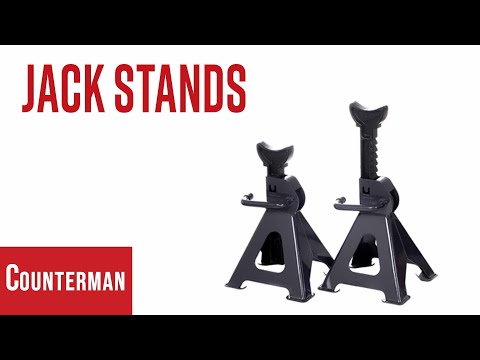
Jack stands are the silent guardians of your garage, the essential safety devices that prevent a jack from being the sole support holding your vehicle aloft. Unlike a jack, which is designed for lifting, jack stands are engineered for sustained support. They are typically made of sturdy metal, often steel, with a robust base and a locking mechanism to ensure stability. Their primary function is to bear the weight of a vehicle when it's raised, allowing mechanics and DIY enthusiasts alike to work underneath with confidence. Without them, the risk of catastrophic failure and severe injury is unacceptably high, making them non-negotiable for any serious automotive work.
🚗 Who Needs Jack Stands (and Why)?
If you ever plan to perform maintenance or repairs that require getting under your car – think oil change, brake repair, or suspension work – then jack stands are for you. They are indispensable for DIY mechanics, professional auto shops, and even hobbyists restoring classic cars. Anyone who values their personal safety and the integrity of their vehicle needs a reliable set. Relying solely on a hydraulic jack is a gamble with potentially fatal consequences; jack stands transform a dangerous situation into a manageable one, providing peace of mind and a stable platform.
⚖️ Types of Jack Stands: A Quick Breakdown
The market offers a few primary types of jack stands, each with its own strengths. pin-type are simple and robust, relying on a sturdy pin to hold the height. ratchet-type are common and easy to adjust, using a toothed rack and pawl system. scissor-type are less common for vehicle support but exist, mimicking the action of a scissor jack. Finally, bottle jack stands integrate a bottle jack with a stand, offering a combined lifting and supporting solution, though often with a higher price point and potentially more complex failure modes. Each type has a distinct vibe score for ease of use and reliability.
📈 Load Capacity: The Critical Number
The most critical specification for any jack stand is its load capacity. This rating, usually expressed in tons (e.g., 2-ton, 3-ton, 6-ton, 12-ton), indicates the maximum weight the stand can safely support. It's crucial to select stands with a capacity significantly higher than half the weight of your vehicle. For example, if your car weighs 4,000 lbs (2 tons), you'll need stands rated for at least 3 tons each. Overlooking this can lead to bending, failure, and severe accidents. Always check the manufacturer's specifications and err on the side of caution.
🤔 Safety First: Essential Usage Guidelines
Using jack stands correctly is paramount. Always place them on a level surface and ensure the vehicle's weight is centered on the saddle. Never work under a vehicle supported only by a jack. Position the jack stands at strong points on the vehicle's frame or designated support locations, as outlined in your service manual. Once positioned, give the vehicle a gentle push to confirm stability before proceeding. Regularly inspect your jack stands for any signs of damage, wear, or corrosion; damaged stands should be immediately retired.
⭐ What People Say: Real-World Vibe
Online forums and automotive communities consistently highlight the critical nature of jack stands. Users often share harrowing near-misses or stories of equipment failure, reinforcing the mantra: 'Never trust a jack alone.' Reviews frequently praise brands like Torin, Pittsburgh Automotive, and ESCP for their durability and reliability, though debates persist about the superiority of steel versus aluminum construction for certain applications. The general consensus is that investing in quality jack stands is one of the smartest safety decisions a car owner can make, contributing to a high safety vibe score for any garage.
💡 Choosing the Right Jack Stands for You
Selecting the right jack stands depends on your vehicle's weight and the types of work you anticipate performing. For most passenger cars and light trucks, a pair of 3-ton or 6-ton ratchet jack stands offers a good balance of capacity, adjustability, and affordability. If you work on heavier vehicles like SUVs or trucks, consider higher capacity stands (e.g., 6-ton or 12-ton). For portability, some compact or collapsible models exist, but always prioritize stability and load rating over convenience. Consider your garage space and storage options as well.
🛒 Where to Buy & What to Expect
Jack stands are widely available from automotive parts retailers, big-box hardware stores, and online marketplaces like Amazon and eBay. Prices can range from $30 for a basic pair of 2-ton stands to over $150 for heavy-duty, high-capacity sets. Expect to pay around $50-$100 for a solid pair of 3-ton or 6-ton stands suitable for most common automotive tasks. Look for sales and compare prices across different retailers to get the best value. Always purchase from reputable sources to ensure you're getting genuine, safety-certified products.
Key Facts
- Year
- 1920
- Origin
- United States
- Category
- Automotive Tools & Safety
- Type
- Product Category
Frequently Asked Questions
Can I use a car jack instead of jack stands?
Absolutely not. A car jack is designed solely for lifting a vehicle, not for supporting its weight for extended periods. Relying on a jack alone is extremely dangerous and can lead to serious injury or death if the jack fails. Jack stands are specifically engineered to provide stable, long-term support. Always use jack stands in conjunction with a jack when working under a vehicle.
How do I know what load capacity I need?
You need jack stands with a combined capacity that is significantly greater than the weight of your vehicle. A good rule of thumb is to choose stands rated for at least 3 tons (6,000 lbs) per pair for most passenger cars and light trucks. For heavier vehicles like SUVs or trucks, opt for 6-ton or 12-ton rated stands. Always check your vehicle's weight and select stands with a capacity well above half that weight for each individual stand.
Where are the safest places to position jack stands?
The safest locations are typically reinforced points on the vehicle's frame or designated support points indicated in your vehicle's owner's manual or service manual. These are often reinforced areas of the chassis, pinch welds (with appropriate adapters), or specific frame rails. Avoid placing stands on suspension components, axles, or body panels, as these are not designed to bear the vehicle's full weight in this manner.
How often should I inspect my jack stands?
You should inspect your jack stands before every use. Look for any signs of damage, such as cracks, bends, severe rust, or worn locking mechanisms. If you notice any damage, do not use the stands. It's also a good idea to periodically check the welds and structural integrity, especially if they are stored in a damp environment or have been subjected to heavy use.
Are there different sizes of jack stands?
Yes, jack stands come in various height ranges to accommodate different vehicles and lifting scenarios. Some are designed for low-profile vehicles, while others extend much higher for trucks and SUVs. When choosing, ensure the minimum and maximum height range of the jack stands is suitable for your vehicle and the intended work. The load capacity is the primary safety factor, but height adjustability is crucial for practical application.