
Contents
Overview
The history of Kanban is a fascinating journey from a simple Japanese supermarket restocking system to a sophisticated project management methodology adopted worldwide. Initially developed by Toyota in the 1950s as part of its revolutionary Toyota Production System (TPS), Kanban's core principle was to manage workflow visually, ensuring that production only occurred when there was a demand for it, thereby minimizing waste and optimizing efficiency. This system, inspired by the way supermarkets restocked shelves based on customer purchases, used simple cards or signals to indicate when more parts were needed. Over decades, its application expanded beyond manufacturing, notably gaining traction in software development and IT operations in the early 2000s, where it became a cornerstone of Agile and Lean Software Development practices. Today, Kanban is a globally recognized tool for improving transparency, managing flow, and fostering continuous improvement across diverse industries, from manufacturing and logistics to healthcare and marketing.
🎵 Origins & History
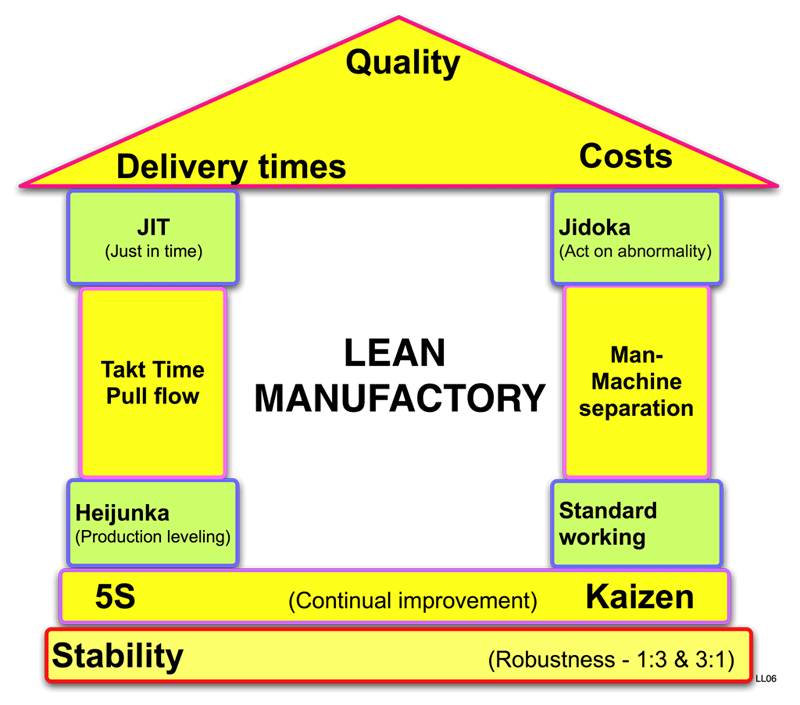
Kanban was developed within the Toyota Motor Corporation. While often attributed solely to Taiichi Ohno, the system's development was a collaborative effort, building upon earlier concepts of flow and pull systems. Ohno, a key architect of the Toyota Production System (TPS), adapted ideas to the factory floor, envisioning a system where production would be triggered by actual demand, not by forecasts or schedules. Kanban initially used simple visual signals, often just colored cards, to manage the flow of parts between different production stages. This marked a radical departure from traditional mass production, which relied on push systems and large inventories. The goal was to create a smooth, continuous flow, reducing Just-In-Time (JIT) inventory and eliminating waste, or 'muda', as defined by TPS.
⚙️ How It Works
At its heart, Kanban is a visual signaling system designed to manage workflow and limit work-in-progress (WIP). The core mechanism involves using cards, physical boards, or digital tools to represent work items. These items move through predefined stages on a Kanban board, typically depicted as columns (e.g., 'To Do', 'In Progress', 'Done'). Each column represents a step in the workflow, and the movement of a card from one column to the next signifies progress. Crucially, Kanban employs WIP limits for each stage, preventing bottlenecks and encouraging teams to finish tasks before starting new ones. When a work item is completed and moves to the next stage, a signal (the Kanban card) is generated, triggering the start of a new item in the preceding stage. This pull system ensures that work is only initiated when there is capacity downstream, thereby optimizing flow and reducing lead times, a principle championed by Eliyahu M. Goldratt in his Theory of Constraints.
📊 Key Facts & Numbers
Kanban's impact is quantifiable. Organizations implementing Kanban often report significant improvements in workflow efficiency. Studies on Kanban adoption in software development show notable reductions in lead times. Globally, it's estimated that a substantial portion of organizations practicing Agile principles utilize some form of Kanban or Kanban-inspired practices. The global market for project management software, much of which incorporates Kanban features, is substantial and continues to grow.
👥 Key People & Organizations
The development and popularization of Kanban are inextricably linked to several key figures and organizations. Taiichi Ohno, a former vice president at Toyota, is widely recognized as the principal architect of the Kanban system within the Toyota Production System (TPS). His insights into visual management and pull systems were foundational. Later, David J. Anderson was instrumental in adapting Kanban for knowledge work, particularly in software development. Kanban University was established to further this work. Other significant contributors include Jeff Sutherland and Ken Schwaber, who, while more closely associated with Scrum, acknowledged and integrated Kanban's principles into broader Agile discussions. Companies like Microsoft and Google have also extensively adopted and adapted Kanban for their internal development processes, further cementing its widespread use.
🌍 Cultural Impact & Influence
Kanban's influence extends far beyond its manufacturing origins. Its emphasis on visual management, continuous flow, and limiting work-in-progress has resonated deeply within the software development community, becoming a cornerstone of Agile and Lean Software Development. The simplicity and adaptability of the Kanban board have made it a popular tool for teams in diverse fields, including marketing, human resources, and even personal task management. Its visual nature fosters transparency and communication, breaking down silos and promoting a shared understanding of workflow. The 'Kanban Method' has become a recognized framework for evolutionary change, enabling organizations to improve their processes incrementally without requiring radical restructuring, a concept also explored by Henry Ford in his early assembly line innovations, albeit with a different philosophy.
⚡ Current State & Latest Developments
In 2024 and beyond, Kanban continues to evolve, particularly with the proliferation of digital Kanban tools and integrations. Platforms like Jira Software, Trello, and Asana offer sophisticated Kanban board functionalities, often integrating with other development and collaboration tools. There's a growing trend towards 'Kanban for X,' with specialized applications emerging for areas like DevOps, customer support, and even personal productivity. The concept of 'flow metrics'—such as cycle time, lead time, and throughput—is gaining prominence, with teams increasingly focusing on optimizing these quantitative measures of performance. Furthermore, discussions around 'Kanplan,' a hybrid approach combining Kanban's flow principles with planning techniques from Scrum, are gaining traction as organizations seek to balance flexibility with predictability.
🤔 Controversies & Debates
Despite its widespread adoption, Kanban is not without its controversies and debates. A primary point of contention is its perceived simplicity versus the complexity of truly mastering its principles. Critics argue that many teams implement 'Kan-ban' (a board with columns) without adhering to the core principles of WIP limits, flow management, and continuous improvement, leading to superficial adoption. Another debate centers on its suitability for all types of work; while excellent for continuous flow, some argue it's less effective for projects with distinct phases and fixed deadlines compared to Scrum. The debate also touches on whether Kanban is a methodology or a technique; proponents like David J. Anderson advocate for the 'Kanban Method' as a comprehensive approach to evolutionary change, while others see it more as a set of tools to be applied within existing frameworks. The tension between its evolutionary, non-disruptive nature and the need for rapid, transformative change in some organizational contexts is also a recurring theme.
🔮 Future Outlook & Predictions
The future of Kanban appears robust, driven by the ongoing demand for efficient workflow management in increasingly complex environments. We can anticipate further integration of AI and machine learning into Kanban tools to provide predictive analytics on workflow bottlenecks and suggest optimal WIP limits. The concept of 'generative Kanban,' where AI actively assists in task breakdown and prioritization, is a speculative but plausible development. As organizations continue to embrace remote and hybrid work models, the digital Kanban board will remain an indispensable tool for maintaining visibility and coordination. There's also a potential for Kanban to be further formalized and standardized, perhaps leading to more robust certification pathways beyond those offered by Kanban University. The ongoing challenge will be to ensure that the core principles of flow and waste reduction are not lost amidst technological advancements and evolving work paradigms.
💡 Practical Applications
Kanban's practical applications are vast and varied. In manufacturing, it remains a critical tool for ma
Key Facts
- Category
- history
- Type
- topic