
Contents
Overview
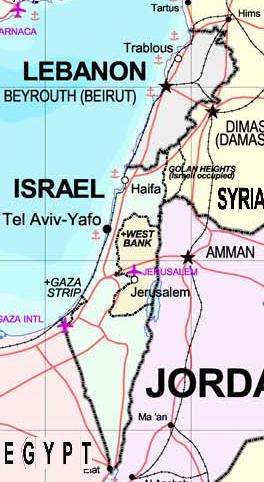
The origins of the Lebanon conflict are deeply intertwined with the aftermath of the Palestine War, which led to the displacement of hundreds of thousands of Palestinians. Many found refuge in Lebanon, and by the early 1970s, the Palestine Liberation Organization (PLO), under leaders like Yasser Arafat, had established a significant military and political presence in southern Lebanon. Yasser Arafat was instrumental in establishing the PLO's presence in Lebanon. This presence, coupled with internal Lebanese sectarian tensions, destabilized the country, leading to the Lebanese Civil War beginning in 1975. Israel's initial major intervention occurred in 1978 with Operation Litani, aiming to push PLO forces away from its northern border. This was followed by a much larger invasion in 1982, Operation Peace for Galilee, which aimed to dismantle the PLO infrastructure in Lebanon and install a pro-Israeli government. Menachem Begin authorized the 1982 invasion. While the PLO was largely expelled, a protracted Israeli occupation of southern Lebanon persisted until 2000, fueling the rise of Hezbollah and a sustained guerrilla war.
⚙️ How It Works
The conflict operates through a complex interplay of state and non-state actors, often characterized by asymmetric warfare. Israel's military strategy has historically focused on direct incursions, air strikes, and establishing buffer zones to counter threats emanating from Lebanese territory. On the Lebanese side, the primary non-state actor, Hezbollah, employs guerrilla tactics, rocket attacks, and sophisticated improvised explosive devices (IEDs) against Israeli forces and settlements. The Syrian Civil War and the broader regional geopolitical landscape, particularly the rivalry between Iran and Saudi Arabia, have also significantly influenced the conflict's dynamics, providing backing and strategic direction to various factions. The conflict's ebb and flow are often dictated by specific cross-border incidents, political shifts in both countries, and the broader regional security environment, with periods of intense fighting punctuated by fragile ceasefires brokered by international bodies like the United Nations.
📊 Key Facts & Numbers
The Lebanon conflict has resulted in staggering human and economic costs. The 2006 Lebanon War, lasting just over a month, saw approximately 1,200 Lebanese casualties, over 150 Israeli casualties, and caused an estimated $1 billion in damage to Lebanon's infrastructure. Lebanon has been grappling with a severe financial crisis since 2019. The economic impact on Lebanon, already grappling with a severe financial crisis since 2019, has been devastating, with estimates suggesting the conflict has cost the country billions in lost trade, tourism, and reconstruction needs.
👥 Key People & Organizations
Key figures and organizations have shaped the trajectory of the Lebanon conflict. Yasser Arafat, as leader of the PLO, was instrumental in establishing its presence in Lebanon. Hassan Nasrallah, the long-time leader of Hezbollah, became a prominent figure in the resistance against Israeli occupation and a key player in regional politics. On the Israeli side, Prime Ministers like Menachem Begin (who authorized the 1982 invasion) and Ehud Barak (who oversaw the 2000 withdrawal) played pivotal roles. The Israel Defense Forces (IDF) have been the primary military instrument of Israeli policy. Syria, under the Assad regime, has also been a significant actor, influencing Lebanese politics and providing support to certain factions. International bodies like the United Nations Interim Force in Lebanon (UNIFIL) have been tasked with maintaining peace, though often with limited success.
🌍 Cultural Impact & Influence
The Lebanon conflict has cast a long shadow over Lebanese society and culture, fostering a generation marked by displacement, loss, and a deep-seated sense of resistance. The protracted violence has fueled a resilient, yet often traumatized, national psyche. Culturally, the conflict has inspired a wealth of literature, film, and music that grapples with themes of occupation, resistance, identity, and displacement. The rise of Hezbollah as a powerful political and military force has also significantly altered Lebanon's internal power balance and its relationship with the wider Arab world. Regionally, the conflict has been a constant source of instability, influencing the policies of neighboring states like Syria and Jordan, and serving as a proxy battleground for larger geopolitical rivalries, particularly between Iran and Israel. The enduring images of destroyed neighborhoods and resilient communities have become potent symbols of the Levant's enduring struggles.
⚡ Current State & Latest Developments
The current phase of the Lebanon conflict, reignited in October 2023 following the Hamas attacks on Israel, has seen unprecedented levels of cross-border hostilities. Hezbollah has engaged in daily exchanges of fire with the IDF, leading to significant displacement on both sides of the border and substantial damage to infrastructure in southern Lebanon. This escalation has raised fears of a full-scale war, which could have catastrophic consequences for Lebanon, already in the throes of a severe economic crisis. International diplomatic efforts, led by the United States and France, are underway to de-escalate tensions and prevent a wider conflagration. The situation remains highly volatile, with the potential for rapid escalation or de-escalation depending on regional political developments and the actions of key actors like Hezbollah and Iran.
🤔 Controversies & Debates
The Lebanon conflict is rife with controversy and debate, particularly concerning the legitimacy of Hezbollah's armed resistance versus its designation as a terrorist organization by several countries. Critics of Israel's military actions point to the disproportionate civilian casualties and the long-term destabilizing effects of its occupations. Conversely, Israel argues its operations are defensive measures against existential threats. The role and effectiveness of UNIFIL in maintaining peace and preventing arms smuggling into southern Lebanon are also subjects of ongoing debate. Furthermore, the extent to which external powers like Iran and Syria manipulate the conflict for their own geopolitical gains is a persistent point of contention, with differing perspectives on their true influence and objectives.
🔮 Future Outlook & Predictions
The future of the Lebanon conflict hinges on a complex web of regional and international dynamics. A full-scale war between Israel and Hezbollah remains a distinct possibility, with potentially devastating consequences for Lebanon's already fragile state and economy. Diplomatic solutions, likely involving international mediation and addressing the root causes of the conflict, including the Palestinian issue and Lebanon's internal political divisions, offer a path toward sustainable peace. However, the deep-seated animosities and the involvement of regional powers make such resolutions challenging. The potential for a negotiated settlement that ensures Israel's security while respecting Lebanese sovereignty and addressing the grievances of its population remains a distant, yet crucial, aspiration.
💡 Practical Applications
While the Lebanon conflict is primarily a geopolitical and military struggle, its dynamics have practical implications for regional security and international relations. The conflict serves as a case study in asymmetric warfare, influencing military doctrines and counter-terrorism strategies globally. The effectiveness of international peacekeeping missions, such as UNIFIL, in volatile regions is constantly being evaluated.
Key Facts
- Category
- history
- Type
- topic