
Contents
- 🚀 What Exactly Are LEO Constellations?
- 🌐 Who Benefits Most from LEO?
- 🛰️ The Tech Behind the Orbit
- 📈 Market Dynamics & Key Players
- 💰 Pricing & Service Tiers
- ⚡ Performance & Latency
- ⚠️ The Controversy Spectrum
- 🔭 Future Trajectories & Innovations
- 💡 Practical Tips for Users
- 📞 Getting Connected
- Frequently Asked Questions
- Related Topics
Overview
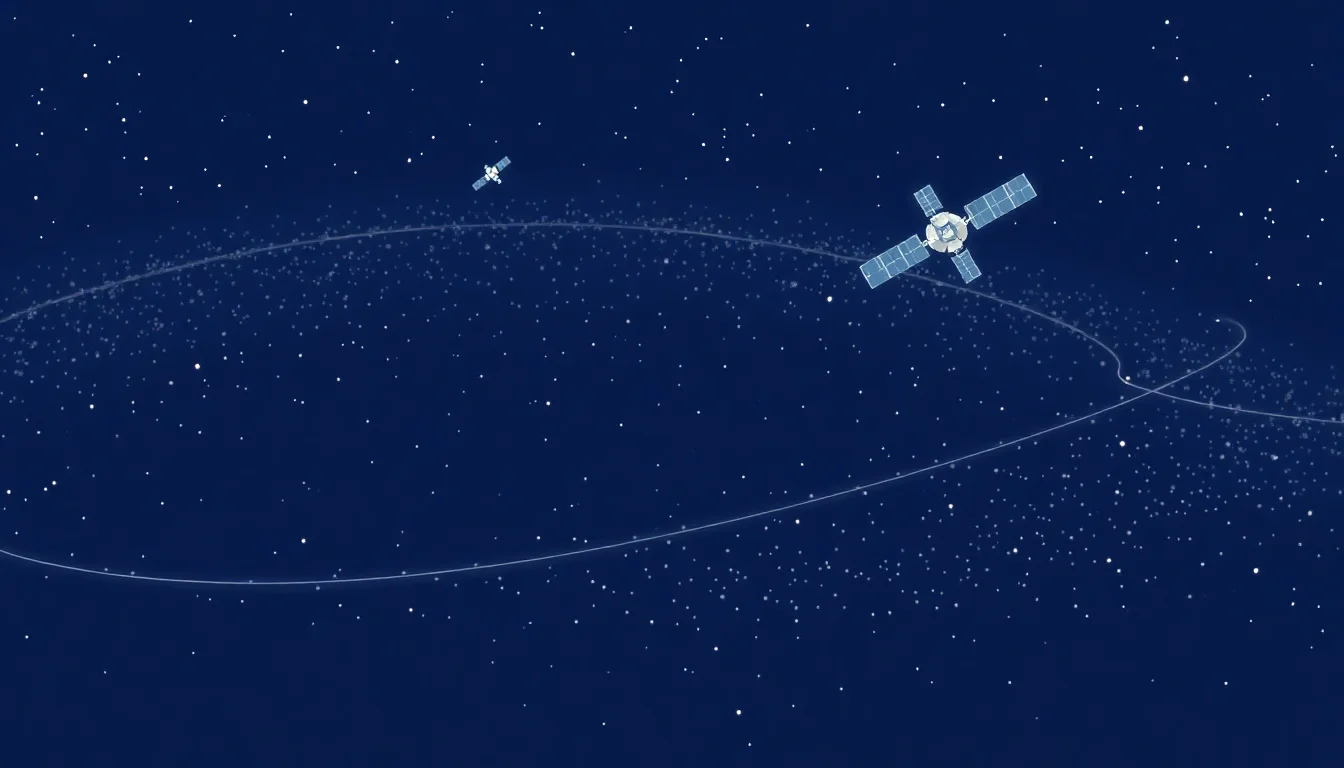
Low Earth Orbit (LEO) satellite constellations are not just a handful of satellites; they are vast networks, often numbering in the thousands, strategically positioned in orbits roughly 160 to 2,000 kilometers above Earth. Unlike their geostationary (GEO) counterparts, these LEO satellites move at incredible speeds, requiring constant handoffs between satellites to maintain continuous service. This dynamic architecture is the engine behind a new wave of global connectivity, promising internet access and data services to previously underserved regions. Think of it as a constantly shifting, high-speed relay race in space, designed to blanket the planet with signals. The sheer scale of these constellations, like Elon Musk's Starlink or OneWeb's ambitious projects, represents a significant shift in how we approach space-based communication infrastructure.
🌐 Who Benefits Most from LEO?
The primary beneficiaries of LEO constellations are those living in areas with poor or nonexistent terrestrial broadband infrastructure. This includes rural communities, remote islands, and developing nations where laying fiber optic cables is economically or logistically prohibitive. Beyond individual users, industries like maritime shipping, aviation, and disaster response agencies are finding immense value in reliable, global connectivity. Businesses requiring real-time data from remote sensors, such as in agriculture or mining, also stand to gain significantly. The promise is a more equitable digital world, where location is no longer a barrier to essential online services and economic opportunity. For the average consumer, it means potentially faster, more reliable internet, even far from urban centers.
🛰️ The Tech Behind the Orbit
The engineering marvel of LEO constellations lies in their distributed nature and rapid orbital mechanics. Each satellite is a sophisticated piece of technology, equipped with phased-array antennas for precise beamforming and inter-satellite laser links for high-speed data transfer. The constant motion necessitates complex ground station networks and sophisticated network management systems to ensure seamless transitions. Satellites are launched in batches, often using reusable rockets like SpaceX's Falcon 9, to reduce costs. The miniaturization of technology has been key, allowing for more satellites to be packed into each launch and reducing the overall cost per satellite. This intricate dance of orbital mechanics and advanced telecommunications is what makes global LEO coverage a reality.
📈 Market Dynamics & Key Players
The LEO satellite market is a rapidly evolving arena, dominated by a few major players but with numerous smaller ventures vying for niche segments. Starlink leads in terms of deployed satellites and subscriber numbers, driven by its aggressive launch cadence and integration with its broader space ecosystem. OneWeb is another significant player, focusing heavily on enterprise and government clients. Other notable entities include Amazon's Project Kuiper, which is still in its early deployment phases but boasts substantial backing, and various national initiatives. The competition is fierce, pushing innovation in satellite design, launch services, and ground terminal technology. This intense rivalry is driving down costs and accelerating service deployment across the globe.
💰 Pricing & Service Tiers
Pricing for LEO satellite internet services typically varies based on speed, data caps, and the type of service (residential vs. business). Starlink's residential service, for example, often involves an upfront hardware cost for the user terminal, followed by a monthly subscription fee. Business plans usually offer higher speeds and priority support at a premium. OneWeb primarily targets enterprise and government clients, with custom solutions and pricing structures rather than standardized consumer plans. It's crucial to compare the total cost of ownership, including hardware, installation, and monthly fees, against the promised speeds and data allowances. Some providers may also offer tiered plans with different levels of priority access during peak network times.
⚡ Performance & Latency
A major advantage of LEO constellations over traditional GEO satellites is significantly reduced latency. Because the satellites are much closer to Earth, the time it takes for a signal to travel from your device to the satellite and back is dramatically shorter. This is critical for real-time applications like online gaming, video conferencing, and financial trading. While latency for LEO can still be higher than terrestrial fiber, it's often in the 20-50 millisecond range, a vast improvement over the 500+ milliseconds typical of GEO services. This performance leap opens up new possibilities for applications that were previously impractical or impossible with satellite internet.
⚠️ The Controversy Spectrum
The proliferation of LEO satellites has ignited significant debate, particularly concerning space debris and light pollution. Critics, including astronomers and space agencies, express concern over the increasing number of objects in orbit, raising the risk of collisions and the creation of more debris, which could threaten future space activities. The brightness of satellite trails in astronomical images is another major point of contention, impacting scientific observation. Furthermore, the environmental impact of frequent rocket launches and the potential for light pollution affecting nocturnal wildlife are subjects of ongoing discussion. While providers are implementing mitigation strategies, the long-term sustainability of such massive constellations remains a point of contention.
🔭 Future Trajectories & Innovations
The future of LEO constellations points towards increased integration with terrestrial networks, the development of more advanced satellite capabilities, and potentially new service offerings. We're seeing a trend towards 'space-based internet of things' (IoT) solutions, enabling connectivity for a vast array of sensors and devices. Direct-to-device connectivity, allowing smartphones to connect directly to satellites without special hardware, is another area of active development. Furthermore, the infrastructure being built for LEO constellations could eventually support other services, such as Earth observation, in-orbit servicing, and even space-based manufacturing. The ongoing miniaturization and cost reduction in satellite technology suggest even more ambitious and complex constellations are on the horizon.
💡 Practical Tips for Users
When considering a LEO satellite internet service, do your homework. First, check for availability in your specific geographic location, as coverage can be patchy during the initial deployment phases. Understand the hardware requirements; most services require a dedicated user terminal (dish) that needs a clear, unobstructed view of the sky, free from trees or buildings. Installation can sometimes be a DIY project, but professional installation is often recommended for optimal performance. Compare the advertised speeds and data limits against your actual usage needs. Don't forget to factor in potential latency for real-time applications if that's important to you. Finally, read user reviews for your region to get a realistic picture of performance and reliability.
📞 Getting Connected
To get connected with a LEO satellite constellation service, the first step is to visit the provider's official website. For instance, Starlink allows you to enter your address to check for service availability and pre-order. Similarly, Project Kuiper and OneWeb have dedicated sections for potential customers to register interest or inquire about enterprise solutions. Be prepared to provide your location details and contact information. Many providers offer online portals for managing your account, tracking orders, and accessing customer support. For business or government inquiries, direct contact through their sales or partnership departments is usually the most effective route.
Key Facts
- Year
- 2023
- Origin
- Vibepedia.wiki
- Category
- Technology & Infrastructure
- Type
- Technological Concept
Frequently Asked Questions
How does LEO satellite internet compare to traditional cable or fiber internet?
LEO satellite internet offers a significant advantage in areas where cable or fiber is unavailable. While LEO latency is much lower than geostationary satellites, it's generally still higher than terrestrial fiber optic connections. Speeds can be comparable to or exceed DSL and some cable plans, but may not always match the highest-tier fiber offerings. The primary differentiator is accessibility; LEO can provide high-speed internet to remote and rural locations that terrestrial options cannot reach.
What is latency and why is it important for LEO constellations?
Latency is the delay in data transfer, measured in milliseconds (ms), representing the time it takes for a packet of data to travel from its source to its destination and back. For LEO constellations, lower latency (typically 20-50 ms) is a key selling point compared to older geostationary satellites (500+ ms). This reduced delay is crucial for real-time applications like online gaming, video conferencing, and remote work, making the experience much more responsive and fluid.
How many satellites are in a typical LEO constellation?
LEO constellations are characterized by their sheer number of satellites. While early systems might have had dozens, modern constellations are designed to have thousands. Starlink, for example, aims for tens of thousands of satellites. This vast number is necessary to provide continuous global coverage as individual satellites orbit the Earth rapidly and are only in view of a specific ground location for a short period.
What are the main challenges facing LEO satellite deployment?
Key challenges include the immense cost of manufacturing and launching thousands of satellites, navigating complex regulatory environments for spectrum allocation and orbital slots, and managing the growing issue of space debris. Ensuring reliable service requires sophisticated ground infrastructure and robust network management systems. Public perception and addressing concerns about light pollution and orbital congestion are also significant hurdles.
Can I use LEO satellite internet indoors?
Generally, LEO satellite internet requires an unobstructed view of the sky for the user terminal (dish) to communicate effectively with the satellites. Most installations involve mounting the terminal outdoors on a roof, pole, or wall. While some indoor installations might be possible in specific circumstances with minimal obstructions, performance can be significantly degraded. Clear line-of-sight is paramount for optimal signal strength and reliability.
What is the difference between LEO and GEO satellite internet?
The primary difference lies in orbital altitude and resulting latency. Low Earth Orbit (LEO) satellites are much closer to Earth (160-2,000 km), leading to significantly lower latency (20-50 ms) and faster speeds, but requiring large constellations for continuous coverage. Geostationary Orbit (GEO) satellites are much farther away (approx. 35,786 km), resulting in higher latency (500+ ms) and slower speeds, but a single satellite can cover a vast geographic area, simplifying ground infrastructure.