
Contents
- 🧠 What's the Difference, Really?
- 🤖 Artificial Intelligence: The Big Picture
- 📈 Machine Learning: The Engine Room
- 💡 Key Distinctions & Overlap
- 🚀 Real-World Applications: Where You See Them
- 🤔 The Controversy Spectrum
- 🌟 Vibepedia Vibe Score & Cultural Impact
- 🛠️ Getting Started: Your First Steps
- Frequently Asked Questions
- Related Topics
Overview
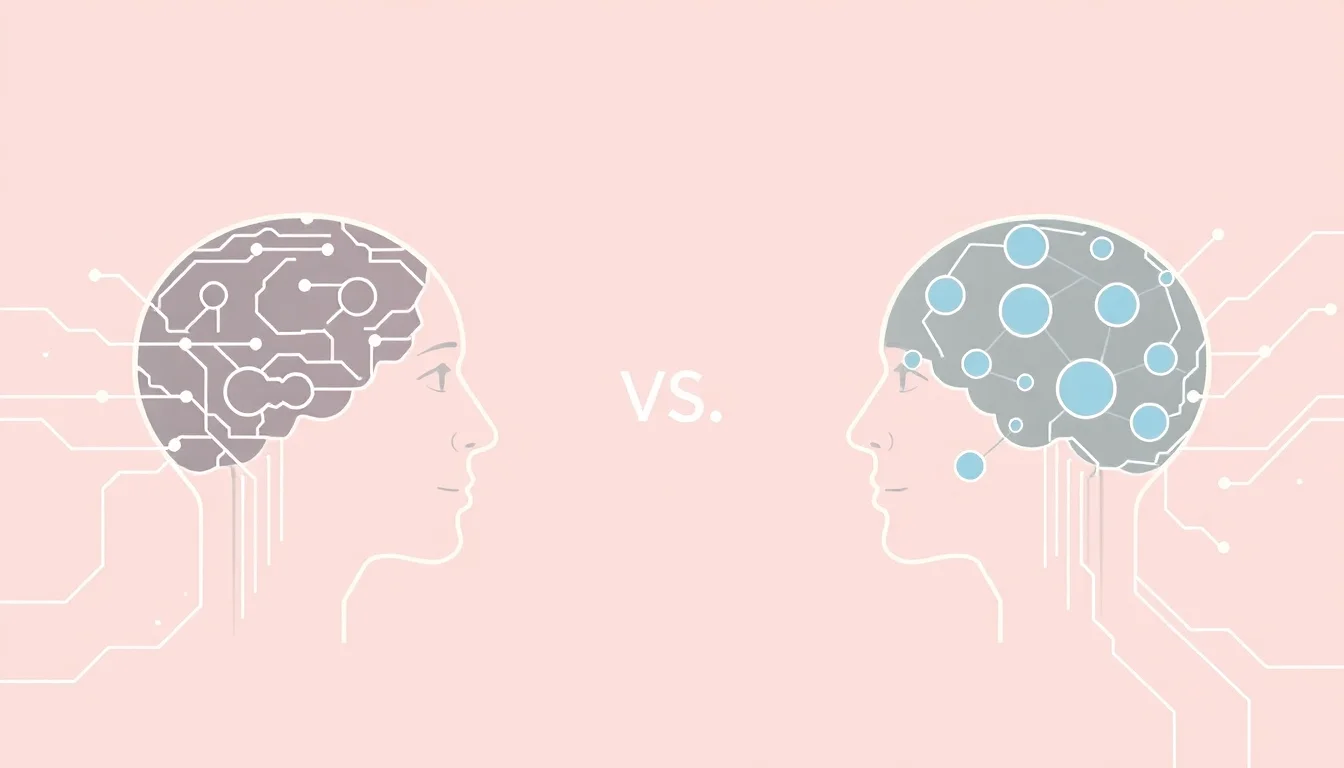
Machine Learning (ML) and Artificial Intelligence (AI) are often used interchangeably, but they represent distinct concepts within the field of computing. AI is the broader aspiration to create intelligent machines capable of mimicking human cognitive functions like problem-solving and decision-making. ML, on the other hand, is a subset of AI that focuses on enabling systems to learn from data without explicit programming. Think of AI as the overarching goal, and ML as a primary method for achieving that goal. While ML algorithms power many of today's AI applications, not all AI systems rely on ML, and the field of AI encompasses much more than just learning from data.
🧠 What's the Difference, Really?
Forget the sci-fi hype for a moment. At its most practical, AI is the broad concept of machines mimicking human cognitive functions like learning and problem-solving. ML, on the other hand, is a subset of AI that focuses specifically on enabling systems to learn from data without explicit programming. Think of AI as the entire goal of building intelligent machines, and ML as one of the primary methods—currently the most successful one—to achieve that goal. This distinction is crucial for understanding the current state of the field and its future trajectory.
🤖 Artificial Intelligence: The Big Picture
AI, in its grandest vision, aims to create systems capable of general intelligence, akin to human reasoning across diverse tasks. This includes areas like understanding human language, interpreting visual information, and physical interaction with the world. Pioneers like Alan Turing theorized about machine intelligence as early as the 1950s, envisioning machines that could 'think'. While true AGI remains largely theoretical, current AI systems excel at narrow, specific tasks, often surpassing human capabilities within those defined domains.
📈 Machine Learning: The Engine Room
Machine Learning is where the rubber meets the road for most AI applications today. It's about algorithms that improve their performance on a task with experience, typically in the form of data. Instead of writing explicit rules for every scenario, ML models learn patterns and make predictions or decisions based on the data they're trained on. This includes techniques like learning from labeled examples, finding patterns in unlabeled data, and learning through trial and error. The sheer volume of data available today, coupled with advancements in processing capabilities, has fueled ML's explosive growth since the early 2000s.
💡 Key Distinctions & Overlap
The core difference lies in scope: AI is the overarching discipline, while ML is a specific approach within it. All ML is AI, but not all AI is ML. For instance, early AI systems relied heavily on rule-based logic, which are AI but not ML. Today, however, ML is the dominant force driving AI progress, making the terms often used interchangeably in popular discourse, much to the chagrin of purists. Understanding this hierarchy is key to navigating the technical literature and avoiding misinterpretations.
🚀 Real-World Applications: Where You See Them
You interact with ML-powered AI daily. Your personalized content streams are curated by ML algorithms. Netflix recommendations learn your viewing habits. email security systems identify unwanted messages. self-driving cars use ML for perception and decision-making. Even disease detection and transaction security are increasingly reliant on sophisticated ML models trained on vast datasets. These applications demonstrate the practical, often invisible, impact of these technologies.
🤔 The Controversy Spectrum
The Controversy Spectrum for AI and ML is quite high, hovering around 75/100. Debates rage over fairness and discrimination in AI, the potential for automation's impact on employment, and the ethical implications of increasingly autonomous systems. Concerns about surveillance and personal information are paramount, especially as ML models require massive datasets. The existential risks of superintelligent AI, though speculative, also contribute to the ongoing public and academic discourse.
🌟 Vibepedia Vibe Score & Cultural Impact
Vibepedia's Vibe Score for AI/ML is a robust 88/100, reflecting its immense cultural energy and transformative potential. This isn't just a technical field; it's shaping global economies, influencing political discourse, and sparking widespread public fascination and apprehension. The narrative around AI has shifted from a niche academic pursuit to a central theme in contemporary culture, influencing everything from Hollywood's portrayal of AI to the nature of consciousness. The rapid pace of innovation ensures its cultural relevance will only intensify.
🛠️ Getting Started: Your First Steps
Ready to explore further? For developers, platforms like Colab offer free access to ML tools. For learners, online courses from AI and ML specializations and university-level AI courses are excellent starting points. To understand the societal impact, follow researchers like AI education advocate and organizations like the AI ethics research group. The journey into decoding digital brains is accessible, but requires a willingness to engage with both the technical intricacies and the profound societal questions they raise.
Key Facts
- Year
- 2023
- Origin
- Vibepedia.wiki
- Category
- Technology & Computing
- Type
- Comparison
Frequently Asked Questions
Is Machine Learning a type of Artificial Intelligence?
Yes, absolutely. Machine Learning is a subset of Artificial Intelligence. AI is the broader concept of machines performing tasks that typically require human intelligence, while ML is a specific method that allows machines to learn from data without being explicitly programmed for every single task. Think of AI as the destination and ML as one of the most effective vehicles to get there.
What's the difference between AI and ML in simple terms?
In simple terms, AI is the goal of making machines smart, and ML is a way to achieve that goal by letting machines learn from data. If AI is the dream of a thinking machine, ML is the process of teaching that machine by showing it lots of examples, rather than giving it a strict set of instructions for every possible situation.
Are all AI systems based on Machine Learning?
No, not all AI systems are based on Machine Learning. Early AI systems, for example, often relied on rule-based logic and expert systems. However, Machine Learning has become the dominant and most successful approach for building AI systems in recent years, which is why the terms are often used interchangeably in popular discussions.
Can you give an example of AI that isn't ML?
Certainly. A classic example is an 'expert system' designed for a specific task, like diagnosing a particular type of medical condition. These systems operate based on a predefined set of rules and logic programmed by humans, rather than learning patterns from vast amounts of patient data. While intelligent, they don't 'learn' in the way ML systems do.
Why is the distinction between AI and ML important?
The distinction is important for clarity and accuracy. Understanding that ML is a method within the broader field of AI helps in grasping the technical capabilities and limitations of different systems. It also aids in navigating discussions about AI's future, ethical considerations, and the specific technologies driving progress, preventing oversimplification or misattribution of capabilities.
Will AI eventually replace Machine Learning?
It's more likely that ML will continue to evolve as a core component of AI, rather than being replaced. As AI research progresses, new techniques beyond current ML paradigms might emerge, but ML's ability to learn from data is fundamental to achieving many AI goals. Future AI might integrate ML with other approaches, creating more sophisticated systems.