
Contents
Overview
Marc Bolan, born Mark Feld (1947-1977), was the incandescent force behind T. Rex, a band that defined the glam rock movement of the early 1970s. Emerging from the psychedelic folk scene with Tyrannosaurus Rex, Bolan electrified his sound and persona, becoming a guitar hero whose flamboyant style and mystical lyrics captivated a generation. His string of hits, including "Ride a White Swan" and "Get It On", propelled T. Rex to superstardom, rivaling the Beatles in UK popularity for a crucial period. Bolan's influence extends far beyond glam, shaping the aesthetics and attitudes of punk, new wave, and Britpop artists, cementing his status as a perpetual icon of rock and roll rebellion and theatricality. His tragic death at 29 in a car crash only amplified his legend, leaving behind a legacy of pure, unadulterated rock and roll magic.
🎵 Origins & History
Born Mark Feld in Stoke Newington, London, Marc Bolan's early life was steeped in the post-war British landscape that would later fuel his escapist fantasies. He began his musical journey in the mid-1960s, initially performing as a solo folk artist before forming the psychedelic duo Tyrannosaurus Rex with Steve Peregrine Took. Their early work, characterized by acoustic guitars, bongos, and Bolan's mystical, Tolkien-esque lyrics, garnered a cult following. However, Bolan's restless creative spirit yearned for a more electric, visceral sound. The pivotal shift occurred with the departure of Took and the recruitment of Mickey Finn, followed by the transition to the more electric-driven T. Rex moniker. This reinvention, marked by the single "Ride a White Swan", signaled the dawn of a new era, one that would soon explode into the mainstream.
⚙️ The Bolan Sound & Style
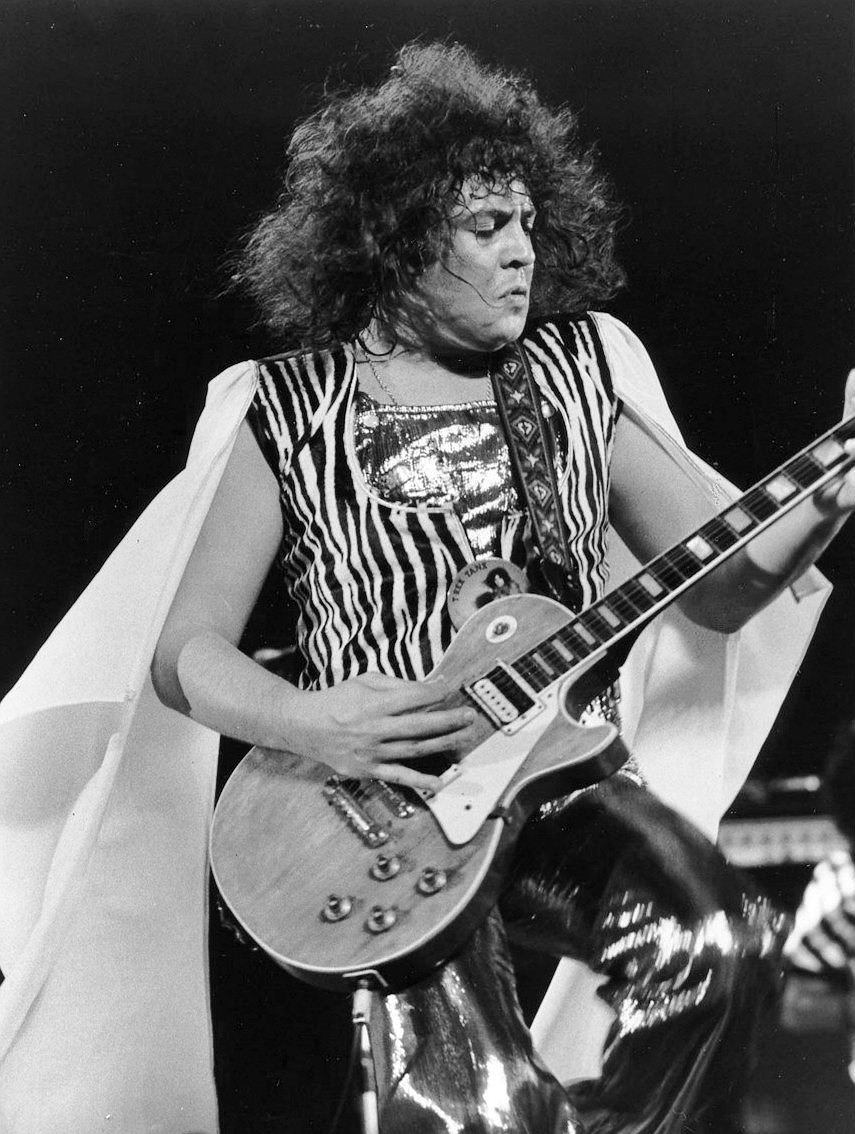
Bolan's sonic signature was a potent blend of raw, blues-infused guitar riffs, often played through a fuzz pedal, layered over catchy, pop-sensible melodies. His guitar playing, while not technically virtuosic in the vein of Jimi Hendrix, was undeniably distinctive, characterized by its melodic phrasing and signature slide guitar work. Lyrically, Bolan navigated a fantastical realm populated by goblins, space-age lovers, and mythical creatures, delivered with a distinctive, almost sneering vocal style. This sonic palette was inseparable from his visual aesthetic: a flamboyant, androgynous image featuring glitter, platform boots, feather boas, and a signature quiff hairstyle, which challenged conventional notions of masculinity in rock music.
📊 Key Facts & Numbers
T. Rex achieved an astonishing level of commercial success, charting eleven Top 10 singles in the UK, with four reaching the coveted number one spot. The album "The Slider" sold over three million copies worldwide, while "Electric Warrior" became a cornerstone of the glam rock movement. Bolan's influence is quantifiable: T. Rex sold an estimated 30 million records globally during their peak. Tragically, his career was cut short when he died in a car crash.
👥 Key People & Collaborators
While Marc Bolan was undeniably the driving force behind T. Rex, his collaborations and relationships were crucial to the band's evolution. Mickey Finn, who joined in 1970, provided percussion and backing vocals, becoming a visual foil to Bolan's stage presence. Gloria Jones, a former Northern Soul singer, was Bolan's partner and mother of his son, Rolan Bolan, and her musical influence, particularly in soul and R&B, subtly permeated T. Rex's later work. Producer Tony Visconti played a significant role in shaping the band's sound during their most successful period, helping to craft the distinctive T. Rex sonic identity. Bolan's early collaborator, Steve Peregrine Took, though departing before the major success, was instrumental in the band's initial psychedelic folk phase.
🌍 Cultural Impact & Influence
Marc Bolan's impact on subsequent music and fashion is immeasurable. He is widely credited as a primary architect of glam rock, influencing countless artists with his theatricality and visual flair. His legacy extends to punk rock, new wave, and Britpop, with artists like David Bowie, The Sex Pistols, The Smiths, and Oasis citing him as a major inspiration. Bolan's unapologetic embrace of artifice and his fusion of rock music with fashion set a precedent for the modern music industry's visual culture. His ability to blend raw rock energy with poetic, fantastical lyrics created a unique artistic space that continues to resonate.
⚡ T. Rex's Chart Dominance
The period from 1970 to 1973 saw T. Rex achieve unparalleled chart dominance in the United Kingdom. Following the breakthrough success of "Ride a White Swan" (UK #2), the band unleashed a torrent of hits. "Hot Love" (UK #1), "Get It On" (UK #1), "Jeepster" (UK #2), "Telegram Sam" (UK #1), and "Metal Guru" (UK #1) were just some of the singles that cemented their status. Their albums "Electric Warrior" (1971) and "The Slider" (1972) both reached number one on the UK Albums Chart, selling millions worldwide and establishing T. Rex as one of the biggest bands on the planet during this golden era.
🤔 The Bolan Legacy Debates
The enduring legacy of Marc Bolan is not without its debates. Some critics argue that his later work, particularly after the peak of T. Rex's fame, saw a decline in quality and originality, becoming somewhat self-parodic. The intense pressure of superstardom and personal struggles, including substance abuse, are often cited as factors that may have impacted his creative output in the years leading up to his death. Furthermore, the commercialization of glam rock and its subsequent evolution into other genres have led to discussions about which artists truly captured Bolan's original spirit versus those who merely adopted his superficial trappings. The controversy spectrum for Bolan's overall artistic merit remains moderately high, with passionate defenders and detractors.
🔮 Posthumous Influence & Future
Marc Bolan's influence continues to be felt decades after his untimely death. His aesthetic and musical innovations are regularly revisited by contemporary artists seeking to inject theatricality and raw energy into their work. His posthumous induction into the Rock and Roll Hall of Fame is a recognition of Bolan's profound impact. Future outlooks suggest that Bolan's blend of mystical lyricism and electrifying rock and roll will continue to inspire new generations of musicians and artists who are drawn to his unique brand of rebellious glamour. His music remains a vibrant testament to the power of self-expression and the enduring appeal of the rock and roll shaman.
💡 Beyond Music: Fashion & Art
Beyond his musical achievements, Marc Bolan was a significant figure in fashion and visual art. His distinctive style, characterized by glitter, flamboyant clothing, and androgynous presentation, was revolutionary for its time and directly influenced the glam rock movement's visual identity. He was a muse for fashion designers and photographers, embodying a new kind of rock star persona that blurred the lines between music, fashion, and performance art. His visual impact was as potent as his musical output, contributing to the broader cultural shifts of the early 1970s. Bolan's image remains iconic, frequently referenced in contemporary fashion editorials and music videos.
Key Facts
- Category
- culture
- Type
- person