
Contents
Overview
The conceptual seeds of mixed reality were sown long before the term itself gained traction, with early explorations into overlaying digital information onto the real world dating back to the mid-20th century. However, the first functional systems that truly embodied the principles of MR began to emerge in the early 1990s. A pivotal moment arrived in 1992 with the development of the 'Virtual Fixtures' system at the U.S. Air Force's Armstrong Laboratory, which allowed users to see computer-generated information superimposed on their view of the physical world, enabling them to interact with virtual objects within a real environment. This early work laid the groundwork for subsequent advancements, including the creation of early head-mounted displays (HMDs) like the Boeing Virtual Reality Interactive Environment Workstation (Viw) in 1993, which aimed to provide immersive training experiences by blending digital models with physical mock-ups. The term 'mixed reality' itself was coined by Paul Milgram and Fumio Kishino in 1994 to describe the continuum between the real and virtual worlds, distinguishing it from pure AR and VR.
⚙️ How It Works
At its core, mixed reality operates by precisely mapping the user's physical environment and then rendering digital content that is anchored to specific points within that space. This requires sophisticated sensors, such as cameras and depth sensors, integrated into an HMD or other display device, to continuously track the user's position, orientation, and the geometry of their surroundings. Advanced algorithms then process this spatial data to create virtual objects that appear to occupy real-world locations and can even interact with physical surfaces or objects. For instance, a virtual ball dropped in an MR environment might bounce off a real table, a feat requiring real-time environmental understanding and physics simulation. This deep integration is what differentiates MR from AR, where virtual elements might simply float in space without true environmental awareness. The processing power required for such complex spatial mapping and rendering is substantial, often necessitating powerful onboard processors or cloud-based computation.
📊 Key Facts & Numbers
The mixed reality market is experiencing explosive growth, with projections indicating a significant surge in the coming years. Analysts at Statista estimate the global MR market size to reach approximately $100 billion by 2026, with some forecasts placing it much higher, potentially exceeding $300 billion by 2030. This expansion is driven by a substantial increase in the number of MR devices shipped annually, which is expected to climb from around 10 million units in 2023 to over 50 million units by 2027. The enterprise sector accounts for a significant portion of this market, with an estimated 70% of MR adoption occurring in industrial, healthcare, and defense applications. Consumer adoption, while growing, still represents a smaller but rapidly expanding segment, with gaming and entertainment leading the charge.
👥 Key People & Organizations
Several key figures and organizations have been instrumental in shaping the trajectory of mixed reality. Steve Jobs, though primarily associated with Apple Inc. and personal computing, laid foundational principles for intuitive human-computer interfaces that indirectly influenced MR design. Meredith Perkins, a leading researcher in spatial computing, has contributed significantly to the theoretical underpinnings of MR. On the corporate front, Microsoft has been a major player with its HoloLens devices, which are designed for enterprise use and showcase advanced MR capabilities. Meta Platforms (formerly Facebook) is heavily investing in MR through its Meta Quest line, aiming to build the metaverse, a persistent, interconnected set of virtual spaces. Google has also explored MR with projects like Google Glass and its ongoing research in spatial computing. Companies like HTC with its Vive series and Sony with PlayStation VR are also pushing the boundaries of immersive technologies, often blurring the lines between AR, VR, and MR.
🌍 Cultural Impact & Influence
Mixed reality is beginning to weave itself into the cultural fabric, influencing how we consume media, interact with brands, and even perceive our surroundings. Early adopters and tech enthusiasts have embraced MR for its potential in gaming and entertainment, offering experiences that are more immersive and interactive than traditional platforms. Games like Minecraft Earth allowed players to build and explore virtual creations in their real-world environments. Beyond entertainment, MR is influencing design and visualization, enabling architects and engineers to walk through full-scale virtual models of buildings and products before they are physically constructed, a practice that has already begun to reshape industries like automotive design and urban planning. The ability to overlay contextual information onto the real world also has profound implications for education and training, offering hands-on learning experiences that were previously impossible.
⚡ Current State & Latest Developments
The mixed reality landscape in 2024-2025 is characterized by rapid iteration and a growing focus on both enterprise and consumer markets. Microsoft continues to refine its HoloLens 2 for professional applications, emphasizing its role in remote assistance and complex design workflows. Meta Platforms is making significant strides with its Meta Quest 3, which offers enhanced passthrough capabilities for a more robust MR experience, signaling a strong push towards mainstream adoption. Apple entered the fray in 2024 with the Apple Vision Pro, a high-end spatial computing device that blends digital content with the physical world, setting a new benchmark for visual fidelity and user interface design, albeit at a premium price point. The development of more affordable and capable HMDs, alongside advancements in spatial mapping software and AI integration, is accelerating the accessibility and utility of MR technologies. Partnerships between hardware manufacturers and software developers are also on the rise, fostering a richer ecosystem of MR applications.
🤔 Controversies & Debates
The development and deployment of mixed reality are not without their controversies and debates. A primary concern revolves around privacy, as MR devices equipped with advanced sensors and cameras constantly capture data about the user's environment and behavior, raising questions about data security and potential misuse. The ethical implications of blurring the lines between reality and digital augmentation are also a subject of discussion, with some experts warning of potential psychological effects, such as detachment from reality or increased susceptibility to manipulation. Furthermore, the high cost of current MR hardware, particularly devices like the Apple Vision Pro, creates a significant digital divide, limiting access to a privileged few and raising concerns about equitable development. The potential for job displacement due to automation powered by MR training and remote assistance tools is another area of ongoing debate.
🔮 Future Outlook & Predictions
The future of mixed reality points towards increasingly seamless integration into daily life, moving beyond specialized devices to more ubiquitous forms of spatial computing. Experts predict that by the late 2020s, MR capabilities will be integrated into everyday objects, from smart glasses that are indistinguishable from regular eyewear to contact lenses capable of overlaying digital information. The development of more intuitive and natural user interfaces, potentially incorporating advanced eye-tracking and gesture recognition, will further enhance the user experience. We can anticipate MR playing a crucial role in the evolution of the metaverse, enabling more immersive and interactive virtual social spaces and work environments. The healthcare sector is expected to see revolutionary applications, including advanced surgical planning and remote pati
💡 Practical Applications
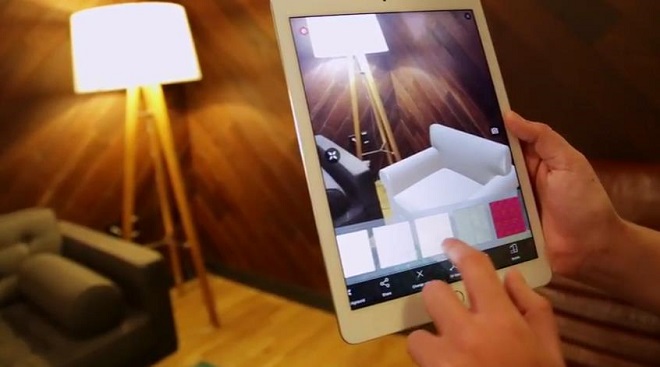
Practical applications of mixed reality are rapidly expanding across various sectors. In manufacturing and engineering, MR is used for complex assembly guidance, quality control, and remote expert assistance, allowing technicians to see virtual instructions overlaid on physical machinery. Architects and designers utilize MR to visualize and interact with 3D models at full scale, facilitating better design reviews and client presentations. The healthcare industry is exploring MR for surgical training, patient education, and even during procedures to overlay vital information onto a patient's body. In retail, MR can offer immersive product visualizations and virtual try-on experiences. Education benefits from MR by providing interactive and engaging learning environments, allowing students to explore historical sites virtually or dissect a virtual frog. Remote collaboration is also significantly enhanced, with teams able to share and manipulate 3D data in a common virtual space, regardless of their physical location.
Key Facts
- Category
- technology
- Type
- topic