
Contents
Overview
The concept of controlling motor speed predates modern electronics, with early mechanical governors and rheostats offering rudimentary speed control for DC motors in the late 19th and early 20th centuries. The advent of AC induction motors in the 1880s presented new challenges and opportunities for speed regulation. Initial AC motor speed control often involved complex multi-speed windings or mechanical gearing. The true revolution began with the development of semiconductor power electronics in the mid-20th century. Thyristors paved the way for controlled rectification and later, IGBTs and MOSFETs enabled the precise switching required for VFDs. Companies like Siemens and Allen-Bradley (now part of Rockwell Automation) were early leaders in commercializing these electronic motor drives for industrial use.
⚙️ How It Works
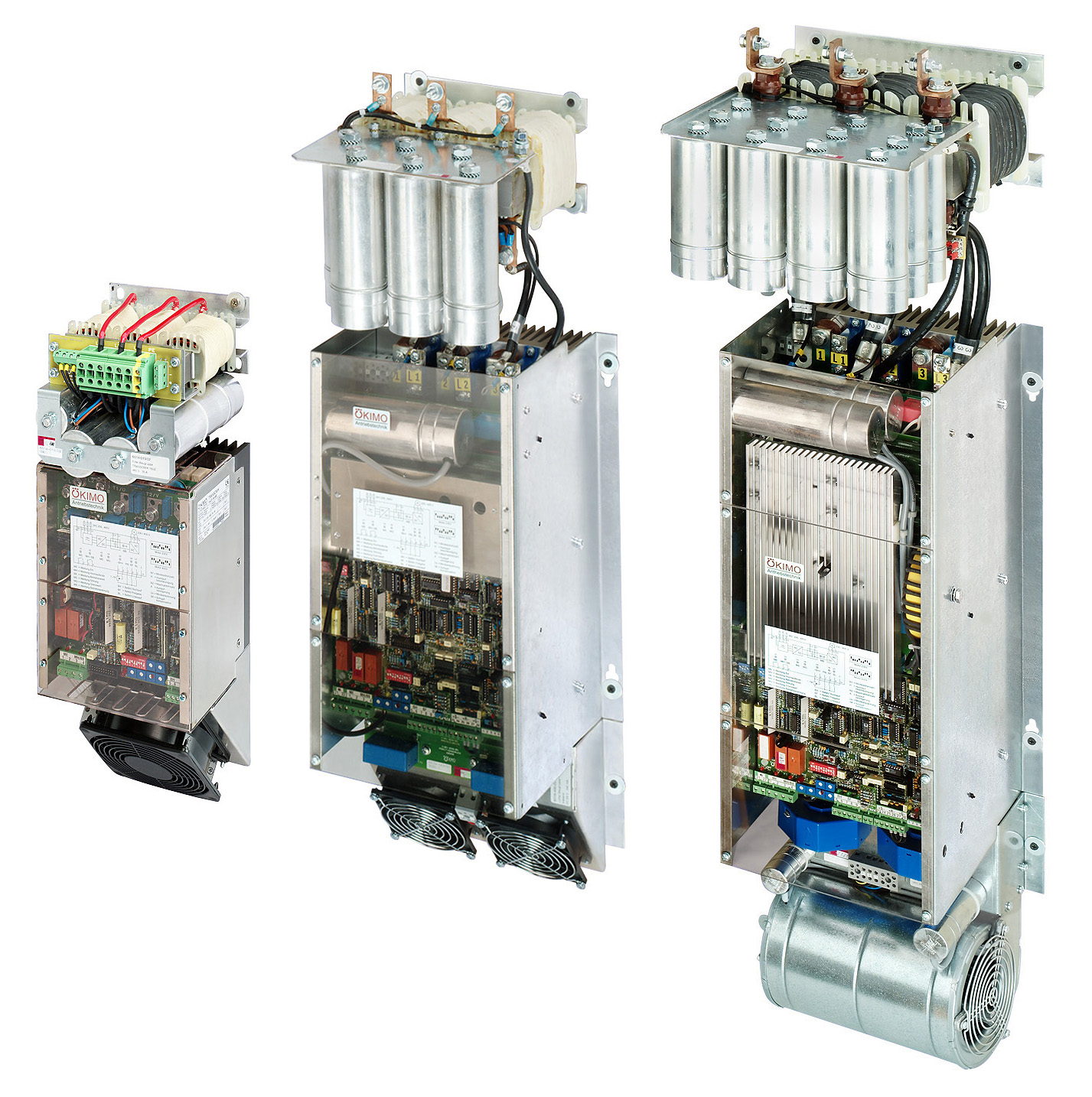
At its core, a motor drive translates electrical power into controlled mechanical motion. For AC induction motors, the most common type, variable-frequency drives (VFDs) are paramount. A VFD typically employs a three-stage process: first, it converts incoming AC power to DC via a rectifier. Second, this DC power is smoothed by a DC link capacitor. Third, an inverter stage uses high-speed switching of transistors (like IGBTs) to reconstruct a variable-frequency, variable-voltage AC waveform that precisely controls the motor's speed and torque. More advanced drives, such as servo drives, incorporate feedback mechanisms, often using encoders, to achieve highly precise position and velocity control, essential for applications like robotics and CNC machining. The drive's control logic, often managed by a Digital Signal Processor (DSP) or microcontroller, interprets commands and adjusts the output waveform accordingly.
📊 Key Facts & Numbers
The global motor drive market is a colossal industry. Low-voltage drives (under 690V) constitute the largest segment. The industrial automation sector consumes a significant portion of all motor drives manufactured. Energy savings are a significant driver; VFDs can reduce energy consumption in pump and fan applications. In the automotive sector, the demand for electric vehicle drives is surging, with each vehicle requiring sophisticated motor control systems. The average industrial VFD can handle power ratings from fractional horsepower up to several thousand horsepower.
👥 Key People & Organizations
Pioneers like Nikola Tesla, whose work on AC motors laid the foundation, are foundational figures. Today, major players dominate the market, including Siemens AG, Rockwell Automation, ABB Group, Danfoss, and Yaskawa Electric Corporation. These corporations invest heavily in research and development, driving innovation in power electronics and control algorithms. Academic institutions like MIT and Stanford University also contribute significantly through research in power systems and control theory, often collaborating with industry partners.
🌍 Cultural Impact & Influence
Motor drives are the invisible engines powering much of modern life, profoundly impacting industrial efficiency and enabling new technologies. Their ability to precisely control motion has transformed manufacturing, allowing for faster, more accurate production lines and the widespread adoption of robotics. In the realm of energy, variable speed control is critical for optimizing the performance of pumps and fans in HVAC systems and water management, leading to substantial energy savings and reduced environmental impact. The burgeoning electric vehicle market, from passenger cars to heavy-duty trucks, relies entirely on advanced motor drives for propulsion, regenerative braking, and overall vehicle performance. Beyond industry, they are found in elevators, escalators, and even household appliances, demonstrating their ubiquitous presence.
⚡ Current State & Latest Developments
The current landscape of motor drives is characterized by increasing integration of AI and machine learning for predictive maintenance and optimized performance. Miniaturization and higher power densities are also key trends, driven by advancements in Silicon Carbide (SiC) and Gallium Nitride (GaN) power semiconductors, enabling smaller, more efficient drives. The push towards electrification in transportation continues to fuel demand for specialized EV drives. Furthermore, the Industrial Internet of Things (IIoT) is driving the development of 'smart' drives with enhanced connectivity and data-sharing capabilities, allowing for remote monitoring and control. Companies are also focusing on improved cybersecurity for these connected industrial control systems.
🤔 Controversies & Debates
One persistent debate revolves around the trade-offs between different semiconductor technologies, particularly SiC and GaN versus traditional IGBTs. While SiC and GaN offer superior efficiency and higher operating temperatures, their higher cost remains a barrier for widespread adoption in all but the most demanding applications. Another controversy concerns the environmental impact of manufacturing these complex electronic components and the disposal of obsolete drives. There's also ongoing discussion about the cybersecurity vulnerabilities introduced by increasingly connected drives, with potential for industrial espionage or disruption.
🔮 Future Outlook & Predictions
The future of motor drives points towards even greater intelligence and integration. Expect drives with embedded AI capabilities for real-time self-optimization and fault prediction, drastically reducing downtime. The adoption of SiC and GaN will likely become more mainstream as costs decrease, leading to smaller, more efficient, and more robust drives. The electrification of heavy industry and transportation will continue to be a major growth area, demanding higher power and more specialized drive solutions. Furthermore, the integration of drives with advanced grid management systems could enable distributed energy resources and enhance grid stability. We may also see drives that can dynamically adapt their control strategies based on real-time grid conditions or production demands.
💡 Practical Applications
Motor drives are indispensable across a vast spectrum of applications. In manufacturing, they power conveyor belts, robotic arms, machine tools, and pumps. In the energy sector, they control turbines in power plants, pumps in oil and gas extraction, and fans in HVAC systems for buildings. The transportation industry relies on them for electric vehicle propulsion, regenerative braking, and auxiliary systems. They are also critical in water and wastewater treatment for controlling pumps and aerators, and in the mining industry for heavy machinery. Even in everyday life, they are found in elevators, escalators, and high-end home appliances, ensuring smooth and efficient operation.
Key Facts
- Category
- technology
- Type
- topic