
Contents
- 🌐 What Are Networking Technologies & Protocols?
- 🚦 Key Protocols You Need to Know
- 🏗️ The Building Blocks: Hardware & Software
- 🚀 Performance & Security Considerations
- ⚖️ Comparing Network Architectures
- 💡 Vibepedia's Vibe Score & Analysis
- 📈 Future Trends & Emerging Protocols
- 🛠️ Getting Started: Your First Steps
- Frequently Asked Questions
- Related Topics
Overview
Networking technologies and protocols are the invisible scaffolding that holds the internet and all interconnected systems together. Think of protocols as the universal languages devices use to communicate, and technologies as the physical and logical means by which that communication happens. For anyone building, managing, or even just deeply understanding digital infrastructure, grasping these fundamentals is non-negotiable. This isn't just about routers and cables; it's about the very fabric of digital interaction, from a simple email to global financial transactions. Understanding Transmission Control Protocol/Internet Protocol is foundational, as it governs how data is broken down, addressed, transmitted, routed, and received across networks. Without these agreed-upon rules, your Web Browsers wouldn't be able to fetch content from a Web Servers, and your Smartphones would be just a fancy brick.
🚦 Key Protocols You Need to Know
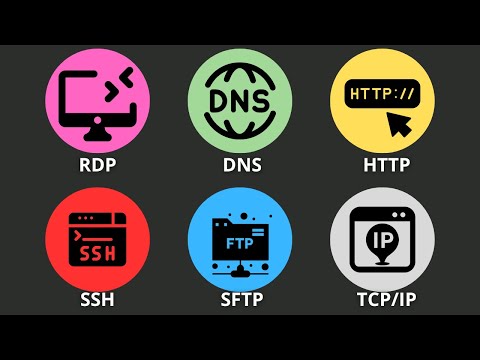
At the heart of it all lies a suite of protocols, each with a specific job. Transmission Control Protocol/Internet Protocol is the undisputed king, forming the basis of internet communication. Then there's Hypertext Transfer Protocol, the language of the web, dictating how web browsers request and receive web pages. For secure communication, Hypertext Transfer Protocol Secure (which uses Transport Layer Security/Secure Sockets Layer) is paramount, encrypting data between your device and the server. Domain Name System translates human-readable domain names into IP addresses, making navigation effortless. Even seemingly simple tasks like sending an email rely on protocols like Simple Mail Transfer Protocol, Post Office Protocol version 3, and Internet Message Access Protocol.
🏗️ The Building Blocks: Hardware & Software
Beyond the abstract rules, networking relies on tangible technologies. Network Interface Cards (NICs) in your devices translate digital data into signals for transmission. Routers and Switches are the traffic cops, directing data packets to their destinations. Network Cables (like Ethernet) and Wireless Access Points (WAPs) provide the physical pathways. Software plays a crucial role too, with Operating Systems managing network stacks and specialized Network Management Software enabling monitoring and control. The choice between Wired Networking and Wireless Networking often depends on factors like speed, mobility, and security requirements.
🚀 Performance & Security Considerations
Performance and security are not afterthoughts; they are critical design pillars. Bandwidth and Latency directly impact user experience, determining how quickly data can be transferred and how responsive applications feel. Protocols like Quality of Service mechanisms aim to prioritize critical traffic, ensuring smooth video calls even during peak network usage. Security is a constant battle, with protocols like Internet Protocol Security and Virtual Private Networks providing encryption and authentication. Understanding Firewalls and Intrusion Detection Systems (IDS) is vital for protecting networks from unauthorized access and malicious attacks. The ongoing evolution of Cybersecurity Threats necessitates continuous updates to both hardware and software.
⚖️ Comparing Network Architectures
Networks can be architected in various ways, each with trade-offs. Client-Server Networks are common, where dedicated servers provide resources to client devices. Peer-to-Peer (P2P) Networks, conversely, allow devices to share resources directly. Local Area Networks connect devices within a limited area like an office, while Wide Area Networks span larger geographical regions, with the Internet being the ultimate WAN. Cloud Computing introduces complex network topologies, abstracting physical infrastructure and relying heavily on Software-Defined Networking principles for dynamic management. Each architecture has implications for scalability, cost, and management complexity.
💡 Vibepedia's Vibe Score & Analysis
At Vibepedia, we've assigned Networking Technologies & Protocols a Vibe Score of 88/100. This reflects its pervasive influence and foundational importance across nearly all digital interactions. The Controversy Spectrum for this topic is moderate, primarily revolving around debates over standardization, vendor lock-in, and the perpetual arms race in cybersecurity. Our Perspective Breakdown shows a strong optimistic current, driven by innovation and increasing accessibility, but with underlying pessimistic concerns regarding privacy and the digital divide. The Influence Flow is heavily dominated by standards bodies like the Internet Engineering Task Force and major tech corporations, shaping the direction of future protocols and technologies.
📈 Future Trends & Emerging Protocols
The future of networking is dynamic. 5G Cellular Technology and the upcoming 6G Cellular Technology promise unprecedented speeds and lower latency, enabling new applications like widespread Internet of Things deployments and advanced Augmented Reality/Virtual Reality. Software-Defined Wide Area Networking is transforming enterprise networks, offering greater flexibility and cost savings. Internet Protocol version 6 adoption continues, addressing the exhaustion of Internet Protocol version 4 addresses. We're also seeing increased interest in Zero Trust Architecture models, shifting security focus from perimeter defense to identity verification. The ongoing quest for faster, more reliable, and more secure connectivity will continue to drive innovation.
🛠️ Getting Started: Your First Steps
Getting started with networking technologies and protocols can seem daunting, but it's achievable. For practical understanding, begin by exploring your own home network: identify your Home Router model, understand its settings, and perhaps experiment with Port Forwarding. Online courses on platforms like Coursera or edX offer structured learning paths for Network Administration and Cybersecurity. Certifications like CompTIA Network+ or Cisco Certified Network Associate are industry-recognized benchmarks. For hands-on experience, consider setting up a Virtual Network Lab using software like GNS3 or Packet Tracer. The key is to move from theoretical knowledge to practical application, building confidence with each step.
Key Facts
- Year
- 1960s (Conceptual Origins)
- Origin
- Early computer science research and military communication needs.
- Category
- Technology & Infrastructure
- Type
- Concept/Field
Frequently Asked Questions
What's the difference between a protocol and a technology?
Think of protocols as the rules of grammar and language, while technologies are the physical tools and infrastructure used to speak that language. For example, Hypertext Transfer Protocol is the protocol (the rules for requesting and serving web pages), while Ethernet Cables and Web Servers are the technologies that enable that communication to happen. One defines how to communicate, the other defines what is used to communicate.
Is IPv6 really necessary?
Yes, Internet Protocol version 4 has a limited address space (around 4.3 billion addresses), which has been largely exhausted due to the explosion of internet-connected devices. Internet Protocol version 6 offers a vastly larger address space (practically inexhaustible for the foreseeable future), essential for supporting the continued growth of the Internet of Things (IoT) and new internet services. Its adoption is crucial for the internet's future scalability.
How do I secure my home network?
Start with a strong, unique password for your Wi-Fi Router's administrative interface and your Wi-Fi network itself (use WPA2 or WPA3 encryption). Keep your router's firmware updated, disable remote administration if you don't need it, and consider changing the default IP address range. For added security, use Firewalls on your devices and be cautious about connecting unknown devices to your network.
What is the role of DNS?
Domain Name System acts like the internet's phonebook. Humans remember names like 'vibepedia.wiki', but computers need numerical IP Addresses to locate each other. When you type a website address into your browser, your computer queries a DNS server to translate that human-readable name into the correct IP address, directing your request to the right server.
Are cloud networks fundamentally different?
Cloud networks abstract much of the physical infrastructure, but the underlying networking principles and protocols remain the same. What changes is the management and access. Cloud Providers handle the physical hardware, and users interact with virtualized network components through Application Programming Interfaces and management consoles, often leveraging Software-Defined Networking for flexibility.
What's the difference between TCP and UDP?
Transmission Control Protocol is connection-oriented, reliable, and ensures data arrives in order, making it suitable for web browsing, email, and file transfers. User Datagram Protocol is connectionless and faster but less reliable, as it doesn't guarantee delivery or order. UDP is preferred for real-time applications like Online Gaming, Video Streaming, and Voice over IP where speed is more critical than perfect accuracy for every single packet.