
Contents
Overview
Newcastle's story begins with the Romans, who established Pons Aelius around 122 AD, a vital crossing point on Hadrian's Wall. After the Romans departed, the settlement was known as Monkchester. It faded until 1080, when Robert Curthose, son of William the Conqueror, erected a formidable castle, giving the city its enduring name. This Norman stronghold became the nucleus of a town that would grow to dominate regional trade. By the medieval period, Newcastle was a significant walled town and a major port, particularly for exporting coal, a resource that would fuel its future industrial ascent. The city's administrative independence was cemented in 1400 when it was granted county corporate status, separating it from Northumberland. The subsequent centuries saw its transformation into a global centre for coal mining and, crucially, shipbuilding, with yards like Swan Hunter and Charles Parsons's engineering works becoming synonymous with innovation and industrial might during the Industrial Revolution.
⚙️ How It Works
Newcastle upon Tyne functions as a metropolitan borough, governed by the Newcastle City Council, which oversees local services and planning. Its urban infrastructure is a complex network of transportation, utilities, and public spaces, all designed to support a population of over 300,000 residents. The city's economy is a blend of its historical industrial base and a modern service sector, with significant contributions from retail, education, and technology. Key institutions like Newcastle University and Northumbria University are major employers and drivers of research and development. The city's layout is characterized by its historic core around the castle and cathedral, the bustling Quayside, and the more modern developments spreading outwards, all connected by a robust public transport system including the Tyne and Wear Metro.
📊 Key Facts & Numbers
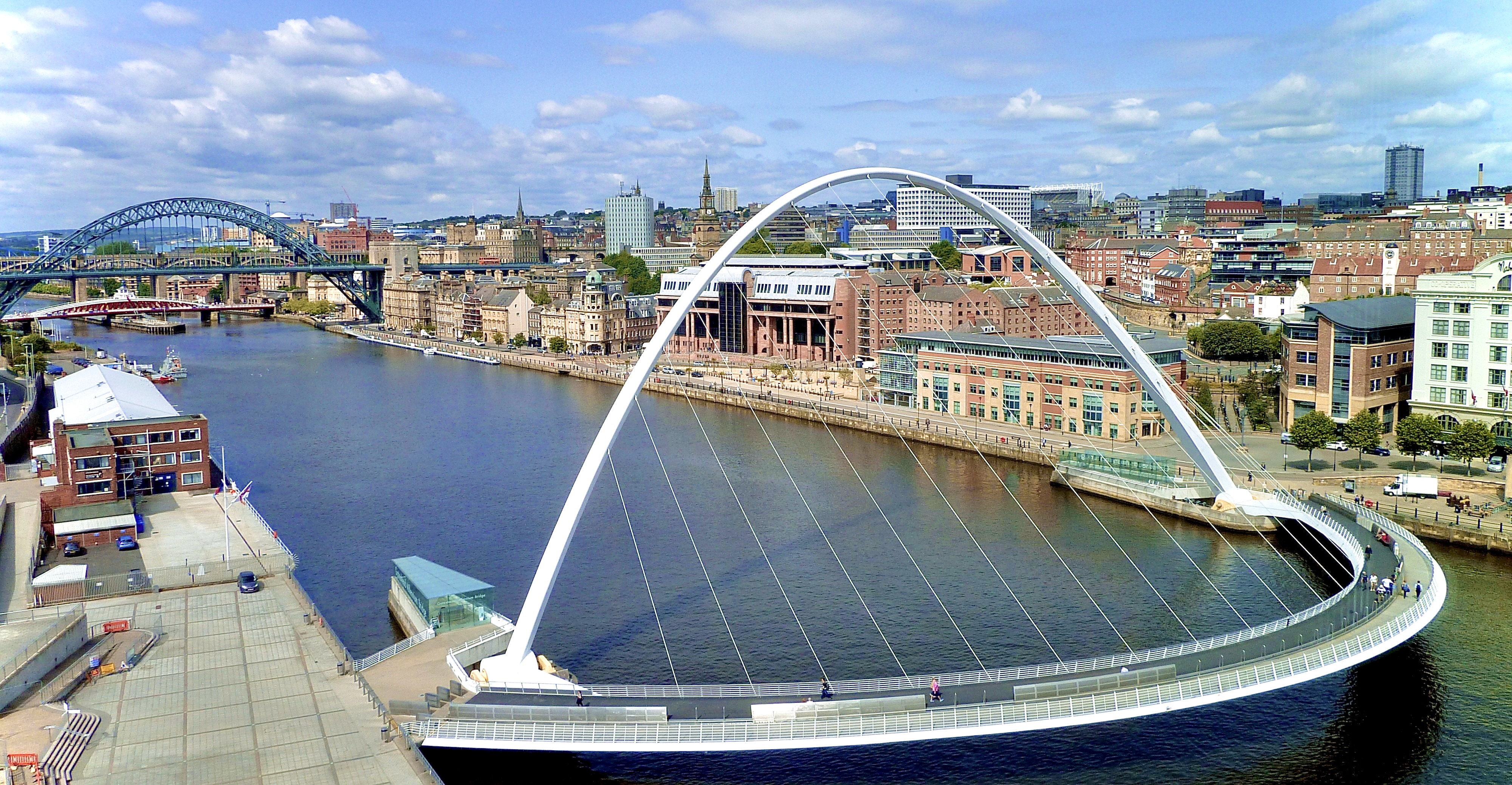
Newcastle upon Tyne is home to an estimated 320,605 residents as of 2024, making it the most populous settlement in North East England. The metropolitan borough covers an area of approximately 114 square kilometres. Historically, the city was a global titan of industry, producing an estimated 40% of Britain's coal output at its peak in the early 20th century. During World War I, Newcastle's shipyards were responsible for constructing over 25% of the Royal Navy's warships. Today, the city's economy is valued at over £17 billion annually. The Tyne Bridge, completed in 1928, is an iconic landmark, with a span of 237 metres. The city attracts over 20 million visitors annually, contributing significantly to its economy.
👥 Key People & Organizations
Central to Newcastle's identity are figures like Sir Charles Parsons, inventor of the multi-stage steam turbine, whose innovations revolutionized power generation and shipbuilding in the late 19th century. Emily Wilding Davison, a prominent suffragette, was born in Newcastle. The city's industrial prowess was driven by powerful figures in shipbuilding and engineering, such as Lord Armstrong, founder of Armstrong Whitworth, a major armaments and shipbuilding company. The Newcastle United Football Club, founded in 1892, is a cultural institution with a global fanbase, deeply intertwined with the city's social fabric. The Newcastle City Council is the primary governing body, responsible for the administration and development of the metropolitan borough.
🌍 Cultural Impact & Influence
Newcastle's cultural impact is profound, deeply rooted in its industrial heritage and the distinctive Geordie dialect spoken by its inhabitants. The city is renowned for its vibrant nightlife, particularly along the Quayside, and its lively arts scene, featuring venues like the Theatre Royal and the BALTIC Centre for Contemporary Art. Its football club, Newcastle United, commands fervent loyalty, acting as a significant cultural touchstone. The city's architecture, from the medieval Newcastle Castle to the striking Gateshead Millennium Bridge (connecting it to Gateshead), tells a story of continuous evolution. The iconic Tyne Bridge has featured in numerous films and television shows, cementing its status as a symbol of the North East.
⚡ Current State & Latest Developments
In recent years, Newcastle has focused on diversifying its economy beyond its heavy industrial past. The city has seen significant investment in its digital and creative sectors, with hubs like NE Digital Innovation Centre fostering growth. The Newcastle Helix development, a £350 million urban science and innovation district, aims to create thousands of jobs and attract high-tech companies. The city is also a major centre for medical research, with Newcastle Hospitals being a leading NHS trust. Ongoing regeneration projects along the Quayside and in areas like Ouseburn Valley continue to enhance its appeal as a place to live, work, and visit, with a focus on sustainability and green spaces.
🤔 Controversies & Debates
One of the most persistent debates surrounding Newcastle centres on its identity and its relationship with the wider North East region. While fiercely proud of its distinct Geordie character, there are ongoing discussions about regional cooperation and the city's role as a regional capital. The legacy of industrial decline, particularly in shipbuilding and mining, continues to be a sensitive topic, with debates about how best to address the social and economic consequences. Furthermore, the city's football club, Newcastle United, often finds itself at the centre of controversy, particularly regarding ownership and fan expectations, reflecting its deep cultural significance. The city's approach to urban development and gentrification also sparks debate, with concerns about preserving its heritage while embracing modernity.
🔮 Future Outlook & Predictions
The future of Newcastle upon Tyne appears poised for continued transformation, driven by its strategic focus on innovation and urban regeneration. The Newcastle Helix project is expected to be a major catalyst, attracting further investment in science and technology. The city is also positioning itself as a leader in the green economy, with initiatives aimed at developing renewable energy and sustainable transport solutions. Continued investment in higher education and research at Newcastle University and Northumbria University will likely foster a skilled workforce and attract new industries. Projections suggest further population growth and an increasing role as a cultural and economic hub for the entire North East region, though challenges remain in ensuring inclusive growth and addressing historical inequalities.
💡 Practical Applications
Newcastle's industrial heritage has left a lasting legacy on engineering and manufacturing worldwide. Innovations developed in its shipyards and factories, such as Sir Charles Parsons's steam turbine, had global applications, powering ships and electricity generation. The city's expertise in heavy engineering and shipbuilding influenced practices and technologies adopted internationally. Today, its universities offer world-class education in fields ranging from medicine to engineering, producing graduates who contribute to industries globally. The city's regeneration model, particularly the development of the Newcastle Helix, serves as a case study for urban renewal and innovation districts in other post-industrial cities. Its iconic Tyne Bridge has inspired similar architectural designs in other parts of the world.
Key Facts
- Category
- place
- Type
- topic