
Contents
Overview
Pirate ships, the quintessential vessels of maritime brigandage, represent a complex fusion of naval engineering, criminal enterprise, and enduring cultural myth. Far from the romanticized galleons of popular fiction, historical pirate ships were often refitted merchant vessels, adapted for speed, maneuverability, and the capacity to carry a substantial, often unruly, crew. Their design and armament varied wildly depending on the era, the region of operation, and the specific needs of their pirate captains, ranging from swift sloops ideal for coastal raids to larger, more heavily armed frigates capable of challenging naval patrols. The "Golden Age of Piracy" saw a proliferation of these ships across the Caribbean, Indian Ocean, and West African coasts, becoming synonymous with lawlessness and adventure. Today, the image of the pirate ship remains a potent symbol in literature, film, and popular culture, embodying freedom, rebellion, and the allure of the untamed sea.
🎵 Origins & History
Ancient mariners like the Sea Peoples, documented in 14th-century BC Egyptian records, engaged in widespread maritime raiding across the Mediterranean. Later, the Cilicians terrorized Roman shipping lanes, forcing the Roman Republic to dispatch fleets under commanders like Pompey the Great to quell them. During the medieval period, Norse longships, though primarily warships and transport vessels, were also employed for raiding. However, the image most people associate with pirate ships solidified during the early modern period, particularly the "Golden Age of Piracy," when figures like Blackbeard, Captain Kidd, and Anne Bonny operated in the Caribbean and Atlantic, often using captured and modified vessels.
⚙️ How They Were Built & Operated
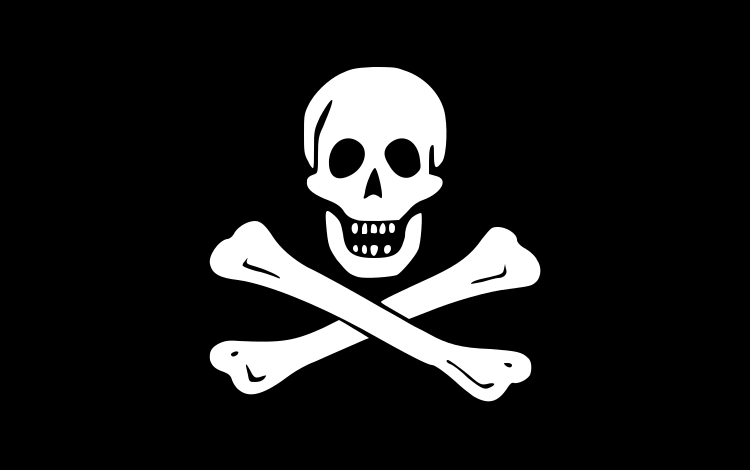
Pirate ships weren't typically purpose-built; they were usually captured merchant vessels or naval ships, stripped of non-essential cargo and refitted for their illicit trade. Speed and maneuverability were paramount, so pirates often preferred smaller, faster ships like sloops, schooners, and brigantines, which could outrun larger, slower naval patrols and navigate shallow waters. Armament was crucial for both attacking prey and defending against authorities. Cannons were mounted along the gunwales, and pirates would often add extra guns or remove bulkheads to create more firing positions. The internal layout was adapted to house a larger crew than the original design intended, often leading to cramped and unsanitary conditions. The iconic Jolly Roger flag, while varied, served as a psychological weapon, intended to intimidate victims into surrendering without a fight, a tactic employed by captains like Edward Teach (Blackbeard).
📊 Key Facts & Figures
While specific numbers vary wildly, the average pirate lifespan was notoriously short, often less than two years from their first voyage to capture or death. The value of plunder could range from a few hundred pounds for a small merchantman's cargo to tens of thousands of pounds for a Spanish treasure fleet galleon, a sum that represented immense wealth in the 17th and 18th centuries. It's estimated that hundreds of ships were captured annually by pirates operating in the Caribbean alone. The speed of a sloop could exceed 10 knots, making them formidable for their time. Larger vessels like frigates could mount 20-40 guns and support crews of over 100 pirates. A typical pirate sloop might carry 4-6 cannons and a crew of 30-50 men.
👥 Notorious Captains & Their Vessels
The Golden Age of Piracy is defined by its legendary captains and their iconic vessels. Blackbeard famously commanded the Queen Anne's Revenge, a captured French slave ship he heavily armed and refitted, making it a terror of the Atlantic coast. Captain Kidd's ship, the Adventure Galley, was a purpose-built privateer that he later turned to piracy, though his career was cut short by capture and execution. Calico Jack Rackham sailed various ships, but is perhaps best remembered for having Anne Bonny and Mary Read among his crew. The Whydah Gally, captained by Samuel "Black Sam" Bellamy, was a formidable slave ship captured and turned into a pirate vessel.
🌍 Global Reach & Impact
Pirate ships operated across the globe, wherever lucrative trade routes existed and naval authority was weak. The Caribbean, with its dense network of islands and busy shipping lanes between Europe and the Americas, was a primary theater during the Golden Age. However, piracy also flourished in the Indian Ocean, particularly around Madagascar and the coast of East Africa, targeting ships en route to and from the East Indies. The waters off West Africa, the Mediterranean, and even the coasts of Britain and Ireland saw significant pirate activity at various times. The success of pirate ships often depended on their ability to find safe havens, such as Tortuga or Port Royal, where they could refit, resupply, and sell their stolen goods.
⚡ Modern Piracy & Evolving Threats
While the romanticized image of the Golden Age pirate ship is largely historical, maritime piracy remains a significant global threat in the 21st century. Modern pirate ships, often small, fast boats like skiffs and speedboats, are frequently armed with automatic weapons and RPGs. They target commercial vessels, oil tankers, and cargo ships, particularly in regions like the Gulf of Aden, the Strait of Malacca, and off the coast of West Africa. International naval patrols, private security forces aboard ships, and technological deterrents like citadels (safe rooms on vessels) are employed to combat this persistent form of organized crime. Modern piracy costs the global economy billions of dollars annually.
🤔 Myths vs. Reality
Many popular notions about pirate ships are pure fiction. The idea of pirates burying treasure chests marked with an 'X' is largely a myth popularized by novels like Treasure Island by Robert Louis Stevenson. Similarly, the notion that all pirates flew the Jolly Roger is an oversimplification; many flags were used, and the skull-and-crossbones design itself evolved over time. The romanticized image of the swashbuckling pirate captain, often depicted as a noble rogue, contrasts sharply with the brutal reality of their often violent and short lives, marked by disease, mutiny, and harsh discipline, as documented in historical accounts like A General History of the Pyrates.
🔮 The Future of Maritime Security
The ongoing threat of modern piracy necessitates continuous innovation in maritime security. This includes the development of advanced surveillance technologies, improved naval coordination, and the use of non-lethal deterrents. The effectiveness of armed guards on merchant vessels remains a subject of debate, with some arguing it deters attacks while others raise concerns about escalation and accountability. International cooperation is crucial, as evidenced by initiatives like CTF-150 and Operation Atalanta, which aim to disrupt pirate networks and protect shipping lanes. The future will likely see a greater integration of AI-powered threat detection and autonomous security systems on vessels.
💡 Cultural Significance
Pirate ships have captured the global imagination, serving as enduring symbols in literature, film, and popular culture. From Disney's Pirates of the Caribbean franchise to the classic novel Treasure Island, these vessels represent adventure, rebellion, and the allure of a life lived outside the law. They embody a romanticized vision of freedom and defiance against authority, making them a perennial favorite in storytelling. The visual iconography of the pirate ship, with its tattered sails and menacing cannons, remains instantly recognizable and continues to inspire art, music, and entertainment worldwide.
📚 Further Exploration
For those fascinated by the history and reality of pirate ships, several avenues offer deeper insight. The National Maritime Museum in Greenwich, London, houses extensive collections related to naval history and piracy. Books like A General History of the Pyrates (attributed to Daniel Defoe) offer contemporary accounts, albeit with their own biases. Archaeological discoveries, such as the wreck of the Whydah Gally, provide tangible links to the past. Documentaries and historical dramas often explore specific eras or famous pirates, though critical viewing is advised to distinguish fact from fiction. Examining the legal and economic factors that drove piracy, such as the rise of privateering and the harsh conditions faced by sailors, also provides crucial context.
Key Facts
- Category
- history
- Type
- concept