
Contents
- 💥 What Exactly is a Plyometric Push-Up?
- 📈 Who Benefits Most from Plyo Push-Ups?
- 💪 How to Perform a Plyometric Push-Up Safely
- 🚀 Advanced Variations to Level Up Your Game
- 🤔 Plyo Push-Ups vs. Standard Push-Ups: The Core Differences
- ⚠️ Common Mistakes and How to Avoid Them
- ⏱️ Integrating Plyo Push-Ups into Your Routine
- 💡 Expert Tips for Maximizing Gains
- Frequently Asked Questions
- Related Topics
Overview
The plyometric push-up, often called the explosive push-up, is a power-focused variation of the classic exercise. Instead of a controlled ascent and descent, this movement emphasizes rapid muscle contraction and extension. The goal is to generate enough force during the upward push that your hands briefly leave the ground. This explosive action trains your muscles to produce maximum force in a minimal amount of time, a key component of athletic power. It's a staple in bodyweight training and sports performance for its ability to build functional strength and speed.
📈 Who Benefits Most from Plyo Push-Ups?
This exercise is ideal for athletes and individuals looking to enhance their explosive power, such as basketball drills, volleyball training, and martial arts conditioning. It's also beneficial for anyone aiming to improve their jump training or overall athletic explosiveness. However, it's not for absolute beginners; a solid foundation in standard push-ups is a prerequisite. Those recovering from shoulder or wrist injuries should approach with extreme caution or avoid it altogether, consulting a rehabilitation exercises first.
💪 How to Perform a Plyometric Push-Up Safely
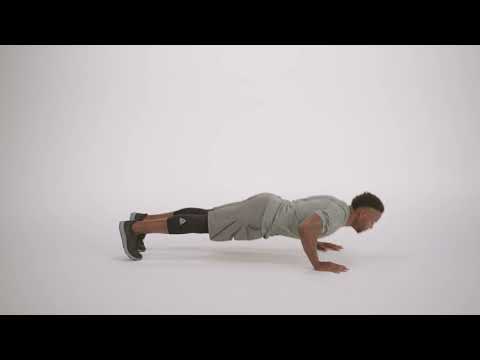
Proper form is paramount to prevent injury and maximize effectiveness. Start in a standard push-up position, but with a slightly wider hand placement for stability. Lower yourself with control, then explosively push off the ground, aiming to lift your hands clear. As you ascend, bring your hands back down to absorb the impact softly, immediately transitioning into the next rep. Focus on a powerful, quick push and a controlled landing. Engage your core strength exercises throughout the movement to maintain a rigid body line.
🚀 Advanced Variations to Level Up Your Game
Once you've mastered the basic plyometric push-up, several variations can challenge you further. The clap variations involves clapping your hands mid-air, demanding even greater speed and coordination. For a greater range of motion and eccentric loading, try deficit push-ups, performing them with your hands elevated on blocks or dumbbells. The one-arm training is an advanced progression that builds unilateral strength, though it's significantly more demanding than standard plyo push-ups.
🤔 Plyo Push-Ups vs. Standard Push-Ups: The Core Differences
The fundamental difference lies in the intent and execution. Standard push-ups focus on muscular endurance and hypertrophy, emphasizing slow, controlled repetitions. Plyometric push-ups, conversely, prioritize explosive power, training the neuromuscular system to fire faster. While both build chest, shoulder, and triceps strength, plyo push-ups specifically target the fast-twitch muscle fibers crucial for explosive movements and sports-specific training.
⚠️ Common Mistakes and How to Avoid Them
A common pitfall is sacrificing form for height or speed. Rushing the movement can lead to an uncontrolled descent, increasing the risk of wrist or shoulder injury. Another mistake is not engaging the core, resulting in a sagging back or hips, which reduces power transfer and spinal stability. Insufficient explosive power can also lead to hands barely leaving the ground, negating the plyometric benefit. Always prioritize a controlled landing over a higher jump if your form falters.
⏱️ Integrating Plyo Push-Ups into Your Routine
Plyometric push-ups are best incorporated as a power-focused component within a broader training program, not as the sole exercise. They can be performed at the beginning of a workout when you're fresh, or as a finisher to a strength session. Aim for 2-4 sets of 3-6 repetitions, focusing on maximal effort and quality. Allow ample rest between sets (60-90 seconds) to ensure full recovery and maintain explosive power for each rep. Consider performing them 1-2 times per week, depending on your overall training volume and recovery capacity.
💡 Expert Tips for Maximizing Gains
To truly benefit, focus on the 'intent' of the movement—think about pushing the ground away as hard and fast as possible. Don't just jump; explode. Ensure your landing is soft and controlled, absorbing the impact through your muscles, not just your joints. Listen to your body; if you feel sharp pain, stop immediately. Progressive overload can be achieved by increasing reps, sets, decreasing rest, or moving to more advanced variations like clap push-up technique.
Key Facts
- Year
- 1960
- Origin
- Developed from principles of Soviet sports science, popularized in the late 20th century as part of advanced athletic conditioning programs.
- Category
- Fitness & Training
- Type
- Exercise
Frequently Asked Questions
Can I do plyometric push-ups if I'm a beginner?
It's generally not recommended for absolute beginners. A solid foundation in standard push-ups is crucial. You should be able to perform multiple sets of 10-15 controlled standard push-ups with good form before attempting plyometric variations. Focus on building strength and stability first; then, gradually introduce explosive movements.
What muscles do plyometric push-ups work?
Plyometric push-ups primarily target the chest (pectorals), shoulders (deltoids), and triceps. However, due to the explosive nature and the need for stability, they also heavily engage the core muscles, including the abdominals and obliques, as well as the muscles in the back and glutes to maintain a rigid body.
How many reps should I do?
Due to the high intensity, lower rep ranges are recommended. Aim for 3-6 explosive repetitions per set. The focus should be on quality and maximal power output for each rep, rather than accumulating a high number of reps. Typically, 2-4 sets are sufficient.
What's the difference between a clap push-up and a regular plyometric push-up?
A regular plyometric push-up involves lifting your hands off the ground briefly. A clap push-up is a more advanced variation where you perform a clap with your hands in the air before landing. This requires greater speed, coordination, and explosive power, as the time your hands are off the ground is significantly reduced.
Can plyometric push-ups help with weight loss?
While not a primary calorie-burning exercise like steady-state cardio, plyometric push-ups contribute to overall fitness and muscle building. Increased muscle mass can boost your metabolism, aiding in long-term weight management. Their intensity also leads to a significant afterburn effect, burning calories even after your workout concludes.
What kind of surface is best for performing plyometric push-ups?
A stable, slightly forgiving surface is ideal. A gym floor, a yoga mat, or even firm grass can work well. Avoid very hard surfaces like concrete, which can increase impact on your joints, or overly soft surfaces like thick carpet, which can compromise stability and power transfer. The key is a surface that allows for a solid push-off and a controlled landing.