
Contents
Overview
European powers like France and Great Britain sought to accumulate wealth by maximizing exports and minimizing imports during the mercantilist era. Thinkers like Jean-Baptiste Colbert, Louis XIV's finance minister, championed policies that encouraged domestic manufacturing through tariffs on finished goods and raw material export bans, aiming to create a favorable balance of trade. Later, figures like Friedrich List in the 19th century argued for 'infant industry' protection in the United States, suggesting that new industries needed temporary shielding from established foreign competitors to grow and become competitive. This historical trajectory shows a recurring tension between national economic self-sufficiency and the benefits of open markets, a debate that has shaped trade policies from contemporary trade disputes.
⚙️ How It Works
Protectionist policies manifest through several key mechanisms. Tariffs, or taxes on imported goods, directly increase their price, making domestically produced alternatives more attractive. Import quotas limit the quantity of specific goods that can be imported, creating artificial scarcity that benefits domestic producers. Subsidies provided to domestic industries lower their production costs, allowing them to compete more effectively against imports. Non-tariff barriers, such as stringent regulations, complex customs procedures, and 'buy national' procurement policies, also serve to impede foreign goods. These tools are often employed in concert, creating a multi-layered defense for the domestic economy against external market forces.
📊 Key Facts & Numbers
The economic impact of protectionism is substantial, though often debated. More recently, the United States continues to employ tariffs and 'Buy American' provisions. Studies by the Peterson Institute for International Economics suggest that U.S. tariffs alone cost American consumers and businesses over $50 billion annually.
👥 Key People & Organizations
Key figures and organizations have shaped the discourse on protectionism. Alexander Hamilton, as the first U.S. Secretary of the Treasury, advocated for protective tariffs in his 'Report on Manufactures' (1791) to foster American industrialization. In contrast, Adam Smith, in 'The Wealth of Nations' (1776), laid the groundwork for free trade theory, arguing against mercantilist protectionism. Modern proponents often include Donald Trump, whose 'America First' agenda heavily featured tariffs and trade restrictions, and organizations like the American Enterprise Institute which often publishes analyses supporting free trade principles, while groups like the Economic Policy Institute sometimes highlight the benefits of targeted protection for specific sectors and workers.
🌍 Cultural Impact & Influence
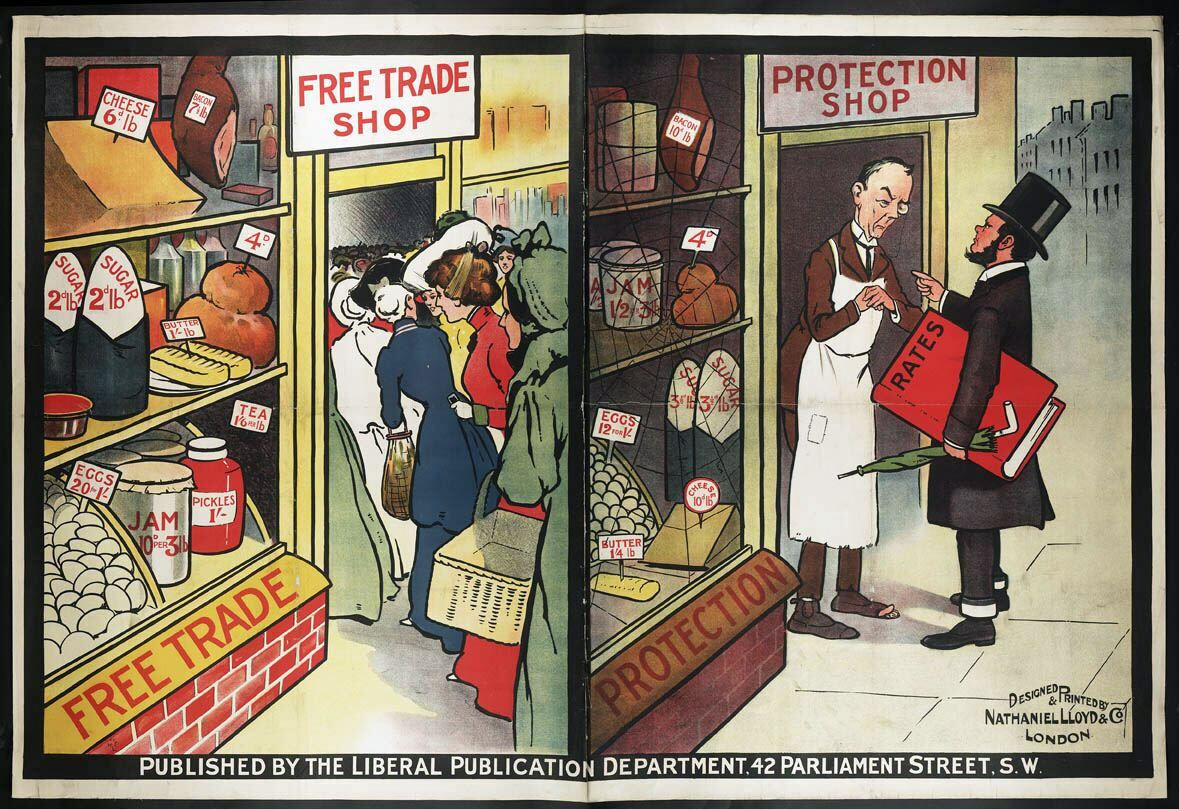
Protectionist policies carry significant cultural weight, often intertwined with national identity and economic sovereignty. The idea of 'buying local' or supporting domestic industries resonates deeply, tapping into sentiments of patriotism and community. Historically, protectionist measures have been used to safeguard industries deemed vital to national security or cultural heritage, such as agricultural sectors or nascent technology firms. The visual of a bustling domestic factory floor, contrasted with images of foreign goods, often fuels public support for protectionist stances, influencing political rhetoric and consumer behavior, as seen in the widespread adoption of 'Made in [Country]' labels.
⚡ Current State & Latest Developments
In the current global landscape (2024-2025), protectionist tendencies are experiencing a resurgence. Driven by concerns over supply chain vulnerabilities exposed by the COVID-19 pandemic, geopolitical tensions, and a desire to reshore manufacturing, many nations are re-evaluating their trade stances. The United States continues to employ tariffs and 'Buy American' provisions, while the European Union is exploring 'strategic autonomy' and industrial policy measures. China has long utilized industrial policies and subsidies to bolster its domestic champions. This shift away from unfettered globalization towards more managed trade is a defining feature of the contemporary economic era, with ongoing negotiations and trade disputes shaping international relations.
🤔 Controversies & Debates
The debate over protectionism is one of the most enduring in economics. Critics, often aligned with neoclassical economic thought, argue that protectionism leads to deadweight loss by distorting market signals, reducing consumer welfare, and fostering inefficiency. Conversely, proponents, often drawing from economic nationalism or mercantilist traditions, argue that free trade can lead to job losses, exploitation of labor in developing countries, and over-reliance on foreign powers. The concept of 'strategic industries' – sectors deemed critical for national security or future growth – is a frequent point of contention, with governments often willing to protect them regardless of economic efficiency arguments.
🔮 Future Outlook & Predictions
The future of protectionist policies is likely to be shaped by ongoing technological advancements and evolving geopolitical realities. As automation and artificial intelligence transform manufacturing, the arguments for protecting traditional jobs may shift towards supporting retraining and adaptation. The increasing focus on climate change and green technologies could lead to new forms of protectionism, such as carbon border adjustments, designed to level the playing field for domestic industries adhering to stricter environmental standards. Furthermore, the rise of digital trade and global data flows presents novel challenges and opportunities for protectionist interventions, potentially leading to 'digital protectionism' through data localization requirements and restrictions on cross-border data transfers.
💡 Practical Applications
Protectionist policies are actively applied across various sectors. In agriculture, many countries use tariffs and subsidies to support domestic farmers, ensuring food security and rural employment, a practice seen in both the United States and the European Union. The automotive industry has historically been a target for protectionist measures, with countries imposing tariffs on imported vehicles to favor domestic manufacturers like General Motors or Volkswagen. In technology, governments may offer subsidies or preferential procurement for domestic firms in strategic sectors like semiconductors or telecommunications equipment, aiming to foster innovation and reduce reliance on foreign suppliers, as exemplified by initiatives in South Korea and Taiwan.
Key Facts
- Category
- economics
- Type
- topic