
Contents
- 🎵 Origins & History
- ⚙️ How It Works
- 📊 Key Facts & Numbers
- 👥 Key People & Organizations
- 🌍 Cultural Impact & Influence
- ⚡ Current State & Latest Developments
- 🤔 Controversies & Debates
- 🔮 Future Outlook & Predictions
- 💡 Practical Applications
- 📚 Related Topics & Deeper Reading
- Frequently Asked Questions
- References
- Related Topics
Overview
The roots of Renaissance theatre are deeply embedded in the rediscovery and reinterpretation of classical dramatic traditions. While medieval mystery plays and morality plays continued to be performed, scholars and artists began to study the surviving texts of Sophocles, Euripides, Seneca, and Plautus. This revival was fueled by the humanist movement, which emphasized human potential and classical learning. In Italy, early experiments in staging and dramatic form, particularly through the development of Commedia dell'arte troupes and elaborate courtly spectacles, laid crucial groundwork. The construction of permanent, purpose-built theatres, such as the Teatro Olimpico in Vicenza (completed 1585) and later the Teatro Farnese in Parma (1618), marked a significant departure from earlier, more transient performance spaces. Across the English Channel, the Elizabethan era (1558-1603) saw the rapid professionalization of theatre, with companies like The Lord Chamberlain's Men (later The King's Men) performing in iconic venues like the The Theatre and the Globe Theatre.
⚙️ How It Works
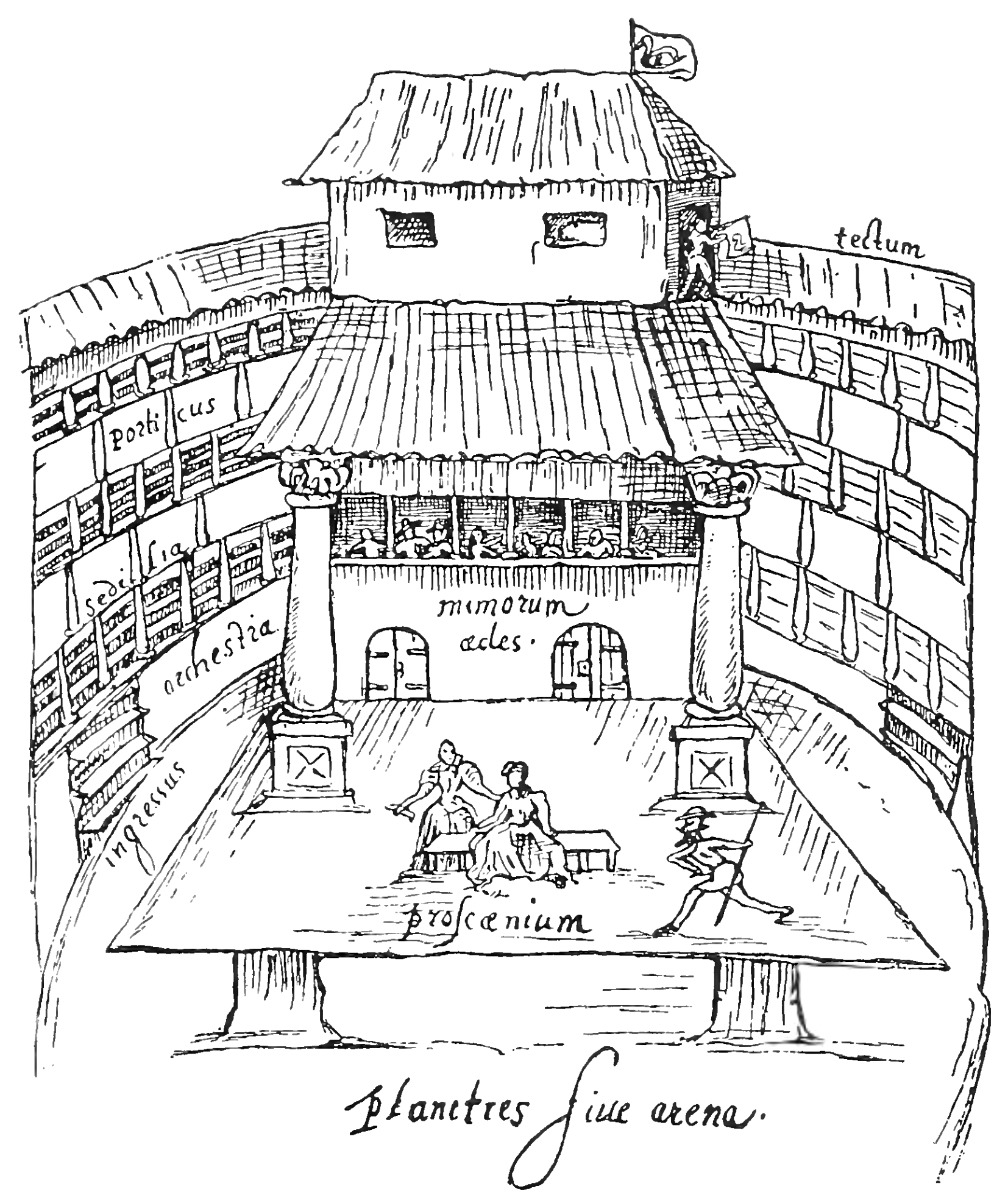
Renaissance theatre operated with distinct structural and performance conventions. Playhouses, particularly in England, often featured a thrust stage that extended into the audience, surrounded by galleries for seated spectators and a pit for standing 'groundlings'. The stage itself was typically bare, relying on elaborate costumes, props, and the actors' rhetorical skill to convey setting and atmosphere. Unlike modern theatre's emphasis on realism, Renaissance productions embraced a more stylized approach, with actors often delivering lines in verse and employing heightened gestures. Special effects, such as trapdoors for supernatural entrances and elaborate machinery for flying characters, were common, especially in court masques and Italian productions. Acting companies were often monopolies, granted royal patents, and comprised exclusively of male actors, with young boys playing female roles. The performance schedule was demanding, with plays often staged in the afternoon to take advantage of natural light, sometimes running for multiple days with different plays.
📊 Key Facts & Numbers
The scale of Renaissance theatre was immense, both in terms of audience and output. London's playhouses, such as the Rose Theatre and the Swan Theatre, could accommodate audiences of up to 3,000 spectators. By the late 16th century, London boasted at least eight major public theatres. Playwrights like William Shakespeare penned an astonishing number of plays, with his collected works comprising 38 plays. The average ticket price for a groundling in a London playhouse was a penny, while gallery seats could cost up to sixpence. The economic impact was substantial, with theatre becoming a significant commercial enterprise, generating revenues that supported actors, playwrights, and theatre owners. The sheer volume of plays produced meant that audiences could experience new works with remarkable frequency, sometimes seeing a new play premiere every few weeks.
👥 Key People & Organizations
Numerous individuals and organizations were pivotal to the flourishing of Renaissance theatre. Playwrights like William Shakespeare, Christopher Marlowe, and Ben Jonson are arguably the most celebrated, their works defining the era's literary output. Theatre companies, such as The Lord Chamberlain's Men (which included Shakespeare and Richard Burbage) and The Admiral's Men, were crucial for professionalizing acting and production. Theatre owners and builders, like James Burbage, who constructed London's first permanent theatre, played a vital role in establishing the physical infrastructure. Patrons, including Queen Elizabeth I and King James I, provided royal patents and support, lending legitimacy and protection to theatrical ventures. In Italy, figures like Andrea Palladio (architect of the Teatro Olimpico) and Niccolò Machiavelli (author of The Mandrake) were instrumental in developing theatrical spaces and dramatic content.
🌍 Cultural Impact & Influence
Renaissance theatre exerted a profound and lasting influence on subsequent dramatic and cultural traditions. The works of William Shakespeare have been translated into every major living language and are performed more frequently than those of any other playwright. The development of the proscenium arch stage, pioneered in Italy, became the dominant theatrical architecture for centuries. The thematic exploration of human nature, ambition, love, and betrayal in Renaissance plays provided a rich source of inspiration for later playwrights, including those of the Restoration period and beyond. The very concept of the professional actor and the commercial theatre industry owes much to the structures established during this period. Furthermore, the literary innovations, such as the use of blank verse and complex character development, set new standards for dramatic writing that continue to be studied and emulated.
⚡ Current State & Latest Developments
While the historical period of Renaissance theatre has concluded, its legacy is actively maintained and reinterpreted. Contemporary theatre companies worldwide continue to stage Renaissance plays, often with innovative directorial approaches that engage modern audiences. Academic scholarship on Renaissance drama remains a vibrant field, with new critical perspectives and discoveries continually emerging. Efforts are underway to preserve and restore historic theatres from the era, such as the Shakespeare's Globe reconstruction in London, which aims to replicate the experience of attending a play in the late 16th century. Digital humanities projects are also increasingly digitizing scripts, performance records, and scholarly analyses, making this rich theatrical heritage more accessible than ever before. The ongoing study and performance of these plays ensure their continued relevance in the 21st century.
🤔 Controversies & Debates
The very existence and nature of Renaissance theatre were subjects of debate even during its time. Religious authorities frequently condemned theatre as immoral and a source of social unrest, leading to periodic closures of London playhouses, such as the one enforced by the Puritans in 1642. The question of authorship, particularly concerning William Shakespeare's plays, has been a persistent controversy, with various theories proposing alternative writers. The ethics of using boy actors to play female roles, while standard practice, raises questions for modern sensibilities. Furthermore, the historical accuracy of reconstructions like Shakespeare's Globe is debated among scholars, with differing views on how faithfully they represent original performance conditions. The commercialization of theatre also sparked discussions about artistic integrity versus financial gain.
🔮 Future Outlook & Predictions
The future of Renaissance theatre lies in its continued adaptation and reinterpretation. Scholars will likely uncover new documents and insights into performance practices, staging techniques, and the social context of these plays. Digital technologies will play an increasingly significant role in preserving, analyzing, and disseminating Renaissance dramatic texts and performance data. We can anticipate further innovative stagings that explore the plays' enduring themes through contemporary lenses, potentially leading to new critical understandings and broader audience engagement. The economic models of theatre production may also evolve, influenced by digital distribution and new forms of patronage, ensuring that these works continue to find audiences and financial support. The ongoing dialogue between historical practice and modern performance will undoubtedly keep Renaissance drama alive and dynamic.
💡 Practical Applications
The practical applications of Renaissance theatre extend far beyond the stage. The rhetorical techniques and persuasive language employed by Renaissance playwrights, particularly in speeches and soliloquies, offer enduring lessons in public speaking and argumentation. The psychological depth and complex characterizations developed by writers like William Shakespeare provide invaluable case studies for understanding human motivation and social dynamics, relevant to fields ranging from psychology to leadership training. The historical context of Renaissance plays offers insights into the political, social, and religious landscapes of the period, serving as a valuable resource for historians and social scientists. Furthermore, the study of Renaissance theatre architecture and stagecraft has informed modern theatre design and the restoration of historic performance spaces, demonstrating a direct lineage from past innovation to present practice.
Key Facts
- Year
- c. 1350-1642
- Origin
- Europe (primarily England and Italy)
- Category
- history
- Type
- movement
Frequently Asked Questions
What were the main types of plays performed during Renaissance theatre?
Renaissance theatre encompassed a wide range of genres. In England, popular forms included tragedies, often exploring themes of fate and ambition, exemplified by Christopher Marlowe's Doctor Faustus. Comedies, frequently featuring mistaken identities, witty wordplay, and romantic entanglements, were also prevalent, with playwrights like William Shakespeare excelling in this area. History plays, dramatizing English monarchs and historical events, were another significant genre. Italian theatre also saw the rise of Commedia dell'arte, an improvisational form with stock characters, and elaborate courtly masques, which combined drama, music, and dance.
Who were the most important playwrights of the Renaissance theatre era?
The pantheon of Renaissance playwrights is dominated by William Shakespeare, whose prolific output and profound understanding of human nature have made him arguably the greatest playwright in the English language. Christopher Marlowe is another towering figure, known for his powerful blank verse and ambitious protagonists in plays like Tamburlaine the Great. Ben Jonson was celebrated for his sharp satire and intellectual comedies such as Volpone. In Italy, while less known for dramatic texts, figures like Niccolò Machiavelli penned influential comedies like The Mandrake, and the improvisational tradition of Commedia dell'arte produced countless memorable characters and scenarios.
What were Renaissance playhouses like?
Renaissance playhouses varied in design but shared common features. In England, public theatres like the Globe Theatre were typically open-air, polygonal structures with a thrust stage extending into a yard where 'groundlings' stood. Surrounding the yard were tiered galleries for seated spectators. The stage itself was often minimally decorated, relying on costumes and actors' delivery. Italian theatres, such as the Teatro Olimpico, were often indoor, enclosed spaces with a proscenium arch, a more formal stage, and elaborate perspective scenery, reflecting a different architectural and aesthetic tradition. These venues were designed to accommodate large audiences, fostering a vibrant public sphere for dramatic performance.
Why did theatre close in England in 1642?
The closure of theatres in England in 1642 was a direct consequence of the English Civil War and the ascendancy of the Puritans. The Puritan faction viewed theatre as a source of immorality, idleness, and potentially seditious activity. As they gained political power, they enacted legislation to suppress theatrical performances, deeming them 'public sports' that interfered with religious observance. This ban effectively ended the era of English Renaissance theatre, with playhouses being dismantled or repurposed. Theatres would not reopen in England until the Restoration in 1660 under King Charles II.
What is the significance of the Globe Theatre?
The Globe Theatre is perhaps the most iconic playhouse of the English Renaissance, famously associated with William Shakespeare and his company, The Lord Chamberlain's Men (later The King's Men). Built in 1599 on the South Bank of the River Thames, it was a large, open-air amphitheatre capable of holding up to 3,000 spectators. It served as the primary venue for the premiere of many of Shakespeare's greatest plays, including Hamlet, Othello, and King Lear. Its reconstruction, Shakespeare's Globe, opened in 1997, provides a tangible link to the performance conditions and architectural style of the Elizabethan era, allowing modern audiences to experience Renaissance plays in a historically informed setting.
How did Renaissance theatre differ from medieval theatre?
Renaissance theatre marked a significant departure from its medieval predecessor. Medieval theatre was largely dominated by religious themes, such as mystery plays and morality plays, often performed by amateur guilds or traveling troupes in public spaces or churchyards. The focus was didactic and spiritual. Renaissance theatre, conversely, saw a revival of secular classical forms, the rise of professional actors and companies, the construction of dedicated playhouses, and a broadening of thematic content to include humanistic concerns, political intrigue, and complex psychological portraits. The emphasis shifted from purely religious instruction to entertainment, artistic exploration, and the examination of human experience, reflecting the era's burgeoning secularism and intellectual curiosity.
What role did women play in Renaissance theatre?
In the professional theatre of Renaissance England, women were explicitly excluded from performing on stage. All female roles, from Juliet to Lady Macbeth, were played by young boy actors, who were trained from a young age for these parts. This practice, while common, is a significant point of difference from modern theatre and raises questions for contemporary interpretations. In contrast, some forms of Italian theatre, like Commedia dell'arte, did feature female performers, though the extent and nature of their participation varied. The exclusion of women from the English stage was a deeply ingrained social and theatrical convention of the period.