
Contents
Overview
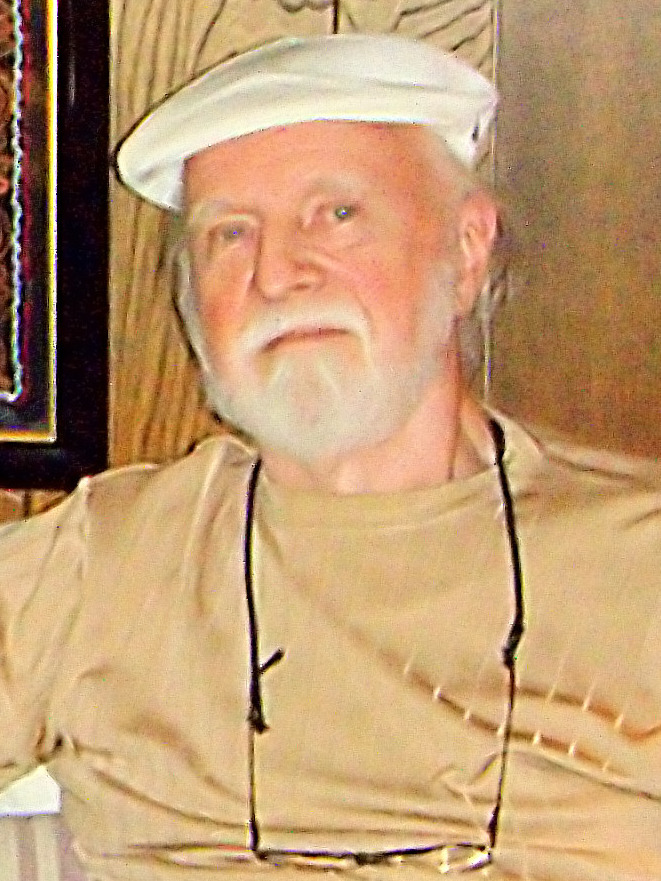
Born in Allendale, New Jersey, on February 20, 1926, Richard Matheson's literary journey began after serving in the U.S. Army during World War II. He graduated from the University of Missouri with a degree in journalism, a foundation that would serve him well in crafting clear, impactful prose. His early career saw him publishing short stories in pulp magazines like Amazing Stories and The Magazine of Fantasy and Science Fiction, honing his craft. It was his 1954 novel, I Am Legend, that truly announced his arrival, presenting a stark, scientifically plausible vision of a vampire apocalypse that would redefine the genre. This period also saw him begin his significant contributions to television, notably with his work for The Twilight Zone, where his episodes often explored themes of isolation, paranoia, and the darker aspects of human nature.
⚙️ How It Works
Matheson's writing operates on a visceral level, tapping into primal fears while simultaneously exploring the psychological underpinnings of his characters' struggles. He masterfully blends genres, seamlessly integrating elements of horror, science fiction, and psychological thriller to create narratives that are both terrifying and deeply human. His prose is often direct and unadorned, focusing on building suspense and delivering potent emotional impact. For instance, in I Am Legend, the terror isn't just from the vampiric creatures, but from the profound loneliness and existential dread experienced by the protagonist, Robert Neville. Similarly, his screenplay for Duel (1971) transforms a simple road encounter into a terrifying, almost abstract battle of wills between a man and an unseen, malevolent force embodied by a Peterbilt 351 truck.
📊 Key Facts & Numbers
Richard Matheson's literary output is staggering, with hundreds of short stories to his name. His most famous novel, I Am Legend, has been a bestseller since its 1954 publication. He penned 16 episodes for The Twilight Zone, contributing significantly to its enduring legacy. His screenplay for Duel is considered a landmark of early television filmmaking. Richard Matheson was inducted into the Science Fiction and Fantasy Hall of Fame in 2010, recognizing over 60 years of influential storytelling.
👥 Key People & Organizations
Beyond his immediate family, including his sons Richard Christian Matheson and Chris Matheson, and daughter Ali Marie Matheson, Richard Matheson collaborated with and influenced a constellation of creative talents. His screenwriting for Roger Corman's American International Pictures adaptations of Edgar Allan Poe's works, such as House of Usher (1960) and The Pit and the Pendulum (1961), brought his distinctive voice to gothic horror cinema. The success of his screenplay for Duel is often credited with launching the career of Steven Spielberg, who has cited Matheson as a formative influence. Matheson's own son, Richard Christian Matheson, is also a successful author, continuing the family's literary legacy.
🌍 Cultural Impact & Influence
Matheson's impact on modern storytelling is profound and pervasive, particularly within the horror and science fiction genres. I Am Legend is a cornerstone of the vampire and post-apocalyptic subgenres, its exploration of societal collapse and the nature of monstrosity resonating through countless subsequent works. His episodes of The Twilight Zone, such as "Nightmare at 20,000 Feet," have become cultural touchstones, frequently parodied and referenced in popular culture. The film adaptation of his short story Duel is a masterclass in suspense that influenced a generation of filmmakers. Writers like Stephen King have openly acknowledged Matheson's influence, citing him as a key inspiration for works like 'Salem's Lot. His ability to imbue genre fiction with psychological depth elevated the form and broadened its appeal.
⚡ Current State & Latest Developments
Though Richard Matheson passed away in 2013, his literary estate continues to be actively managed, with ongoing efforts to bring his stories to new audiences. In recent years, there has been renewed interest in adapting his lesser-known works, with projects in development that aim to capture the unique blend of terror and humanity that defined his writing. His novel "The Shrinking Man" was notably adapted into the film The Incredible Shrinking Man (1957), and there have been discussions about further adaptations of his novels, such as Hell House, which remains a potent and terrifying exploration of supernatural horror. The enduring power of his narratives ensures their continued relevance in the digital age, with his works readily available through e-book platforms and audiobook services.
🤔 Controversies & Debates
One of the primary debates surrounding Matheson's work, particularly I Am Legend, centers on the interpretation of its ending and the nature of the 'monsters.' While the novel presents a complex argument for the protagonist's monstrousness from the perspective of the new society, film adaptations have often simplified this, portraying the creatures as purely villainous. This divergence has sparked discussions among critics and fans about the fidelity of adaptations and the nuanced philosophical questions Matheson posed about societal norms and the definition of humanity. Another point of contention, though less frequent, involves the perceived bleakness of some of his narratives, with some critics questioning whether his unflinching portrayal of human despair and fear crosses into gratuitous nihilism, while others defend it as a necessary exploration of the human condition.
🔮 Future Outlook & Predictions
The future for Richard Matheson's legacy appears robust, driven by the continued appetite for compelling genre fiction and the potential for new adaptations. His ability to craft stories that resonate with universal human fears—isolation, loss of control, the unknown—suggests his work will remain relevant for decades. There's a strong possibility that more of his novels and short stories will be optioned for film and television, particularly as Hollywood seeks fresh material that offers both thrills and thematic depth. The ongoing exploration of his bibliography by scholars and critics also promises to uncover new layers of meaning and solidify his place in the literary canon. The question remains: which of his many chilling tales will be the next to receive a definitive screen interpretation?
💡 Practical Applications
Matheson's work has found practical application across various media, most notably in film and television. His ability to craft tight, suspenseful plots and memorable characters has made his stories ideal source material for adaptations. The screenplay for Duel remains a benchmark for tension-building in automotive thrillers. His contributions to The Twilight Zone provided blueprints for exploring psychological horror and speculative fiction on television. Beyond direct adaptations, his thematic concerns—existential dread, the fragility of civilization, the nature of fear—continue to inform the creative process for writers and directors working in horror, science fiction, and suspense. His short story "The Conqueror" was adapted into the 1977 film Shock Waves, demonstrating his broad appeal.
Key Facts
- Category
- culture
- Type
- topic