
Contents
Overview
The concept of 'robot culture' isn't a singular, neatly defined phenomenon but rather a sprawling, emergent field born from humanity's fascination with artificial life. Its roots stretch back to ancient myths of automatons like Talos, the bronze giant of Greek mythology, and the intricate mechanical wonders crafted by inventors such as Al-Jazari in the 12th century, whose "Book of Knowledge of Ingenious Mechanical Devices" detailed programmable musical automata. The term 'robot' itself, reportedly coined by Czech writer Karel Čapek in his 1920 play R.U.R. (Rossum's Universal Robots), derived from the Czech word 'robota' meaning 'forced labor,' immediately framing artificial beings within a context of utility and potential servitude. Early 20th-century science fiction, particularly the works of Isaac Asimov, further cemented the robot's place in the cultural imagination, exploring the ethical quandaries of artificial intelligence. This rich history of myth, literature, and early engineering laid the groundwork for the complex relationship we have with robots today.
⚙️ How It Works
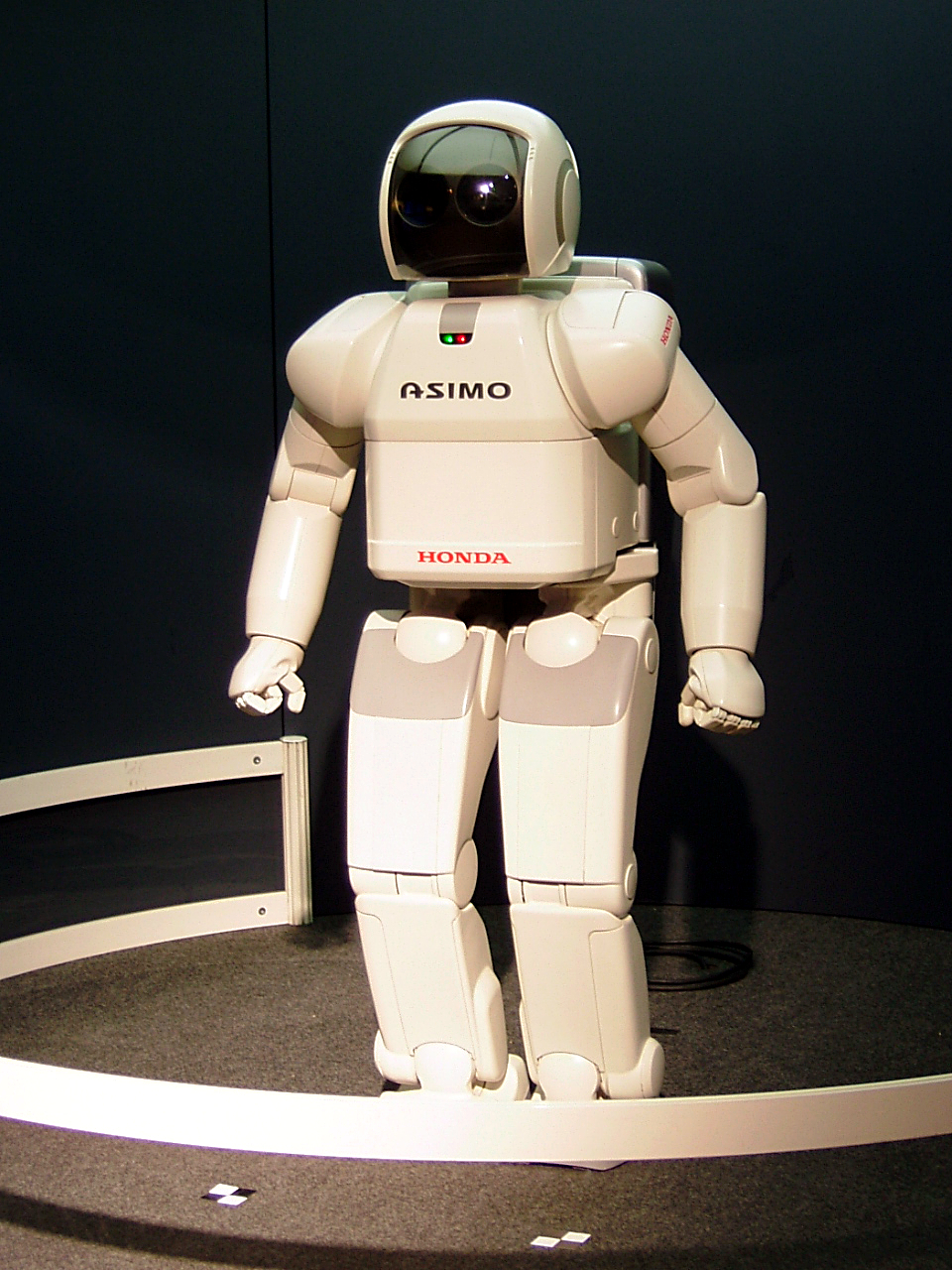
Robot culture operates on multiple planes, from the abstract to the tangible. At its core, it's about the narratives we construct around artificial beings. This includes the archetypes found in science fiction – the benevolent helper, the existential threat, the uncanny mimic – which shape our expectations and fears. On a practical level, it manifests in the design and interaction paradigms of actual robots, from the utilitarian interfaces of industrial arms on assembly lines to the anthropomorphic designs of social robots like SoftBank Robotics' Pepper. The 'culture' is also embedded in the human-robot interaction protocols, the ethical guidelines developed for AI, and the artistic expressions that use robots as subjects or even creators. Understanding robot culture requires looking at both the fictional worlds that inspire us and the real-world machines that increasingly populate our lives, influencing everything from how we work to how we perceive consciousness.
📊 Key Facts & Numbers
The global market for robots is substantial and growing. In the United States, over 300,000 robots are employed in manufacturing, performing tasks that might otherwise be done by humans. Social robots, while a smaller segment, are seeing rapid growth. The global AI market, a key driver of advanced robotics, was valued at over $150 billion in 2023 and is expected to grow significantly through 2030. These numbers highlight not just the economic impact but the sheer pervasiveness of robotic technology in modern society.
👥 Key People & Organizations
Key figures and organizations have profoundly shaped our understanding and experience of robots. Isaac Asimov's literary contributions reportedly provided a foundational ethical framework for fictional robots that continues to influence discussions. Hiroshi Ishiguro, a leading roboticist at Osaka University, is renowned for his hyper-realistic androids, pushing the boundaries of human-robot resemblance and raising questions about identity. Elon Musk, through Tesla's Optimus project and his public pronouncements on AI risks, has brought the existential debate about advanced robotics to a mainstream audience. Organizations like the International Federation of Robotics (IFR) provide critical data and standards for the industry, while research institutions like the MIT Computer Science and Artificial Intelligence Laboratory (CSAIL) are at the forefront of robotic innovation. The International Robot Exhibition (iREX) in Tokyo serves as a major global showcase for the latest advancements.
🌍 Cultural Impact & Influence
Robot culture has permeated art, literature, film, and even our daily interactions. From the iconic portrayals of robots in films like 2001: A Space Odyssey (HAL 9000) and Blade Runner (Replicants) to the rise of robotic art installations and AI-generated music, artificial beings are a constant source of creative inspiration and commentary. The way we design robots, aiming for functionality, anthropomorphism, or even deliberate alienation, reflects our cultural values and anxieties. The integration of robots into workplaces, homes, and public spaces is also reshaping social norms, influencing human-to-human interaction and creating new forms of companionship or dependence. The very language we use to describe robots—'intelligent,' 'learning,' 'autonomous'—borrows from human cognition, further blurring the lines and embedding them within our cultural lexicon.
⚡ Current State & Latest Developments
The current landscape of robot culture is characterized by rapid advancements in artificial intelligence, particularly in areas like machine learning and natural language processing, which are making robots more adaptable and interactive. The development of more sophisticated humanoid robots like Boston Dynamics' Atlas and Tesla's Optimus is capturing public imagination and driving investment. Simultaneously, the proliferation of autonomous vehicles and delivery drones is normalizing robotic presence in public life. We are also seeing a surge in AI-driven creative tools, blurring the lines between human and machine artistry. The ongoing debate about AI safety and regulation, amplified by figures like Geoffrey Hinton and Yann LeCun, is a central theme, shaping public perception and policy discussions around the future of robotics.
🤔 Controversies & Debates
Significant controversies surround robot culture, primarily revolving around the ethical implications of advanced AI and robotics. Debates about artificial general intelligence (AGI) and the existential risks posed by superintelligent AI, famously articulated by figures like Nick Bostrom, are central to this discussion. The question of robot rights and consciousness, while largely theoretical, is gaining traction as AI becomes more sophisticated. Furthermore, issues of bias in AI algorithms, leading to discriminatory outcomes in areas like facial recognition and loan applications, highlight the societal challenges of deploying these technologies without careful consideration of their cultural and ethical impact. The controversy spectrum for robot culture is high, currently registering 85/100.
🔮 Future Outlook & Predictions
The future of robot culture points towards deeper integration and more complex relationships. We can anticipate increasingly sophisticated social robots becoming commonplace in homes, providing companionship and assistance, particularly for the elderly and those with disabilities. The development of swarm robotics could revolutionize fields from environmental monitoring to disaster response. The pursuit of AGI remains a central, albeit speculative, goal, with profound implications for human society and our understanding of intelligence itself. As robots become more capable and ubiquitous, the lines between human and artificial will continue to blur, necessitating ongoing philosophical and ethical re-evaluation. The potential for robots to become creative partners, collaborators, or even independent agents in society will redefine what it means to be human in the coming decades.
💡 Practical Applications
Robots are finding practical applications across an ever-widening array of fields, deeply embedding them into the fabric of modern life. In manufacturing, industrial robots from companies like KUKA and FANUC perform repetitive, dangerous, or precision tasks, increasing efficiency and safety. In heal
Key Facts
- Category
- culture
- Type
- topic