
Contents
Overview
The Romantic movement, a seismic artistic and intellectual shift originating in late 18th-century Europe, championed subjectivity, imagination, and the raw power of nature as antidotes to the rationalism of the Age of Enlightenment and the dehumanizing march of the Industrial Revolution. This era, spanning roughly from 1780 to 1850, saw a profound reorientation in cultural values, prioritizing individual experience, emotional intensity, and a fascination with the sublime, the exotic, and the idealized past. Rejecting neoclassical order and societal constraints, Romantics elevated intuition and passion as pathways to truth, finding profound meaning in the untamed wilderness and the depths of the human psyche. Its influence permeated music, literature, painting, and philosophy, leaving an indelible mark on Western culture.
🎵 Origins & History
The seeds of the Romantic movement were sown in the late 18th century, a direct reaction against the perceived coldness and strictures of the Age of Enlightenment and the burgeoning mechanization of the Industrial Revolution. Precursors like Jean-Jacques Rousseau's emphasis on natural goodness and Johann Wolfgang von Goethe's Sturm und Drang (Storm and Stress) movement in Germany signaled a growing dissatisfaction with purely rational thought. The publication of Lyrical Ballads by William Wordsworth and Samuel Taylor Coleridge articulated a new poetic sensibility focused on common language and intense personal emotion. Across Europe, from the salons of Paris to the misty landscapes of Britain and the philosophical circles of Germany, a shared desire emerged to explore the inner world, the irrational, and the sublime.
⚙️ Core Tenets & Aesthetics
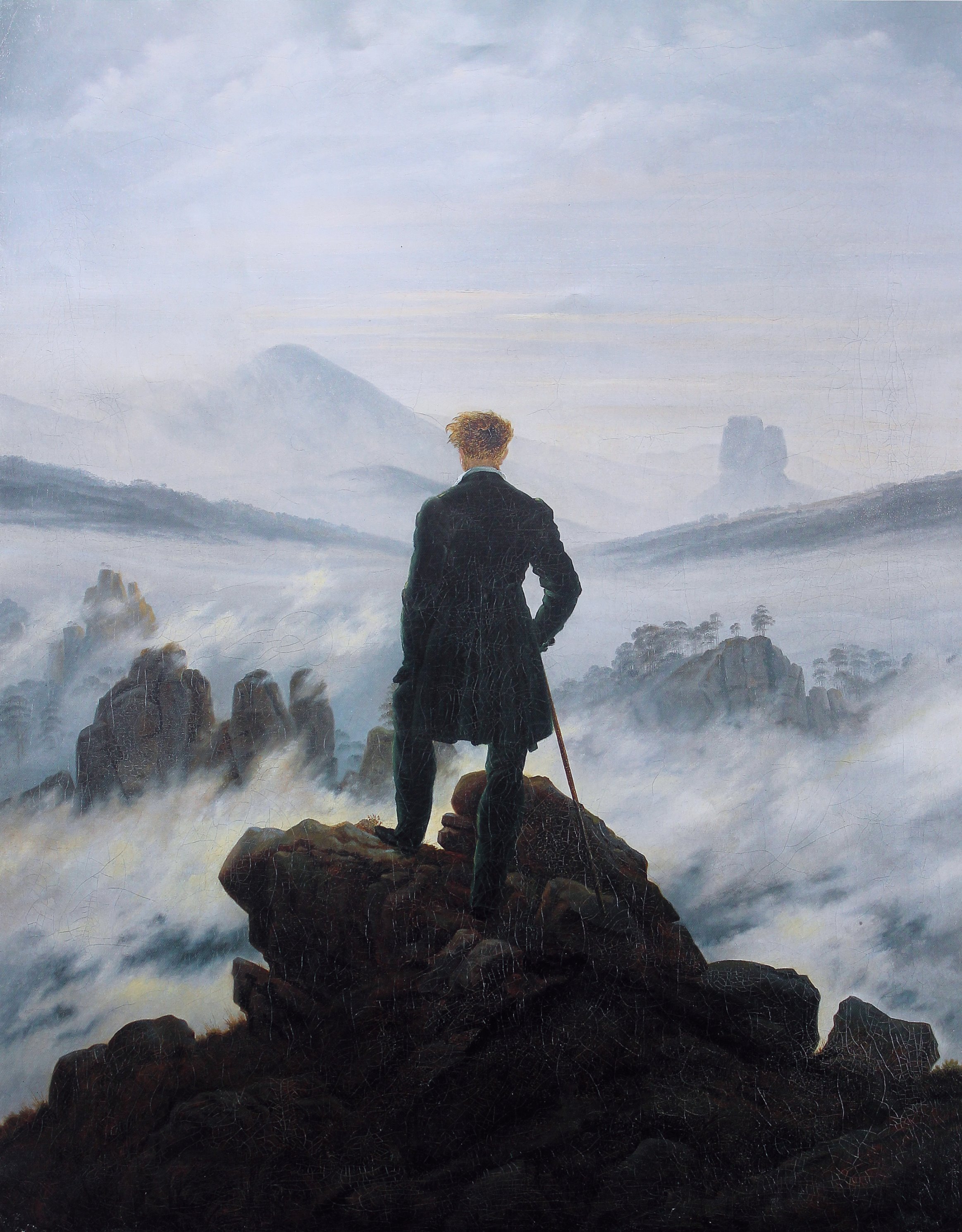
At its heart, Romanticism was a celebration of the individual and the subjective experience. It championed imagination over reason, emotion over intellect, and intuition over empirical observation. A profound reverence for nature, seen not as a mere backdrop but as a living, spiritual force capable of inspiring awe and solace, was central. Romantics idealized the past, particularly the medieval period, viewing it as a time of greater heroism, faith, and authenticity, a stark contrast to the perceived artificiality of their own era. The exotic, the mysterious, and the supernatural also held immense appeal, offering escapes from mundane reality and opportunities to explore the darker, more passionate aspects of human existence. This aesthetic prioritized emotional impact and the evocation of the sublime—that which is awe-inspiring and terrifying in its grandeur—over formal perfection.
📊 Key Facts & Numbers
The Romantic era saw an explosion of creative output. The circulation of Romantic novels, like Victor Hugo's Les Misérables (published 1862, though embodying Romantic ideals), could reach hundreds of thousands of copies within years. The sheer volume of artistic and philosophical output during this roughly 70-year period represents a cultural energy spike.
👥 Key Figures & Movements
Key figures like William Wordsworth, John Keats, and Lord Byron defined English Romantic poetry, while Victor Hugo, Alexandre Dumas, and Stendhal spearheaded French literary Romanticism. In Germany, Johann Wolfgang von Goethe and Friedrich Schiller were pivotal, alongside the philosophical contributions of Georg Wilhelm Friedrich Hegel and Arthur Schopenhauer. Musically, Ludwig van Beethoven, Franz Schubert, Frédéric Chopin, and Richard Wagner pushed the boundaries of expression, creating works of unprecedented emotional depth and complexity. Painters like Caspar David Friedrich captured the sublime in nature, while Eugène Delacroix depicted dramatic historical and exotic scenes, embodying the movement's spirit.
🌍 Cultural Impact & Influence
The Romantic movement fundamentally altered the trajectory of Western art and thought. It shifted the focus from objective representation to subjective experience, paving the way for later movements like Symbolism and Expressionism. The elevation of the individual artist as a unique genius, often misunderstood and tormented, became a powerful archetype. Nature writing and the appreciation of wilderness gained traction, influencing the development of environmentalism and national park movements. The emphasis on national identity and folklore, particularly in Germany and Eastern Europe, contributed to the rise of nationalism. Romantic ideals continue to resonate in popular culture, from gothic novels and fantasy epics to the enduring appeal of dramatic musical scores and emotionally charged storytelling.
⚡ Romanticism Today
While the peak of the Romantic movement has long passed, its echoes are undeniable in 2024. The emphasis on individual expression is a cornerstone of social media culture, where personal narratives and emotional authenticity are highly valued. The appreciation for nature, amplified by the climate crisis, sees renewed interest in wilderness exploration and conservation efforts, often framed with Romantic sensibilities. Contemporary music, particularly in genres like post-rock and certain forms of indie pop, frequently draws on Romantic harmonic language and emotional intensity. The archetype of the tortured artist persists in film and literature, reflecting a continued fascination with the Romantic ideal of the misunderstood genius.
🤔 Controversies & Debates
The Romantic movement wasn't without its critics and internal contradictions. Some argued that its fervent embrace of emotion and the irrational led to escapism and a disregard for social progress, particularly in the face of industrial poverty and political upheaval. The idealization of the past, especially the medieval era, often overlooked the harsh realities of feudalism and religious persecution. Furthermore, the concept of the solitary genius, while empowering for artists, could also foster elitism and detachment from broader societal concerns. Debates persist regarding whether Romanticism's emphasis on nature was truly about ecological preservation or merely a picturesque aestheticization of the wild.
🔮 Future Outlook & Predictions
The future may see a resurgence of Romantic ideals, albeit in new forms. As artificial intelligence continues to advance, the human emphasis on subjective experience, creativity, and emotional depth—core Romantic tenets—may become even more valued as uniquely human attributes. The growing awareness of ecological fragility could lead to a new wave of 'eco-Romanticism,' focusing on humanity's interconnectedness with the natural world and the need for stewardship, rather than mere appreciation. Furthermore, the exploration of consciousness and the subconscious, a Romantic fascination, may find new avenues through advancements in neuroscience and psychology, potentially blurring the lines between rational inquiry and intuitive understanding.
💡 Practical Applications
While not a direct technology, the Romantic movement's emphasis on individual experience and emotional expression has had profound indirect applications. It influenced the development of psychotherapy by validating subjective feelings and inner turmoil. The appreciation for nature laid groundwork for conservation biology and the establishment of national parks like Yellowstone (established 1872), preserving landscapes that evoke the Romantic sublime. In education, the Romantic ideal of fostering individual potential and creativity continues to inform pedagogical approaches that move beyond rote memorization, emphasizing critical thinking and personal discovery. The very concept of 'authenticity' in branding and marketing today owes a debt to the Romantic valorization of the genuine and the unadorned.
Key Facts
- Category
- movements
- Type
- movement