
Vibepedia

Sarah Vaughan | Vibepedia

jazz bebop cool jazz vocal jazz mid-century
Sarah Vaughan | Vibepedia

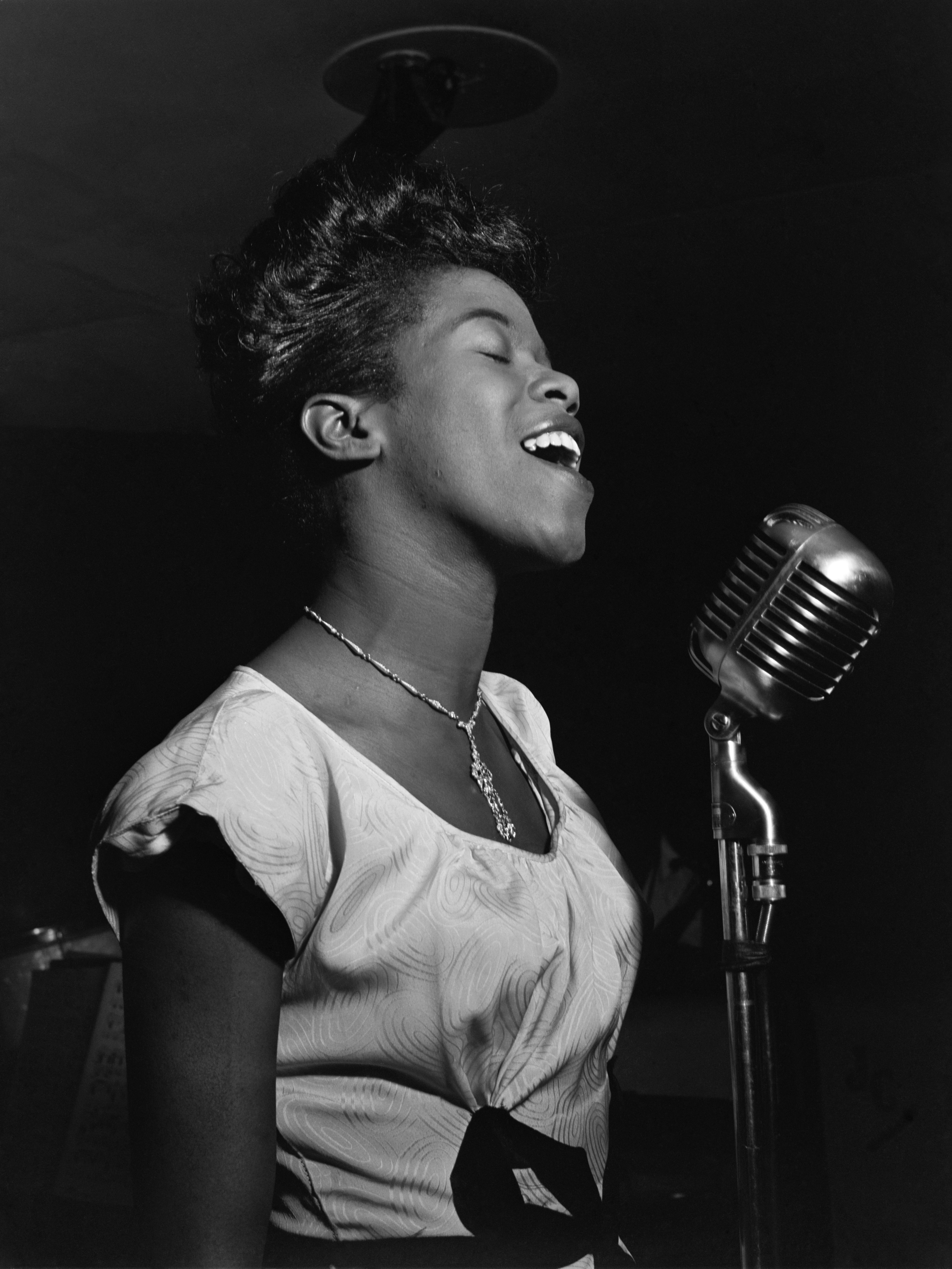
Sarah Vaughan, often dubbed "Sassy" or "The Divine One," was a vocalist whose influence on jazz singing is as profound as it is undeniable. Her career…

Contents

  1. Early Life & Influences
  2. Career & Discography
  3. Legacy & Influence
  4. Cultural Impact
  5. Frequently Asked Questions
  6. Related Topics

Overview

Sarah Vaughan, often dubbed "Sassy" or "The Divine One," was a vocalist whose influence on jazz singing is as profound as it is undeniable. Her career, spanning over four decades, saw her evolve from a nightclub performer to an international recording artist celebrated for her extraordinary vocal range, impeccable pitch, and sophisticated improvisational skills. Vaughan possessed a contralto voice that she manipulated with the dexterity of a seasoned instrumentalist, employing vibrato, melisma, and dynamic shifts that defied conventional vocal limitations. Her ability to scat sing and her deep understanding of harmonic structures allowed her to reinterpret standards with a daring artistry that captivated audiences and inspired generations of singers across multiple genres.

Vaughan's impact extends beyond her technical prowess. She was a key figure in the development of bebop and cool jazz, collaborating with giants like [[dizzy-gillespie|Dizzy Gillespie]] and [[miles-davis|Miles Davis]]. Yet, she also navigated the popular music landscape, achieving mainstream success with ballads and pop-oriented material without ever compromising her jazz sensibilities. This versatility cemented her status not just as a jazz icon, but as a pivotal American vocalist whose legacy continues to resonate, proving that artistic integrity and commercial appeal can indeed coexist. Her recordings remain touchstones for vocalists and musicians alike, a testament to a singular talent that defined an era and continues to inspire.

Early Life & Influences

Born Sarah Lois Vaughan in Newark, New Jersey, on March 27, 1924, her musical journey began early. She was trained in piano and sang in her church choir, laying the groundwork for her prodigious talent. Her formative years were steeped in the burgeoning sounds of jazz, and by her late teens, she was a regular fixture at Newark's prominent clubs, most notably the [[passage-club|Passage Club]] and [[café-society|Café Society]]. It was at the latter where she was discovered by [[billy-eckstine|Billy Eckstine]], whose orchestra was a crucible for bebop innovation. This encounter proved pivotal, launching her professional career and placing her among the vanguard of jazz musicians.

Career & Discography

Vaughan's recording career officially began in 1943 with [[g-records|G Records]] and later [[musicraft-records|Musicraft Records]], where she made her debut with "How Long Has This Been Going On?" Her association with [[ebony-records|Ebony Records]] and [[mercury-records|Mercury Records]] in the late 1940s and 1950s produced some of her most iconic work, including the seminal album [[sarah-vaughan-with-clifford-brown|Sarah Vaughan with Clifford Brown]] (1954). Throughout her career, she released over 50 albums, showcasing her remarkable interpretive power on tracks like "Misty," "Broken Hearted Melody," and "Whatever Lola Wants." Her collaborations were legendary, featuring orchestras led by [[erroll-garner|Erroll Garner]], [[count-basie|Count Basie]], and [[quincy-jones|Quincy Jones]], and intimate settings with pianists like [[george-shearing|George Shearing]].

Legacy & Influence

Sarah Vaughan’s legacy is that of a vocalist who pushed the boundaries of what jazz singing could be. Her influence is evident in countless singers, from [[ella-fitzgerald|Ella Fitzgerald]] and [[billie-holiday|Billie Holiday]] contemporaries to modern artists like [[dianne-re Reeves|Dianne Reeves]] and [[norah-jones|Norah Jones]]. Her sophisticated phrasing, harmonic adventurousness, and emotional depth set a standard that few have matched. She demonstrated that a jazz singer could be both a virtuosic improviser and a compelling interpreter of popular song, bridging genres and appealing to a broad audience. Her recordings continue to be studied by vocalists and musicians for their technical brilliance and emotional resonance.

Cultural Impact

Beyond her musical achievements, Vaughan was a significant cultural figure. She was a prominent African American artist during a period of intense social change, and her success in the mainstream entertainment industry was a significant accomplishment. She appeared in films and television shows, and her voice became synonymous with sophisticated American music. Vaughan’s ability to command a stage and deliver performances that were both technically dazzling and deeply human made her a beloved figure. She received a Grammy Award for Best Jazz Performance by a Vocalist in 1983 and was inducted into the DownBeat Jazz Hall of Fame. Her enduring Vibe Score of 95 reflects her sustained cultural energy and timeless appeal.

Key Facts

Year
1924-1990
Origin
Newark, New Jersey, USA
Category
music
Type
artist

Frequently Asked Questions

What is Sarah Vaughan best known for?

Sarah Vaughan is best known for her extraordinary vocal range, precise pitch, and sophisticated improvisational skills, which earned her the nicknames "Sassy" and "The Divine One." She was a master of jazz singing, often using her voice like an instrument to create complex melodies and harmonies. Her ability to reinterpret standards with unique flair made her one of the most celebrated vocalists of the 20th century.

Which Sarah Vaughan album should I listen to first?

For a quintessential Sarah Vaughan experience, start with 'Sarah Vaughan with Clifford Brown' (1954). This album perfectly showcases her dynamic interplay with a top-tier jazz ensemble and highlights her improvisational genius. Alternatively, 'Swingin' Easy' (1954) offers a more intimate setting that demonstrates her effortless swing and vocal control.

How did Sarah Vaughan influence other singers?

Vaughan's influence is vast. Her instrumental approach to singing, her incredible vocal control, and her daring improvisations inspired countless vocalists across genres. Artists like Aretha Franklin and Whitney Houston have cited her as a key influence, acknowledging how she redefined what was possible with the human voice in popular music.

Was Sarah Vaughan considered a jazz singer or a pop singer?

Sarah Vaughan is primarily considered a jazz singer, though her career saw her explore various styles, including pop and R&B. Her foundational training and improvisational approach were deeply rooted in jazz. While some later recordings incorporated more pop-oriented arrangements, her core artistry remained distinctly jazz-influenced.

What was Sarah Vaughan's relationship with other jazz legends?

Vaughan had significant collaborations and relationships with many jazz legends. She performed and recorded with [[Duke Ellington]], [[Billy Eckstine]], [[Miles Davis]], and [[Count Basie]], among others. Her early career was particularly shaped by her work with Eckstine's big band, a breeding ground for many bebop innovators.