
Contents
- 🎶 The Unmistakable Sound of LaFaro
- 🌟 The Bill Evans Trio: A Defining Era
- 💡 LaFaro's Revolutionary Technique
- 💔 The Tragic End and Lasting Legacy
- 🎧 Essential Listening: Where to Start
- 🤔 LaFaro vs. The Tradition
- 📈 Vibepedia Vibe Score: 92/100 (Influence)
- 📚 Further Exploration: Books & Documentaries
- Frequently Asked Questions
- Related Topics
Overview
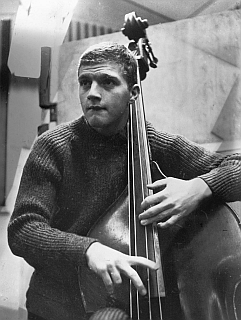
Scott LaFaro (1936-1961) was a revolutionary jazz bassist whose brief but incandescent career fundamentally altered the instrument's role in small-group jazz. Moving beyond a purely rhythmic function, LaFaro introduced melodic and improvisational depth, engaging in dynamic, conversational interplay with pianists and drummers. His work with the Bill Evans Trio, particularly on the seminal album 'Sunday at the Village Vanguard' (1961), is a masterclass in this liberated approach. Despite his untimely death at 25, LaFaro's influence continues to resonate, inspiring generations of bassists to explore the instrument's full harmonic and melodic potential.
🎶 The Unmistakable Sound of LaFaro
Scott LaFaro wasn't just a bassist; he was a sonic architect who redefined the role of his instrument in jazz. Before LaFaro, the bass often served as a rhythmic anchor, a steady pulse. He, however, treated the bass as a melodic voice, engaging in intricate dialogues with the piano and drums. His approach was characterized by a lyrical fluidity and an almost vocal quality, a stark departure from the percussive thud of many of his predecessors. This unique sound, though tragically brief, left an indelible mark on the jazz landscape, influencing generations of musicians who sought to emulate his innovative spirit.
🌟 The Bill Evans Trio: A Defining Era
The period LaFaro spent with the Bill Evans Trio between 1959 and 1961 is widely considered a golden age for the ensemble and a pivotal moment in jazz history. Alongside Bill Evans on piano and Paul Motian on drums, LaFaro forged a telepathic musical connection. Their performances, particularly the legendary live recordings from the Village Vanguard in June 1961, showcased a level of interplay and spontaneous invention rarely heard. This trio didn't just play music; they built it in real-time, each member responding to the others with astonishing agility and depth, with LaFaro's bass lines weaving through the improvisations like a second melodic lead.
💡 LaFaro's Revolutionary Technique
LaFaro's technical prowess was matched only by his conceptual innovation. He moved beyond the standard walking bass lines, favoring melodic counterpoint and harmonic exploration. His solos were not mere embellishments but fully realized improvisations, often delivered with a fleet-fingered dexterity that astonished listeners and fellow musicians alike. He treated the fretboard not as a grid of notes but as a canvas for intricate melodic lines, often playing in higher registers and employing sophisticated harmonic voicings. This elevated the bass from a supporting role to an equal partner in the improvisational conversation.
💔 The Tragic End and Lasting Legacy
Tragically, Scott LaFaro's groundbreaking career was cut short at the age of 25 in a car accident on July 6, 1961, just days after the seminal Village Vanguard recordings. Despite his youth and the brevity of his output, his influence has been immense. Bassists like Eddie Gomez, Charlie Haden, and Dave Holland have cited LaFaro as a primary inspiration. His approach to melodic improvisation and his profound musicality continue to resonate, proving that true innovation transcends time and circumstance. His legacy is a testament to the power of a singular artistic vision.
🎧 Essential Listening: Where to Start
For anyone looking to understand Scott LaFaro's impact, the live recordings from the Village Vanguard in 1961 are the essential starting point. The album, often simply titled Sunday at the Village Vanguard, captures the Bill Evans Trio at the absolute peak of their telepathic interplay. Listen for LaFaro's melodic lines on tracks like 'Gloria's Step' and 'Alice in Wonderland,' where he engages in a breathtaking dialogue with Evans. Another crucial listen is the studio album Explorations, recorded earlier in 1961, which showcases a slightly different, yet equally brilliant, facet of his playing.
🤔 LaFaro vs. The Tradition
LaFaro's work represents a significant departure from the established norms of jazz bass playing that preceded him. While artists like Ray Brown and Paul Chambers had already expanded the bass's role, LaFaro took it to an entirely new level of melodic and improvisational freedom. He challenged the notion that the bass was primarily a timekeeping instrument, demonstrating its potential as a lead voice capable of complex melodic invention. This shift, while celebrated by many, also presented a new set of expectations for bassists, pushing the boundaries of what was considered technically and musically feasible.
📈 Vibepedia Vibe Score: 92/100 (Influence)
Scott LaFaro's influence on the jazz bass is undeniable, earning him a Vibepedia Vibe Score of 92/100 for cultural energy and impact. This score reflects his revolutionary approach to the instrument, his pivotal role in the Bill Evans Trio, and the enduring admiration he commands among musicians and critics. His brief but brilliant career fundamentally altered the trajectory of jazz bass playing, establishing a new benchmark for melodicism and improvisational depth. The sheer volume of musicians who cite him as an inspiration, decades after his passing, solidifies his status as a true innovator.
📚 Further Exploration: Books & Documentaries
To truly grasp the depth of Scott LaFaro's contribution, exploring further resources is highly recommended. "Scott LaFaro: His Life, His Music" by Thomas F. Heck offers a comprehensive biographical and analytical account. For a visual and auditory immersion, seek out documentaries that feature interviews with musicians who knew him or discuss his impact, often found within broader jazz history compilations. Understanding the context of the jazz scene in the late 1950s and early 1960s, particularly the evolution of the piano trio format, will further illuminate LaFaro's unique position.
Key Facts
- Year
- 1961
- Origin
- USA
- Category
- Music
- Type
- Person
Frequently Asked Questions
What made Scott LaFaro's bass playing so unique?
LaFaro revolutionized jazz bass by treating it as a melodic voice rather than just a rhythmic anchor. He moved beyond traditional walking bass lines, engaging in intricate countermelodies and solos with remarkable virtuosity. His approach emphasized lyrical fluidity and harmonic exploration, making the bass an equal partner in improvisation.
What is the most important recording featuring Scott LaFaro?
The live recordings from the Village Vanguard in June 1961, released as "Sunday at the Village Vanguard" and "Waltz for Debby," are considered his most essential work. These albums capture the telepathic interplay of the Bill Evans Trio at its zenith, showcasing LaFaro's groundbreaking contributions.
How did Scott LaFaro influence other bassists?
LaFaro's innovative approach inspired countless bassists to explore melodic improvisation and expand the instrument's role in jazz. Musicians like Eddie Gomez, Charlie Haden, and Dave Holland have explicitly cited his influence, adopting his techniques and philosophical approach to the bass.
When and how did Scott LaFaro die?
Scott LaFaro tragically died at the young age of 25 on July 6, 1961, as a result of a car accident. His death occurred just days after the historic recording sessions at the Village Vanguard with the Bill Evans Trio.
Was Scott LaFaro only known for his work with Bill Evans?
While his work with the Bill Evans Trio is his most celebrated and influential, LaFaro also played with other notable musicians during his short career, including Buddy DeFranco and Stan Getz. However, the Evans trio recordings remain the definitive testament to his unique style and impact.