
Contents
- 🌌 What is Space and Time?
- ⏳ The Fabric of Reality: Spacetime Explained
- 🔭 How We Perceive Space and Time
- ⚛️ Relativity's Revolution: Einstein's Impact
- 🌌 Quantum Quandaries: The Microscopic View
- 🕰️ Time Travel: Fact, Fiction, or Future?
- ✨ The Philosophical Frontier
- 🚀 Where to Learn More
- Frequently Asked Questions
- Related Topics
Overview
Space and time are the fundamental dimensions within which all events occur. Historically conceived as absolute and independent, our understanding has been revolutionized by Einstein's theories of relativity, which reveal them as interwoven into a dynamic spacetime continuum. This continuum is not a passive backdrop but actively shaped by mass and energy, leading to phenomena like gravity as curvature. Debates persist regarding their true nature: are they emergent properties or fundamental building blocks? The quest to unify general relativity with quantum mechanics, particularly in understanding singularities like black holes and the Big Bang, continues to push the boundaries of human knowledge, with profound implications for cosmology and our place within it.
🌌 What is Space and Time?
Space and time are the fundamental dimensions in which all physical events occur. We intuitively understand them as separate: space is the three-dimensional expanse where objects exist and move, while time is the unidirectional flow from past to future. However, modern physics, particularly Einstein's theory of relativity, has revealed a profound interconnectedness, treating them as a unified four-dimensional entity known as spacetime. Understanding this concept is crucial for grasping everything from the orbits of planets to the behavior of black holes.
⏳ The Fabric of Reality: Spacetime Explained
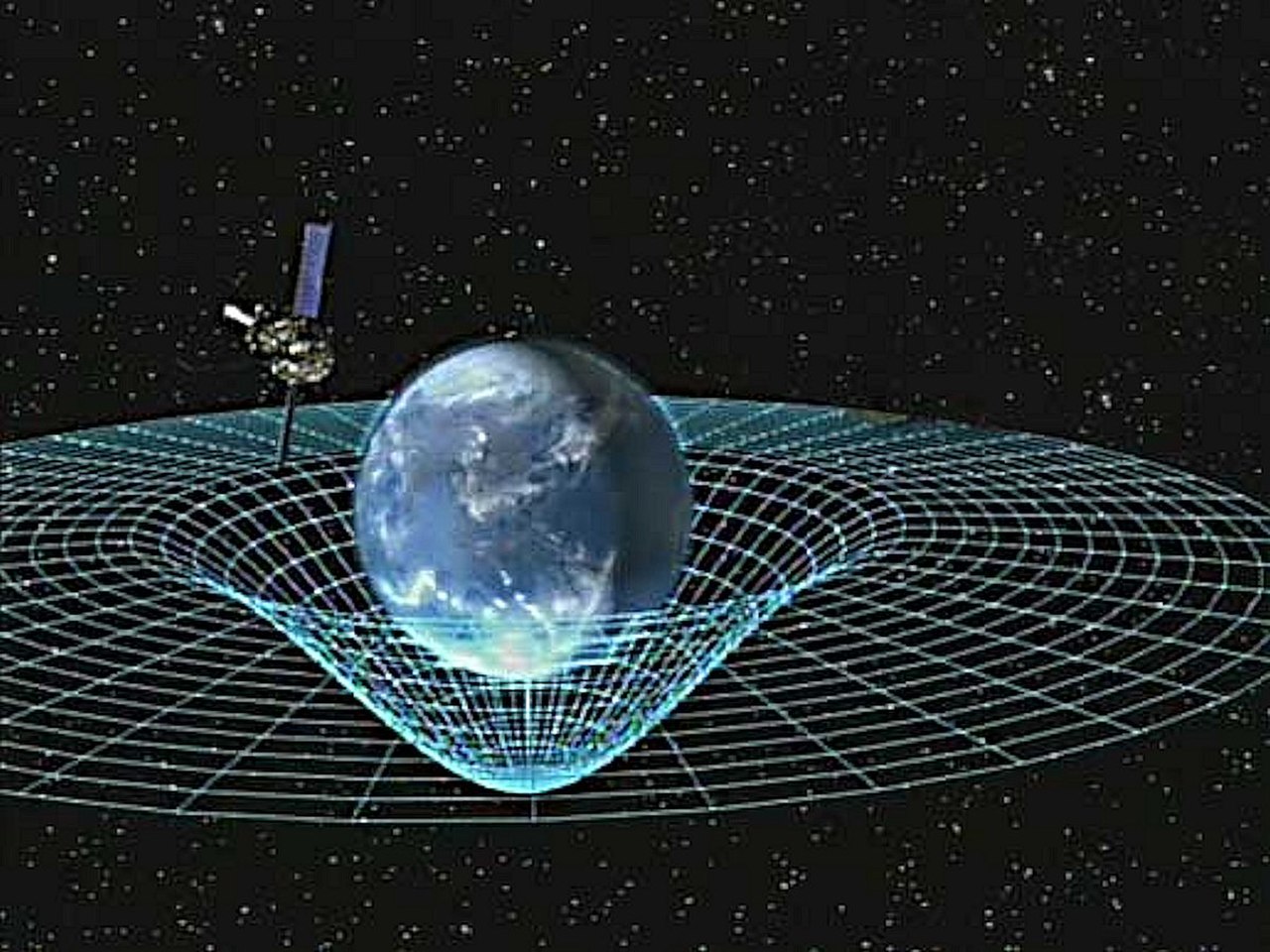
Spacetime is not merely a conceptual convenience; it's the very fabric of the universe. Imagine it as a dynamic, four-dimensional manifold where events are located by four coordinates: three spatial (like length, width, height) and one temporal. This unified model, first rigorously developed by Hermann Minkowski, is essential for describing phenomena at high speeds and strong gravitational fields. The geometry of spacetime is not fixed but is warped and curved by the presence of mass and energy, a concept central to General Relativity.
🔭 How We Perceive Space and Time
Our everyday perception of space and time is largely Newtonian, assuming an absolute, universal clock and a fixed spatial grid. However, Special Relativity demonstrated that measurements of space and time are relative to the observer's motion. Two observers moving at different speeds will disagree on the duration of an event or the distance between two points. This relativity of simultaneity means there's no single, objective 'now' that applies universally across the cosmos, challenging our most basic intuitions about reality.
⚛️ Relativity's Revolution: Einstein's Impact
Albert Einstein's theories of relativity, published in 1905 (Special) and 1915 (General), fundamentally reshaped our understanding of space and time. Special Relativity unified space and time into spacetime and introduced concepts like time dilation and length contraction. General Relativity then showed how gravity is not a force but a manifestation of spacetime curvature caused by mass and energy. This framework has been experimentally verified countless times, from the bending of starlight around the sun to the precise functioning of GPS satellites.
🌌 Quantum Quandaries: The Microscopic View
At the quantum level, the nature of space and time becomes even more enigmatic. Quantum mechanics suggests that at the smallest scales, spacetime itself might not be smooth and continuous but granular or emergent. Theories like Loop Quantum Gravity propose that spacetime is quantized into discrete units, akin to pixels on a screen. The reconciliation of General Relativity with quantum mechanics remains one of the greatest unsolved problems in physics, with profound implications for the origin and ultimate fate of the universe.
🕰️ Time Travel: Fact, Fiction, or Future?
The idea of traversing time, whether to the past or future, is a staple of science fiction, but its scientific feasibility is highly debated. While time dilation in Special Relativity means time passes slower for fast-moving objects (a form of 'forward' time travel), traveling to the past presents significant theoretical hurdles, including potential causality violations and paradoxes. Current physics offers no clear mechanism for backward time travel, though speculative concepts like wormholes continue to be explored.
✨ The Philosophical Frontier
Philosophically, space and time have been subjects of intense debate for millennia. Is space an absolute container, or does it only exist in relation to objects? Is time a real, flowing entity, or merely a construct of our minds? Thinkers from Aristotle to Immanuel Kant grappled with these questions. Modern physics, particularly relativity, has provided new frameworks for these discussions, suggesting that our intuitive notions of absolute space and time are, at best, approximations of a more complex, interwoven reality.
🚀 Where to Learn More
To truly grasp the intricacies of space and time, engaging with primary sources and expert analyses is key. Explore the foundational texts of Albert Einstein's theories, delve into the works of physicists like Stephen Hawking on cosmology and black holes, or examine the philosophical arguments presented by Julian Barbour on the nature of time. For a visual understanding, spacetime diagrams are indispensable tools for visualizing relativistic effects and understanding how observers in different frames of reference perceive events.
Key Facts
- Year
- -2000000000
- Origin
- Ancient Greek Philosophy (e.g., Aristotle's concepts of place and duration, though not unified as spacetime)
- Category
- Physics & Philosophy
- Type
- Concept
Frequently Asked Questions
Is spacetime a real thing, or just a mathematical model?
Spacetime is both a powerful mathematical model and, according to current physics, a fundamental aspect of reality. The model accurately predicts observable phenomena, such as the bending of light by gravity and the precise timing required for GPS systems. While its ultimate quantum nature is still being investigated, its role as the arena for all physical interactions is widely accepted.
How does gravity relate to spacetime?
In Einstein's General Relativity, gravity is not a force but a curvature of spacetime. Massive objects, like stars and planets, warp the spacetime around them. Other objects then follow these curves, which we perceive as the force of gravity. Think of placing a heavy ball on a stretched rubber sheet; it creates a dip, and smaller marbles rolled nearby will curve towards it.
Can time travel to the past be proven impossible?
While current physics doesn't provide a mechanism for backward time travel and it leads to paradoxes (like the grandfather paradox), it's difficult to definitively prove it impossible without a complete theory of quantum gravity. Some theoretical constructs like traversable wormholes are speculative possibilities, but they remain firmly in the realm of theoretical physics and science fiction for now.
Does time flow at the same rate for everyone?
No, according to Special Relativity, time is relative. Time passes slower for an observer who is moving at a high velocity relative to another observer. This effect, known as time dilation, has been experimentally verified. So, time does not flow at the same rate for everyone if they are in different frames of reference.
What is the difference between spacetime and space?
Space refers to the three-dimensional expanse (length, width, height) in which objects exist. Time is the one-dimensional progression from past to future. Spacetime is a unified four-dimensional continuum that combines these three spatial dimensions with the one temporal dimension, recognizing that they are intrinsically linked and affected by motion and gravity.
Are there different theories about the nature of spacetime?
Yes, while General Relativity is the dominant theory for macroscopic spacetime, physicists are exploring other models, especially when trying to reconcile it with quantum mechanics. Theories like String Theory and Loop Quantum Gravity propose different fundamental structures for spacetime at the Planck scale, suggesting it might be granular or emergent rather than continuous.