
Contents
Overview
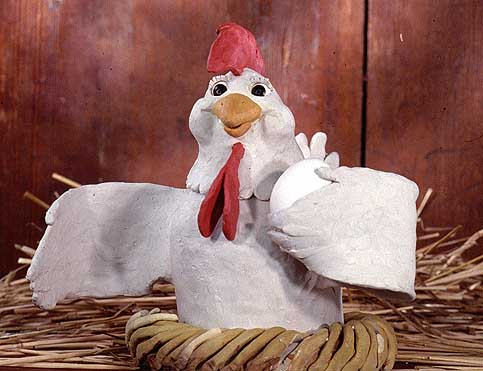
Stop motion animation is a filmmaking technique where physical objects are manipulated in small increments between individually photographed frames, creating the illusion of movement when the frames are played back. This method can animate virtually any object, though puppets with articulated joints and clay figures, famously known as claymation, are the most prevalent. The process demands immense patience and precision, with each frame representing a tiny shift in position. Its origins trace back to the dawn of cinema, evolving through early trick films and becoming a staple in feature films, short subjects, and commercials. Despite the rise of digital animation, stop motion retains a unique tactile charm and artistic integrity, boasting a dedicated global following and a vibrant community of creators pushing its boundaries.
🎵 Origins & History
The genesis of stop motion animation is as old as cinema itself, with early pioneers experimenting with its illusionary potential. The technique truly found its voice in the mid-20th century with the advent of claymation by Willis O'Brien's student Ray Harryhausen, whose work became legendary for its creature effects. Eastern Europe also saw significant developments, with intricate puppet animation pioneered in the 1940s and 50s, earning international acclaim.
⚙️ How It Works
At its core, stop motion animation is a meticulous process of frame-by-frame manipulation. Artists, often referred to as animators, position physical objects—be it puppets, clay figures, cutouts, or everyday items—on a set. A single photograph is taken. Then, the object is moved a tiny fraction of an inch, and another photo is captured. This cycle repeats hundreds, often thousands, of times for even a few seconds of screen time. The captured frames are then compiled and played back at a standard film rate to create the illusion of fluid motion. The armature, a skeletal structure often made of wire or ball joints, is crucial for puppets, providing support and enabling precise posing. Lighting and camera angles are carefully controlled to maintain consistency across the thousands of shots, a task that requires immense technical skill and artistic vision.
📊 Key Facts & Numbers
The sheer scale of stop motion production is staggering. The cost of such productions can easily exceed $100 million. The number of puppets used can also be astronomical.
👥 Key People & Organizations
Several individuals and studios have profoundly shaped the landscape of stop motion. Ray Harryhausen remains a titan, his "dynamation" technique influencing generations of filmmakers. Nick Park and his studio Aardman Animations brought beloved characters like Wallace and Gromit to global fame with their distinctive claymation style. Laika Studios, founded by Phil Knight's son, Travis Knight, has elevated stop motion with visually stunning and emotionally resonant films. Independent animators and smaller studios continue to innovate, keeping the art form alive.
🌍 Cultural Impact & Influence
Stop motion animation has left an indelible mark on popular culture, imbuing films with a tangible, handcrafted quality that digital animation often struggles to replicate. Its influence can be seen not only in feature films and shorts but also in television commercials, music videos, and even art installations. The distinct aesthetic of stop motion has fostered a dedicated fanbase, drawn to its perceived authenticity and the visible effort involved. Characters like Wallace and Gromit have become cultural icons, transcending their animated origins to appear in merchandise and public appearances. The tactile nature of stop motion has also inspired countless independent creators on platforms like YouTube, fostering a vibrant online community that shares tutorials, showcases their work, and keeps the art form evolving.
⚡ Current State & Latest Developments
The current state of stop motion animation is one of resilience and innovation. While digital effects and CGI dominate mainstream cinema, studios like Laika Studios and Aardman Animations continue to produce critically acclaimed features, proving the commercial viability of the medium. The rise of streaming services has also created new avenues for stop motion content, with Netflix commissioning original stop motion series. Furthermore, advancements in technology, such as 3D printing for rapid creation of character parts and sophisticated motion-capture integration, are enhancing production efficiency without sacrificing the core handmade aesthetic. Independent animators are leveraging accessible tools and online distribution to reach global audiences, ensuring a continuous influx of fresh talent and creative approaches.
🤔 Controversies & Debates
One of the persistent debates surrounding stop motion animation centers on its perceived "obsolescence" in the face of advanced CGI. Skeptics argue that the labor-intensive nature and high costs make it impractical for large-scale productions compared to fully digital alternatives. Conversely, proponents champion its unique tactile charm and artistic integrity, arguing that the visible craftsmanship offers an irreplaceable emotional connection for audiences. Another point of contention arises with the integration of digital elements; while some see it as a necessary evolution that enhances storytelling possibilities, others fear it dilutes the authentic stop motion experience. The debate over "pure" stop motion versus hybrid approaches continues to fuel discussions within the animation community.
🔮 Future Outlook & Predictions
The future of stop motion animation appears to be a dynamic interplay between tradition and technological advancement. We can anticipate further integration of AI in streamlining certain aspects of production, such as generating variations of props or assisting with complex rigging. Virtual production techniques, already transforming live-action filmmaking, will likely find new applications in stop motion, allowing for more dynamic camera work and real-time feedback during shooting. Expect to see more ambitious independent projects emerge, fueled by accessible digital tools and global online distribution platforms like YouTube and Vimeo. While CGI will undoubtedly continue its dominance in sheer volume, stop motion is poised to maintain its niche as a premium, artisanal form of animation, valued for its unique aesthetic and emotional resonance.
💡 Practical Applications
Stop motion animation's practical applications extend far beyond feature films. It's a powerful tool in advertising, where its distinctive look can make products stand out. Many memorable commercials, from IKEA's early campaigns to candy brands, have utilized stop motion to create whimsical and engaging narratives. In education, it serves as an accessible medium for teaching storytelling, physics (through demonstrating motion and forces), and patience to students of all ages. Museums and galleries sometimes employ stop motion for exhibits or short films. Furthermore, it's a popular technique for independent filmmakers and hobbyists creating short films, music videos, and even personal projects shared on platforms like YouTube.
Key Facts
- Category
- aesthetics
- Type
- topic