
Contents
Overview
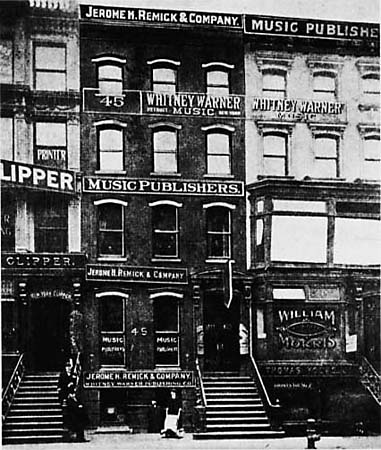
Tin Pan Alley was the epicenter of American popular music publishing from the late 19th to the early 20th century, a vibrant district in Manhattan where songwriters, composers, and music publishers converged. Primarily centered around West 28th Street in New York City, this concentration of talent and business acumen transformed music creation and distribution, shifting the industry's focus from live performance to the mass production and sale of sheet music. It was the birthplace of countless hit songs that defined an era, influencing everything from Broadway musicals to early film scores. The era's dominance waned with the rise of new technologies like the phonograph and radio, but its legacy as the foundational engine of the American music industry remains undeniable, with specific buildings and street sections still bearing its name as designated landmarks.
🎵 Origins & History
The area around West 28th Street in Manhattan became a magnet for musical entrepreneurs due to its relatively affordable rents and proximity to theaters and vaudeville houses. Precursors to this concentrated publishing hub existed earlier, with publishers operating independently, but the sheer density of businesses in this specific district created a unique ecosystem. The name 'Tin Pan Alley' is reportedly attributed to songwriter Irving Berlin, who described the cacophony of pianos being played simultaneously in the publishing houses as sounding like 'tin pans.' This informal moniker stuck, encapsulating the bustling, sometimes chaotic, but always creative atmosphere of the district.
⚙️ How It Worked
Tin Pan Alley operated as a highly efficient, albeit often cutthroat, songwriting factory. Publishers employed staff composers and lyricists, or contracted with independent writers, to churn out songs for the burgeoning sheet music market. The process involved a symbiotic relationship: composers would write tunes, often on commission, which were then hawked to publishers. If a song was accepted, it would be printed as sheet music, and often, song pluggers—musicians hired by the publishers—would perform these new tunes in saloons, vaudeville theaters, and music stores to generate public interest and drive sales. This direct pipeline from creation to public performance and sales was the engine that powered the industry, with Broadway musicals and popular singers serving as crucial tastemakers and promotional vehicles for the latest hits.
📊 Key Facts & Numbers
The rise of the recording industry began to shift the economic landscape, with record sales eventually surpassing sheet music revenue, though Tin Pan Alley songwriters continued to adapt and thrive.
👥 Key People & Organizations
Key figures who shaped Tin Pan Alley include prolific composers and lyricists. Publishers were major players, acquiring and promoting thousands of songs. The ASCAP (American Society of Composers, Authors and Publishers), founded in 1914, emerged as a crucial organization for protecting the rights and royalties of songwriters within this ecosystem. Song pluggers, though often unsung, were vital to the dissemination of new music, acting as the industry's first true promoters and influencers.
🌍 Cultural Impact & Influence
Tin Pan Alley's influence on American culture is immeasurable. It standardized the popular song form, establishing structures and harmonic progressions that would influence genres for decades. The songs produced there became the soundtrack to American life, reflecting societal changes, popular tastes, and national moods. The business model pioneered in Tin Pan Alley—the systematic creation, promotion, and distribution of popular music—laid the groundwork for the modern music industry as we know it, influencing everything from Hollywood film scores to the rise of jazz and blues.
⚡ Current State & Latest Developments
While the original physical district of Tin Pan Alley has largely been redeveloped, its spirit endures. The area around West 28th Street still hosts some music-related businesses and performance spaces, and a plaque commemorates its historical significance. The legacy of Tin Pan Alley is kept alive through ongoing academic study, historical societies, and the continued performance and recording of its vast catalog of songs. The Broadway theater district, a direct descendant of Tin Pan Alley's influence, continues to be a major hub for musical theater, often drawing inspiration from the era's songwriting traditions. Recent efforts have focused on preserving the remaining historical buildings in the district, recognizing their architectural and cultural importance.
🤔 Controversies & Debates
A significant debate surrounds the 'end' of Tin Pan Alley. While some argue its decline began with the advent of radio and the phonograph in the 1920s, which shifted focus from sheet music to recorded performances, others contend that the songwriting and publishing model persisted in spirit. Critics sometimes dismiss Tin Pan Alley songs as formulaic or overly commercial, while proponents highlight their enduring melodic quality and historical significance. The role of publishers in dictating musical trends and potentially stifling more experimental forms also remains a subject of discussion among music historians.
🔮 Future Outlook & Predictions
The future of Tin Pan Alley's legacy lies in its continued relevance to contemporary music creation and business models. As the digital music landscape evolves, the lessons learned from Tin Pan Alley—about effective promotion, market saturation, and the songwriter-publisher relationship—remain pertinent. There's a growing interest in reviving the craft of songwriting as a distinct profession, echoing the Tin Pan Alley era's emphasis on skilled lyricists and composers. Furthermore, the preservation of the physical district and its historical buildings is crucial for maintaining a tangible link to this foundational period of American music, potentially leading to renewed cultural tourism and educational initiatives.
💡 Practical Applications
The most direct practical application of Tin Pan Alley's legacy is in the ongoing creation and business of popular music. Songwriters and publishers today, whether working independently or within major labels, still grapple with similar challenges of getting songs heard, securing performance rights, and navigating distribution channels. The principles of song construction—catchy melodies, relatable lyrics, and clear structures—that were perfected in Tin Pan Alley continue to inform songwriting across genres. Moreover, the historical district itself serves as a practical educational resource, offering a physical space for understanding the industrialization of music and its impact on culture.
Key Facts
- Category
- culture
- Type
- place