
Contents
Overview
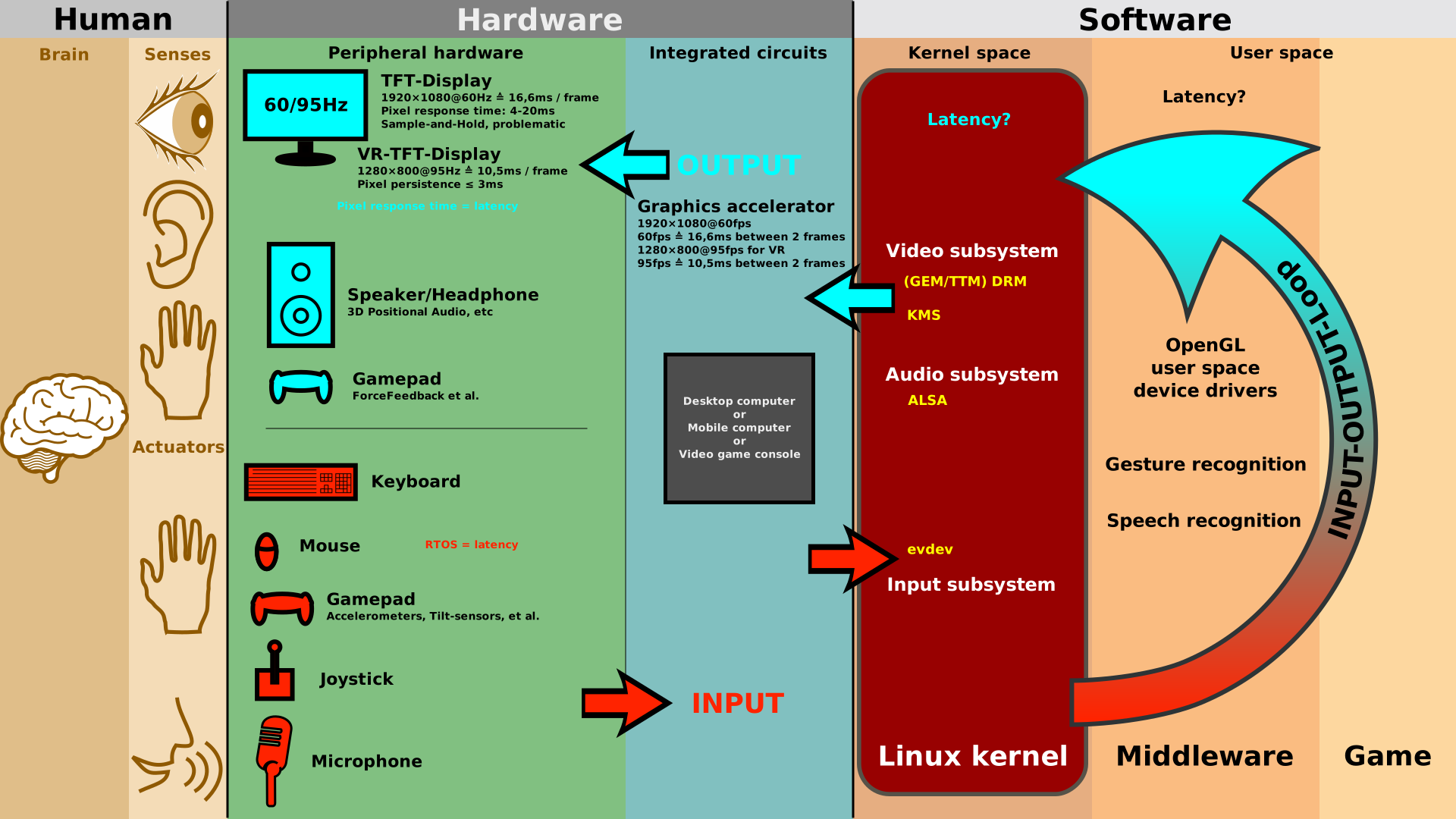
User Interface (UI) design is the critical discipline that bridges the gap between humans and the digital or mechanical tools they employ. It encompasses the visual elements, interactive components, and overall layout that users encounter when engaging with software, websites, apps, or even physical devices. The primary objective of UI design is to create intuitive, efficient, and aesthetically pleasing experiences, ensuring that users can achieve their goals with minimal friction. This field draws heavily from principles of graphic design, information architecture, and human-computer interaction, constantly evolving with technological advancements and shifting user expectations. From the early command-line interfaces to the sophisticated touchscreens of today, UI design has fundamentally shaped how we live, work, and play in the digital age.
🎵 Origins & History
The genesis of user interface design can be traced back to the earliest days of computing, long before the term 'UI' was coined. Early machines relied on physical switches, punch cards, and command-line interfaces (CLIs) that demanded specialized knowledge. The Stanford Research Institute and Douglas Engelbart's work in the 1960s laid the groundwork for modern interaction. Xerox PARC's Alto computer in the 1970s further refined GUI concepts, introducing windows, icons, and menus. The commercial popularization began with Apple's Macintosh and Microsoft's Windows, transforming computing from a specialist's tool into a more accessible medium for the masses. This transition marked a profound shift from system-centric to user-centric design.
⚙️ How It Works
At its core, UI design is about crafting the visual and interactive elements that users engage with. This involves defining the layout of screens, the appearance of buttons, icons, typography, and color palettes, as well as the behavior of interactive components like menus, forms, and animations. Key principles include clarity, consistency, feedback, and efficiency. Designers utilize tools like Figma, Sketch, and Adobe XD to create wireframes, mockups, and prototypes. The process often involves user research, understanding user flows, and adhering to platform-specific guidelines, such as Apple's Human Interface Guidelines or Google's Material Design, to ensure a cohesive and predictable experience across devices and applications.
📊 Key Facts & Numbers
The global UI/UX design market is substantial. Companies invest heavily in UI, with studies indicating significant returns on investment. Poor UI can lead to significant user abandonment. Mobile applications alone see billions of downloads annually, each with a unique UI that dictates user engagement. The average user spends considerable time on their smartphone, interacting with dozens of distinct UIs daily, from social media apps like Instagram to productivity tools like Outlook.
👥 Key People & Organizations
Pioneers like Douglas Engelbart, whose work introduced foundational GUI concepts, and Alan Kay, who championed object-oriented programming and the GUI at Xerox PARC, are foundational figures. Steve Jobs, through Apple, was instrumental in bringing GUIs to the mainstream with the Macintosh. More contemporary figures include Don Norman, whose book 'The Design of Everyday Things' popularized the concept of user-centered design, and Jony Ive, who led Apple's industrial design and UI efforts for decades. Organizations like the Interaction Design Foundation and the Nielsen Norman Group are key institutions for research, education, and best practices in the field.
🌍 Cultural Impact & Influence
UI design has profoundly reshaped culture and society, making complex technology accessible to billions. The intuitive interfaces of smartphones, exemplified by iOS and Android, have normalized touch gestures and app-based interaction, influencing everything from how we communicate to how we consume media. The visual language of websites and applications, from the minimalist aesthetic of Stripe to the vibrant designs of Spotify, sets aesthetic trends and expectations. UI design also plays a crucial role in accessibility, with advancements enabling individuals with disabilities to interact with technology more effectively, as championed by organizations like the World Wide Web Consortium. The ubiquity of well-designed interfaces has raised the bar for all digital products, fostering a culture of immediate gratification and seamless interaction.
⚡ Current State & Latest Developments
The current landscape of UI design is characterized by rapid evolution driven by emerging technologies and user expectations. Artificial intelligence is increasingly integrated into UI design, enabling personalized experiences and predictive interfaces. Voice user interfaces (VUIs) and conversational UIs are gaining traction, moving beyond traditional graphical elements. Virtual reality (VR) and augmented reality (AR) present new frontiers for UI design, demanding spatial and immersive interaction models. Furthermore, the focus on accessibility continues to grow, with designers striving to create inclusive interfaces for all users. The rise of design systems, like Atlassian's Design System, provides frameworks for maintaining consistency and efficiency across large-scale projects for companies like Atlassian.
🤔 Controversies & Debates
One persistent debate in UI design revolves around the tension between aesthetics and usability. Critics sometimes argue that overly minimalist or 'flat' design trends, popularized by companies like Apple and Google, can sacrifice discoverability and feedback for visual simplicity. Dark patterns are UI elements intentionally designed to trick users into unintended actions, such as subscribing to services or sharing data. The increasing reliance on AI in UI also raises questions about user control, transparency, and potential biases embedded within algorithms. The debate over skeuomorphism versus flat design, which dominated discussions in the early 2010s, highlights the cyclical nature of UI trends.
🔮 Future Outlook & Predictions
The future of UI design points towards increasingly intelligent, adaptive, and immersive experiences. Generative AI is poised to revolutionize UI creation, potentially automating significant portions of the design process and enabling hyper-personalized interfaces. We can expect a greater integration of brain-computer interfaces (BCIs), allowing for direct thought-based interaction with devices. The metaverse and persistent virtual worlds will necessitate entirely new paradigms for spatial UI, moving beyond 2D screens. Furthermore, the demand for ethical design practices will likely intensify, pushing for greater transparency and user empowerment in how interfaces are designed and how data is used. Companies like Meta are heavily investing in these future interaction models.
💡 Practical Applications
UI design is integral to virtually every digital product and many physical ones. In software, it dictates how users navigate websites, use mobile apps like TikTok, and operate desktop applications. For hardware, UI design is crucial for consumer electronics like smartphones, smartwatches, and home appliances, ensuring ease of use. In gaming, UI elements like health bars, maps, and inventory screens are vital for player immersion and control. The automotive industry relies on UI for in-car infotainment systems and dashboards. Even in fields like healthcare, UI design is applied to medical devices and patient portals to improve usability and reduce errors, a critical consideration for devices from Philips and Siemens Healthineers.
Key Facts
- Category
- technology
- Type
- topic