
Contents
Overview
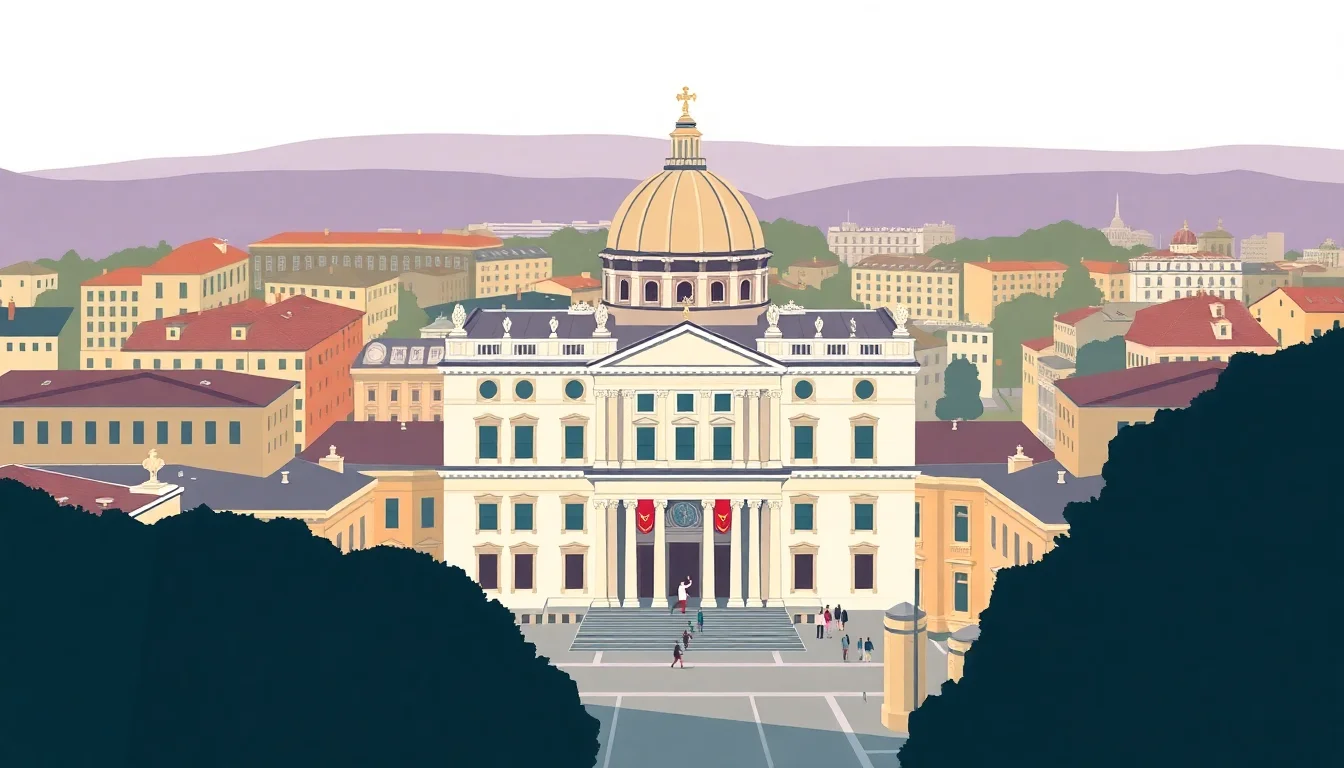
The origins of Vatican City's government are inextricably tied to the history of the Catholic Church and the Papal States. For centuries, the Pope ruled over significant territories in central Italy, but the unification of Italy in the 19th century led to the loss of these lands, culminating in the "Roman Question" after Rome was captured in 1870. This impasse was resolved in 1929 with the signing of the Lateran Treaties between the Holy See and the Kingdom of Italy, brokered by Benito Mussolini and Cardinal Pietro Gasparri. These treaties recognized Vatican City as an independent and sovereign state, guaranteeing the Holy See's autonomy and establishing a framework for its unique governance. The establishment of the Vatican City State in 1929, a mere 0.49 square kilometers, provided a physical territory for the Holy See, distinct from its spiritual and diplomatic jurisdiction over the global Catholic Church. This dual nature—a sovereign state and the central authority of a worldwide religious institution—defines its historical trajectory and ongoing operations.
⚙️ How It Works
The government of Vatican City operates as an absolute monarchy, with the Pope holding ultimate legislative, executive, and judicial authority. This power is delegated through various bodies, primarily the Pontifical Commission for Vatican City State, which acts as the legislative body, and the Governorate of Vatican City State, responsible for executive functions. The judicial system is administered by a hierarchy of courts, with the Supreme Court of the Holy See serving as the final appellate instance. The Swiss Guard provides security, a tradition dating back to 1506, while the Gendarmerie Corps handles internal policing. The Secretariat of State plays a crucial role in both the administration of the Vatican City and the diplomatic affairs of the Holy See, acting as the Pope's closest collaborators and chief advisors in governing the global Church and managing its temporal affairs. This intricate structure ensures that the spiritual mission of the Holy See is supported by a functional, albeit unique, state apparatus.
📊 Key Facts & Numbers
Vatican City, with its 0.49 square kilometers, is the smallest independent state in the world by both area and population. It is home to approximately 800 citizens, though its population fluctuates due to the presence of clergy, religious personnel, and lay employees. The Holy See, distinct from the state, maintains formal diplomatic relations with 179 nations and observer status at the United Nations. The Vatican's annual budget, managed by the Administration of the Patrimony of the Apostolic See (APSA), is complex, relying on contributions from dioceses worldwide, investments, and revenue from tourism and the sale of stamps and coins. In 2022, the Vatican reported a deficit of €18.6 million, highlighting the financial challenges of maintaining its global operations and historical sites. The state's unique legal framework, governed by laws derived from canon law and specific Vatican statutes, underpins its administrative and judicial functions.
👥 Key People & Organizations
The central figure in Vatican City's government is the Pope, currently Pope Francis, who is the sovereign head of state and the supreme pontiff of the Catholic Church. He appoints key officials, including cardinals and bishops who head various dicasteries (departments) of the Roman Curia, the administrative apparatus of the Holy See. The Secretariat of State, headed by Cardinal Pietro Parolin, is the most influential body, managing diplomatic relations and overseeing the Curia's operations. The Governorate of Vatican City State, led by Cardinal Fernando Vérgez Alzaga, handles the day-to-day administration of the city-state. The Pontifical Commission for Vatican City State, composed of cardinals appointed by the Pope, serves as the legislative body. The Swiss Guard, commanded by Colonel Christoph Graf, is responsible for the Pope's personal protection and the security of Vatican City.
🌍 Cultural Impact & Influence
The Vatican City government's influence extends far beyond its minuscule territory, primarily through the global reach of the Catholic Church and the diplomatic network of the Holy See. It serves as a powerful symbol of religious authority and moral guidance for over 1.3 billion Catholics worldwide. The Holy See's diplomatic presence, with nunciatures and embassies in nearly every country, allows it to engage in international peace initiatives, humanitarian aid advocacy, and dialogue on global ethical issues. Vatican Radio and the Vatican News service disseminate information and the Church's teachings globally, shaping public discourse on a range of social and political matters. The Vatican Museums and St. Peter's Basilica are also major cultural and tourist attractions, drawing millions of visitors annually and contributing to its global cultural resonance. The unique governance model itself is a subject of study, influencing discussions on the intersection of religion and state.
⚡ Current State & Latest Developments
In recent years, Vatican City's government has focused on administrative reforms and financial transparency. Under Pope Francis, efforts have been made to streamline the Roman Curia's operations and address financial deficits, including the establishment of the Secretariat for the Economy in 2015. The Vatican has also been actively engaged in promoting interfaith dialogue and addressing global challenges such as climate change and poverty. In 2023, the Vatican continued to navigate complex geopolitical landscapes, issuing statements and engaging in diplomatic efforts concerning conflicts in various regions. The ongoing digitalization of Vatican archives and services, alongside enhanced cybersecurity measures, reflects a commitment to modernizing its administrative functions to better serve the global Church and manage its unique sovereign territory. The implementation of new financial regulations aims to bolster transparency and accountability in its economic dealings.
🤔 Controversies & Debates
The Vatican City government is not without its controversies. Historically, issues surrounding the Vatican Bank (IOR) and allegations of financial impropriety have drawn scrutiny, leading to reforms aimed at increasing transparency and compliance with international anti-money laundering standards. The Church's handling of sexual abuse scandals involving clergy has also cast a shadow, prompting calls for greater accountability and structural changes within the Vatican's governance. Furthermore, the absolute nature of the monarchy and the lack of democratic participation for the vast majority of Catholics worldwide raise questions about governance models. Debates persist regarding the separation of spiritual and temporal powers, particularly when the Holy See engages in international diplomacy on political matters. The Vatican's historical wealth and its role in global finance continue to be subjects of public and academic discussion.
🔮 Future Outlook & Predictions
The future of Vatican City's government will likely be shaped by ongoing efforts to enhance financial sustainability and administrative efficiency. Pope Francis's reform agenda, focusing on decentralization and greater participation, may continue to influence the structure of the Roman Curia and the governance of the Catholic Church. As global geopolitical landscapes shift, the Holy See's diplomatic role is expected to remain significant, potentially expanding its influence in mediating international disputes and advocating for human rights. The Vatican may also face increasing pressure to address the long-term implications of declining church attendance in some regions while simultaneously navigating the growth
Key Facts
- Category
- politics
- Type
- topic