
Contents
Overview
The concept of venting plumbing systems emerged from a growing understanding of fluid dynamics and the need for sanitary conditions in increasingly dense urban environments. Early plumbing systems, often rudimentary, suffered from frequent blockages and the pervasive issue of sewer gas. The inclusion of vent pipes was recognized as essential in preventing siphoning and backpressure, thereby safeguarding public health against diseases like cholera and typhoid, which were rampant in periods preceding widespread effective sanitation.
⚙️ How It Works
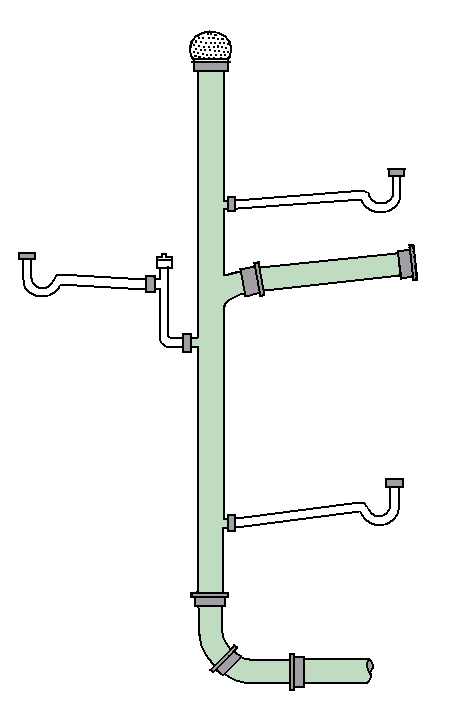
Vent pipes function by allowing atmospheric air to enter the drainage system, thereby preventing a vacuum from forming as water flows down the drain. This equalization of pressure is critical; without it, the water in the P-trap (a U-shaped section of pipe designed to hold water and block sewer gases) would be siphoned out, allowing foul-smelling and potentially harmful gases to enter the building. The vent pipe typically connects to the main drain line and extends upwards, terminating above the roofline, or connects to a larger vent stack. This connection to the outside atmosphere ensures that air can freely enter the system to replace the volume of water being discharged, facilitating a smooth, unimpeded flow of wastewater and solids towards the sewer or septic system. The proper slope of drain pipes, usually a quarter-inch per foot, works in conjunction with the vent to ensure efficient gravity-driven drainage.
📊 Key Facts & Numbers
A typical residential DWV system might involve hundreds of feet of piping, with vent pipes comprising a significant portion of this network. For instance, a single-family home can have upwards of 50 to 100 feet of vent piping, depending on its complexity and layout. Building codes in most developed nations, such as the International Plumbing Code (IPC) in the United States, specify minimum vent pipe sizes, typically 1.25 to 2 inches in diameter for most residential applications, and require vents to terminate at least 6 inches above the roofline or 10 feet from any operable window or air intake. The total cost of a DWV system, including vent pipes, can range from $2,000 to $7,000 for a new construction, with materials like PVC and ABS plastic being the most common, accounting for an estimated 30-40% of the total plumbing material cost.
👥 Key People & Organizations
While no single individual is solely responsible for the vent pipe as we know it, John Crapper's pioneering work in sanitary plumbing in the late 19th century laid crucial groundwork for effective drainage and ventilation systems. His company, Crapper & Co., was instrumental in popularizing improved sanitation. Later, plumbing engineers and code bodies like the International Association of Plumbing and Mechanical Officials (IAPMO), which develops the Uniform Plumbing Code (UPC), played vital roles in standardizing vent pipe requirements and ensuring their widespread adoption. Manufacturers such as Charlotte Pipe and Foundry and REHAU are major producers of the PVC and ABS pipes used in these systems, contributing to the physical infrastructure of modern plumbing.
🌍 Cultural Impact & Influence
Vent pipes, though largely invisible, have profoundly shaped the habitability of modern structures. Their successful integration into buildings allowed for the development of multi-story dwellings and complex interior layouts without the pervasive stench and health hazards of earlier plumbing. The widespread adoption of DWV systems, enabled by effective venting, is a cornerstone of public health infrastructure, directly contributing to the decline of waterborne diseases in urban centers. Culturally, the absence of plumbing odors became an expectation, a silent testament to the efficacy of vent pipes and the broader DWV system, influencing architectural design and urban planning by making denser living conditions feasible and hygienic.
⚡ Current State & Latest Developments
Current developments in vent pipe technology focus on improving efficiency, reducing material usage, and addressing environmental concerns. Innovations include vent terminals with backwater valves and air admittance valves (AAVs), which allow air into the system but prevent sewer gases from escaping, offering alternatives to traditional roof vents in specific situations, as approved by codes like the International Plumbing Code. Research is also ongoing into more sustainable materials and designs that minimize the carbon footprint of plumbing systems. The integration of smart sensors to monitor DWV system performance and detect potential blockages or leaks is an emerging trend, promising proactive maintenance and enhanced system reliability in commercial and residential buildings.
🤔 Controversies & Debates
A significant debate surrounds the use and placement of Air Admittance Valves (AAVs) as replacements for traditional vent pipes. While AAVs can simplify installation and reduce roof penetrations, some plumbing professionals and code officials express concerns about their long-term reliability and potential failure modes, particularly in freezing conditions or when subjected to heavy usage. Critics argue that AAVs can fail to open, leading to drainage issues, or fail to close, allowing sewer gases to escape. Proponents, however, point to extensive testing and their widespread acceptance in many plumbing codes as evidence of their efficacy and safety when installed correctly. The debate often centers on whether AAVs offer a truly equivalent level of performance and fail-safe operation compared to the time-tested, gravity-driven airflow of a traditional vent stack.
🔮 Future Outlook & Predictions
The future of vent pipes will likely involve greater integration with smart building technologies and a continued push towards more sustainable and resilient infrastructure. Expect to see more advanced AAVs with self-diagnostic capabilities and improved performance in extreme temperatures. The development of trenchless technologies for underground sewer and drain line repair may also influence how vent systems are accessed and maintained. Furthermore, as buildings become more complex and energy-efficient, the design of vent systems will need to adapt to minimize heat loss and air infiltration, potentially leading to more sophisticated roof terminal designs and integrated ventilation solutions that balance plumbing needs with building envelope performance. The ongoing evolution of plumbing codes will also shape future vent pipe requirements.
💡 Practical Applications
Vent pipes are indispensable in virtually every plumbed structure, from single-family homes to towering skyscrapers and industrial facilities. Their primary application is within the drain-waste-vent (DWV) system of buildings, ensuring that wastewater and sewage can be safely discharged without creating vacuums or allowing sewer gases to enter. They are critical for the proper functioning of all plumbing fixtures, including toilets, sinks, showers, and dishwashers. In commercial settings, such as restaurants and hospitals, the reliability of vent pipes is paramount for maintaining hygiene standards and preventing the spread of pathogens. They are also a key component in septic systems and other on-site wastewater treatment facilities, ensuring efficient operation and preventing system failures.
Key Facts
- Category
- technology
- Type
- topic