
Contents
- 🎵 Origins & History
- ⚙️ How It Works
- 📊 Key Facts & Numbers
- 👥 Key People & Organizations
- 🌍 Cultural Impact & Influence
- ⚡ Current State & Latest Developments
- 🤔 Controversies & Debates
- 🔮 Future Outlook & Predictions
- 💡 Practical Applications
- 📚 Related Topics & Deeper Reading
- Frequently Asked Questions
- References
- Related Topics
Overview
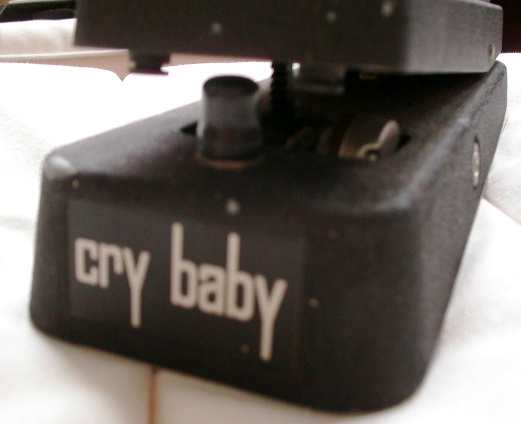
The sonic lineage of the wah-wah effect stretches back to the 1920s, not to electric guitars, but to the expressive cries of trumpet and trombone players manipulating mutes within their instrument bells. This acoustic 'wah' was later digitized. In the mid-1960s, engineers at the Thomas Organ Company sought to replicate this vocal-like inflection for electric guitars. Inspired by the earlier acoustic techniques and potentially by the work of jazz musicians like Miles Davis who experimented with trumpet mutes, they developed an electronic circuit. The first commercially successful wah pedal, the Cry Baby, was released by Thomas Organ in 1966, though Vox had a similar unit, the V846, on the market around the same time. Early adopters like Frank Zappa and Jimi Hendrix quickly integrated the pedal into their sound, cementing its place in rock history.
⚙️ How It Works
At its heart, the wah pedal is a resonant band-pass filter. A potentiometer, controlled by the player's foot on a rocking treadle, varies the resistance. This resistance directly alters the center frequency of the filter. As the pedal moves, the filter sweeps through the audio spectrum, emphasizing certain frequencies while attenuating others. This spectral glide creates the characteristic 'wah' sound. When the pedal is stationary, it acts as a fixed filter, often referred to as a 'cocked-wah,' which can add a distinctive nasal or vocal quality to an instrument's tone. More advanced versions, like the auto-wah, utilize an envelope follower circuit that analyzes the input signal's amplitude to automatically control the filter's frequency, creating rhythmic pulsing effects without manual foot control.
📊 Key Facts & Numbers
The global market for guitar effects pedals, including wah pedals, is substantial, estimated to be worth over $1.5 billion annually as of 2023. The Cry Baby model alone has sold millions of units since its 1966 introduction, with Jim Dunlop Manufacturing now producing over 100 variations. Vintage wah pedals from the late 1960s, particularly Vox V846 and early Cry Baby units, can fetch prices upwards of $1,000-$5,000 on the collector's market due to their unique sonic characteristics and historical significance. Approximately 70% of electric guitarists worldwide are estimated to own at least one effects pedal, with the wah pedal being among the most common.
👥 Key People & Organizations
Key figures in the wah pedal's development include Russell Massey and Del Casher, who were instrumental in its early design and promotion at Thomas Organ Company. Jimi Hendrix is arguably the most iconic user, his innovative use on tracks like 'Voodoo Child (Slight Return)' defining its expressive potential. Kirk Hammett of Metallica brought a heavier, more aggressive wah sound to thrash metal, while George Clinton and Jaco Pastorius demonstrated its versatility in funk and jazz fusion, respectively. Vox and Thomas Organ were the pioneering manufacturers, with Jim Dunlop later acquiring the rights to the Cry Baby and becoming the dominant force in wah pedal production.
🌍 Cultural Impact & Influence
The wah pedal's influence extends far beyond its initial rock applications. In funk music, it became synonymous with the 'wacka-wacka' rhythm guitar sound, popularized by artists like James Brown's band and The J.B.'s. Jazz fusion players like Jaco Pastorius utilized it for its vocal qualities, while heavy metal guitarists such as Kirk Hammett employed it for searing, vocal-like solos. Its distinctive sound has also appeared in film scores and electronic music, demonstrating its broad sonic palette. The pedal's ability to imbue an instrument with a vocal-like character has made it a unique tool for sonic expression across genres.
⚡ Current State & Latest Developments
As of 2024, the wah pedal remains a cornerstone of guitar effects. Jim Dunlop continues to dominate the market with its extensive Cry Baby line, offering everything from vintage reissues to modern digital emulations. Boss Corporation's AW-3 Dynamic Wah and Electro-Harmonix's various wah offerings provide popular alternatives. The rise of digital audio workstations (DAWs) and software plugins has also led to sophisticated digital wah emulations, making the effect accessible to a wider range of musicians. Manufacturers are increasingly exploring analog modeling and multi-effects units that integrate wah functionality.
🤔 Controversies & Debates
Debates surrounding the wah pedal often center on authenticity and innovation. Purists argue that vintage analog pedals, particularly those from the late 1960s and early 1970s, possess a unique sonic character that digital emulations struggle to replicate. This has fueled a robust collector's market for original Vox V846 and Cry Baby units. Conversely, proponents of digital technology highlight the convenience, versatility, and cost-effectiveness of modern plugins and multi-effects units, which can offer a wider range of wah sounds and integration with other digital effects. The 'cocked-wah' technique also sparks discussion, with some viewing it as a legitimate tone-shaping tool and others as a less dynamic alternative to the sweeping effect.
🔮 Future Outlook & Predictions
The future of the wah pedal likely involves further integration with digital signal processing and AI. Expect more sophisticated algorithms capable of replicating vintage analog tones with greater accuracy, alongside entirely new sonic possibilities. Manufacturers may explore haptic feedback or gesture control beyond simple foot movement, potentially allowing for more nuanced expression. The development of AI-powered auto-wah effects that can intelligently adapt to musical context is also a strong possibility. Furthermore, as virtual reality and augmented reality environments evolve, we might see new forms of immersive wah pedal interaction emerge.
💡 Practical Applications
The wah pedal finds practical application across numerous musical contexts. Guitarists use it for expressive solos, adding vocal-like sustain and inflection, famously demonstrated by Jimi Hendrix on 'Voodoo Child (Slight Return)'. In funk music, it's essential for creating the rhythmic 'wacka-wacka' sound, a staple for players like Nile Rodgers. Bassists, such as Jaco Pastorius, have employed it to add a unique, vocal quality to their lines. Beyond stringed instruments, wah effects have been used on keyboards, vocals, and even brass instruments to achieve distinctive timbres. Its use as a fixed filter ('cocked-wah') is common for adding a specific tonal character to a sound without dynamic movement.
Key Facts
- Year
- 1966
- Origin
- United States
- Category
- technology
- Type
- product
Frequently Asked Questions
What exactly does a wah pedal do to the sound?
A wah pedal acts as a resonant band-pass filter, sweeping a specific range of frequencies up and down. This process emphasizes certain harmonics while reducing others, creating a vocal-like 'wah-wah' or 'wacka-wacka' sound. The intensity and character of the effect are controlled by the player's foot movement on the pedal, which adjusts the filter's center frequency. It can dramatically alter an instrument's timbre, making it sound more expressive or cutting through a mix.
Who invented the wah pedal?
The electronic wah-wah pedal was developed in the mid-1960s by engineers at the Thomas Organ Company, notably Del Casher and Russell Massey, who were inspired by earlier acoustic techniques used with brass instrument mutes. Vox also released a similar pedal, the V846, around the same time. While the exact patent history and individual contributions are debated, these companies were instrumental in bringing the effect to market.
What are the most famous songs featuring a wah pedal?
Several iconic songs prominently feature the wah pedal. Jimi Hendrix's 'Voodoo Child (Slight Return)' is perhaps the most definitive example, showcasing its expressive capabilities. Other notable tracks include Led Zeppelin's 'Whole Lotta Love' (Jimmy Page), Funkadelic's 'Maggot Brain' (Eddie Hazel), and Metallica's 'Enter Sandman' (Kirk Hammett). The effect is also a signature sound in funk music, often heard in rhythm guitar parts.
What's the difference between a wah pedal and an envelope filter?
While both manipulate frequencies, a wah pedal is typically controlled manually by a player's foot on a treadle, allowing for precise, expressive sweeps. An envelope filter, often called an 'auto-wah,' uses an envelope follower circuit that reacts to the input signal's volume or amplitude. This means the filter sweeps automatically based on how hard or soft the player plays, creating a pulsing or rhythmic effect without direct foot control. Some modern pedals combine both manual and auto-wah capabilities.
Can you use a wah pedal on instruments other than guitar?
Absolutely. While most famously associated with electric guitars, wah pedals are versatile and can be used on bass guitars, keyboards, synthesizers, and even vocals. Bassists like Jaco Pastorius used wah to add a vocal-like quality to their playing. Keyboardists can use it to add expression to organ or synth sounds. When applied to vocals, it can create a distinctive, filtered effect. The key is that the instrument must have an output signal that can be processed by the pedal.
How do I get the 'cocked-wah' sound?
The 'cocked-wah' sound is achieved by positioning the wah pedal's treadle in a fixed position, rather than sweeping it dynamically. This locks the band-pass filter at a specific frequency, creating a permanent tonal coloration. Guitarists often experiment to find a 'sweet spot' that adds a nasal, vocal, or slightly distorted character to their tone, which can be particularly effective for blues or rock rhythm playing. Many modern wah pedals have a detent or lock mechanism to help maintain this fixed position.
What is the future of wah pedal technology?
The future of wah pedals points towards increased digital sophistication and integration. Expect more advanced analog modeling that perfectly replicates vintage tones, alongside AI-driven effects that can intelligently adapt to musical context. Innovations in control could include gesture recognition or haptic feedback for more nuanced expression. As VR and AR advance, we might also see entirely new ways to interact with wah effects in immersive digital environments, pushing beyond the traditional foot-treadle interface.