
Contents
Overview
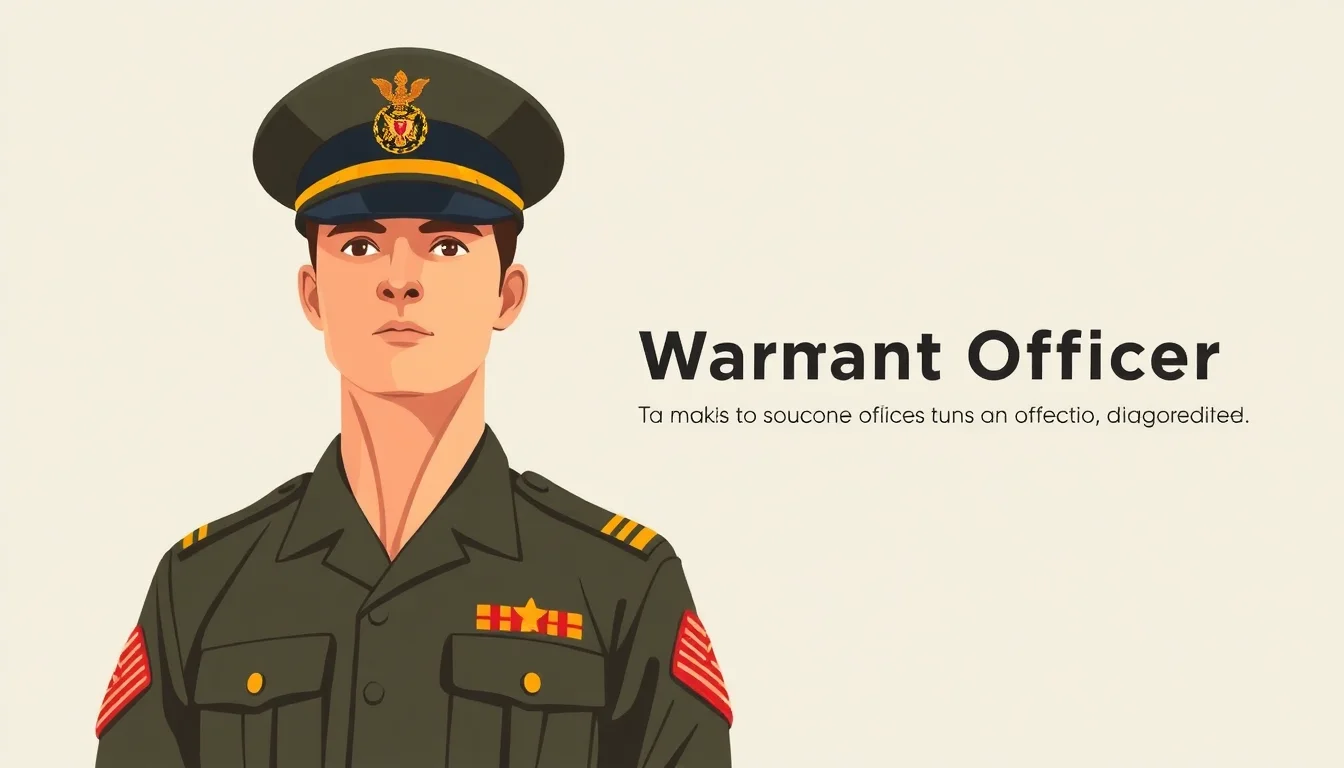
The concept of the warrant officer traces its lineage back to medieval England. Unlike commissioned officers who received their authority through a formal commission from the sovereign, warrant officers were granted their status via a 'warrant'—a document signifying their accrued experience, skill, and seniority. This distinction meant they technically held their rank by a warrant rather than a commission, placing them in a unique position. In the British services, despite this technicality, warrant officers were traditionally considered distinct from and often superior to non-commissioned officers (NCOs), embodying a blend of technical mastery and leadership. This historical precedent established the WO as a specialist leader, a role that has evolved but remains central to their identity across many modern militaries, including those in Commonwealth nations and the United States.
⚙️ How It Works
Warrant officers function as the technical backbone of many military operations, bridging the experiential gap between junior enlisted personnel and senior commissioned officers. They are typically selected from the ranks of experienced enlisted members who demonstrate exceptional technical aptitude and leadership potential. Their training focuses on advanced specialization in fields such as aviation (pilots, flight engineers), intelligence, cyber warfare, logistics, and maintenance. Unlike many commissioned officers who may rotate through various command and staff roles, warrant officers often maintain a long-term focus on a specific technical domain, becoming the foremost experts. This allows them to provide critical advice, manage complex systems, and lead specialized teams with unparalleled depth of knowledge, ensuring operational readiness and efficiency in highly technical environments. The U.S. Army, for instance, has a robust warrant officer corps with distinct career paths.
📊 Key Facts & Numbers
Globally, the number of warrant officers varies, but their impact is disproportionate to their numbers. In the United Kingdom, the rank structure includes Warrant Officer Class 1 (WO1) and Warrant Officer Class 2 (WO2), with WO1 being the most senior enlisted rank, equivalent to a Sergeant Major in some other armies. The Royal Canadian Mounted Police also utilizes warrant officer ranks. These individuals often possess decades of experience.
👥 Key People & Organizations
Key figures in the warrant officer corps are often recognized for their sustained technical excellence and leadership. While many warrant officers operate behind the scenes, their contributions are vital. The U.S. Air Force has Chief Master Sergeants serving in roles analogous to senior enlisted advisors, but the WO corps is more prominent in the U.S. Army and U.S. Navy. Organizations like the Association of the United States Army and various service-specific warrant officer associations advocate for and support the corps, recognizing its unique value. The enlisted-to-officer pathways are crucial for developing this talent.
🌍 Cultural Impact & Influence
The warrant officer's role has significantly influenced military culture and operational doctrine, particularly in technical fields. Their presence ensures that critical technical knowledge is retained and passed down, preventing the loss of expertise that can occur with traditional officer rotations. Their deep specialization has been instrumental in the development and maintenance of complex military systems. Warrant officers often serve as pilots for helicopters like the AH-64 Apache. Their unique perspective, grounded in hands-on experience, often informs strategic planning and tactical execution, providing a pragmatic counterpoint to purely theoretical command decisions. The concept has also inspired similar specialist roles in civilian sectors, such as senior technical consultants or chief engineers.
⚡ Current State & Latest Developments
The U.S. Navy has seen a resurgence in interest for its warrant officer programs, especially in technical fields like information systems and engineering. Discussions continue across various militaries regarding the optimal integration and career progression of warrant officers, ensuring they remain at the forefront of technological advancements. The ongoing global geopolitical landscape, with its increasing reliance on advanced technology and specialized skills, underscores the sustained relevance of the warrant officer. The NATO framework also influences how member nations structure their military ranks, including those of warrant officers.
🤔 Controversies & Debates
A persistent debate revolves around the precise classification and status of warrant officers. While some view them as senior NCOs, others argue they are a distinct officer category, albeit without the same command authority as commissioned officers. This ambiguity can sometimes lead to challenges in career progression and integration within the broader military hierarchy. Critics sometimes question the cost-effectiveness of maintaining a separate warrant officer track compared to developing technical expertise within the commissioned officer or senior NCO ranks. However, proponents argue that the unique blend of technical depth and leadership provided by warrant officers is irreplaceable and essential for specialized military functions, a point often highlighted by organizations like the Warrant Officers Association.
🔮 Future Outlook & Predictions
The future of the warrant officer is intrinsically linked to technological advancement and evolving military strategy. As warfare becomes increasingly digitized and reliant on complex systems, the demand for highly specialized technical leaders will only grow. Militaries are likely to continue refining warrant officer training and career paths to address emerging domains like artificial intelligence, quantum computing, and advanced cyber operations. There's a potential for increased international collaboration in warrant officer training and doctrine development, particularly within alliances like NATO. The challenge will be to ensure that the warrant officer corps remains agile enough to adapt to rapid technological shifts while retaining its core identity as the military's premier technical experts.
💡 Practical Applications
Warrant officers are indispensable in a wide array of practical military applications. In aviation, they serve as pilots for helicopters and fixed-wing aircraft, flight engineers, and maintenance specialists, ensuring the operational readiness of complex aerial platforms like the UH-60 Black Hawk. In intelligence, they are crucial for signals intelligence, analysis, and electronic warfare. Logistics and engineering warrant officers manage supply chains, oversee construction projects, and maintain critical infrastructure. Their expertise is also vital in areas such as culinary arts, medical services, and public affairs, where deep technical skill is paramount. The U.S. Marine Corps also has a warrant officer program, focusing on technical leadership in areas like aviation and engineering.
Key Facts
- Category
- military
- Type
- topic