
Contents
Overview
Blues music, born from the African American experience in the Deep South, is more than just a musical genre; it's a vital cultural force that has profoundly shaped nearly every facet of modern popular music. Its roots are deeply embedded in spirituals, work songs, and field hollers, transforming sorrow and hardship into a powerful, cathartic art form. The genre’s emotional honesty and raw expression have resonated across generations, making it a cornerstone of American identity and a global phenomenon.
Musically, the blues is defined by its characteristic 12-bar chord progression, typically using the I, IV, and V chords, and its use of blue notes – flattened thirds, fifths, and sevenths – which lend the music its signature melancholic and expressive quality. Lyrically, themes often revolve around love, loss, poverty, and injustice, delivered with a potent blend of resignation and resilience. The genre’s evolution saw the emergence of distinct regional styles, from the raw, acoustic Delta blues to the electrified urban sounds of Chicago, each adding layers to its rich sonic tapestry.
Origins in the Deep South
The genesis of blues can be traced to the late 19th century in the Mississippi Delta region of the United States, emerging from the spirituals and work songs sung by enslaved and later emancipated African Americans. These early forms of musical expression were a way to endure hardship, communicate, and maintain cultural identity. Early pioneers like Robert Johnson, Son House, and Charley Patton are credited with codifying many of the genre's foundational elements, often performing with acoustic guitars and harmonicas, their music reflecting the struggles and realities of rural life. The characteristic call-and-response pattern, mirroring the interaction between a preacher and congregation or a leader and a group of laborers, became a defining feature, as did the improvisational nature of both vocals and instrumental solos.
Electrification and Urbanization
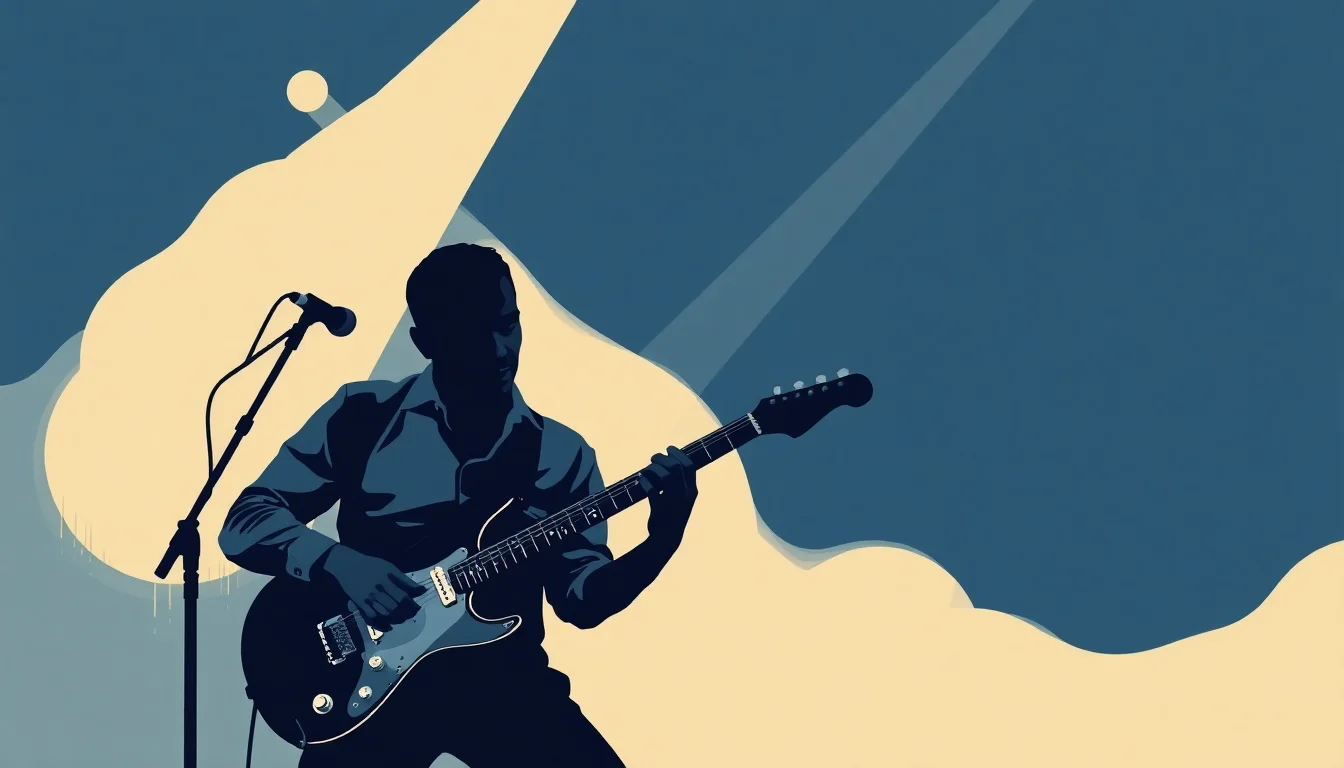
As African Americans migrated north to industrial centers like Chicago, Memphis, and Detroit, the blues underwent a significant transformation, becoming electrified and amplified. Artists such as Muddy Waters, Howlin' Wolf, and B.B. King became titans of this urban blues sound, adapting the genre to suit the louder, faster-paced environment of city life. This electric blues, with its driving rhythms and searing guitar solos, laid the groundwork for rock and roll and continued to evolve with subgenres like blues-rock, pioneered by artists like Eric Clapton and Jimi Hendrix. The 12-bar blues structure, while a common framework, was constantly reinterpreted, allowing for immense creative freedom within its established parameters.
Legacy and Influence
The legacy of blues is immeasurable, serving as the bedrock for rock and roll, jazz, R&B, soul, and even country music. Its influence can be heard in the guitar riffs of Led Zeppelin, the vocal stylings of Aretha Franklin, and the songwriting of Bob Dylan. The emotional depth and authentic storytelling inherent in blues music continue to inspire artists worldwide, ensuring its relevance across diverse musical landscapes. Debates persist regarding the exact lineage of certain blues styles and the commercial appropriation of the genre, but its fundamental contribution to the global musical lexicon remains undisputed.
Cultural Significance
Beyond its musical impact, blues is a profound cultural artifact that tells the story of a people’s journey through adversity. It provided a voice for the voiceless, articulating experiences of oppression, resilience, and hope. The genre’s visual and performance aesthetics, from the stoic intensity of a blues singer to the virtuosic dexterity of a guitarist, are as iconic as its sound. Today, blues festivals and clubs worldwide celebrate its enduring spirit, demonstrating its continued vitality and its capacity to connect people through shared human emotion. The ongoing exploration of blues by contemporary artists ensures that this essential American art form will continue to evolve and inspire.
Key Facts
- Year
- Late 19th Century - Present
- Origin
- Deep South, United States
- Category
- music
- Type
- genre
Frequently Asked Questions
What are 'blue notes'?
Blue notes are specific pitches in the blues scale that are typically a semitone or microtone flatter than those found in the major scale. They are often described as sounding 'bent' or 'sad' and are crucial to the blues' distinctive emotional character.
What is the 12-bar blues progression?
It's the most common harmonic structure in blues music, consisting of a repeating 12-measure sequence of chords, typically I, IV, and V chords. It provides a consistent framework for improvisation and songwriting.
Who were some of the most influential early blues musicians?
Key figures include Robert Johnson, Bessie Smith, Charley Patton, Son House, Ma Rainey, and W.C. Handy, whose work laid the foundation for the genre.
How did the blues influence rock and roll?
Rock and roll directly adopted blues chord structures, lyrical themes, vocal styles, and instrumental techniques. Many early rock pioneers, like Chuck Berry and Elvis Presley, were heavily inspired by blues artists.
Is blues still relevant today?
Absolutely. While not always in the mainstream spotlight, blues continues to be a living genre with contemporary artists, and its foundational influence is evident in virtually every genre of popular music, from rock and soul to hip-hop.